


In the ever-evolving tech landscape of 2025, Edge AI is emerging as a game-changer. By combining artificial intelligence with edge computing, Edge-ai enables data processing directly on devices like smartphones, cameras, drones, and sensors—without relying on cloud servers for every task.
As industries demand real-time decision-making, improved privacy, and low-latency responses, Edge-ai is quickly becoming the cornerstone of smart technology applications.
What Is Edge AI?
Edge refers to the deployment of AI algorithms on edge devices—hardware that operates outside centralized cloud infrastructure. Instead of sending all data to a cloud server for processing, Edge ai enables devices to analyze and respond locally.
This is made possible through specialized chips, AI models optimized for low power consumption, and advances in mobile and embedded computing.
Why Edge AI Is a Trending Technology in 2025
The rapid expansion of IoT (Internet of Things), 5G networks, and AI model compression techniques has paved the way for widespread adoption of Edge-AI. It’s no longer just about smarter devices—it’s about making them faster, more efficient, and more private.
Key drivers for Edge-ai adoption include:
-
Instant decision-making for critical applications
-
Enhanced user privacy and data security
-
Reduced dependence on internet connectivity
-
Energy-efficient and scalable solutions for smart devices
Real-World Applications of Edge AI
1. Smart Surveillance Systems
Cameras powered by Edge-AI can detect suspicious behavior, track objects, and even identify faces in real time—without sending video footage to the cloud.
2. Healthcare Monitoring
Wearable devices use Edge ai to monitor heart rate, oxygen levels, and activity patterns instantly, alerting users and caregivers of abnormalities on the spot.
3. Autonomous Vehicles
Self-driving cars rely on Edge for critical decisions such as obstacle avoidance, lane detection, and real-time navigation.
4. Retail Analytics
In-store sensors use Edge to track customer behavior, optimize layouts, and personalize advertisements without violating user privacy.
Benefits of Edge-Ai Over Traditional ai
-
Speed: Real-time data processing without round-trip delays
-
Security: Sensitive data stays on the device
-
Reliability: Works even in offline or low-bandwidth environments
-
Cost-Efficiency: Less data transmitted = lower cloud costs
-
Energy Savings: Optimized models consume less power
Edge AI vs Cloud AI: What’s the Difference?
| Feature | Edge AI | Cloud AI |
|---|---|---|
| Latency | Ultra-low | High (depends on connection) |
| Connectivity | Works offline | Requires stable internet |
| Privacy | High (local data) | Riskier (data sent externally) |
| Compute Power | Limited but optimized | Virtually unlimited |
| Use Cases | Real-time decisions | Deep learning, model training |
While cloud AI is still vital for model training and large-scale analytics, Edge-Ai is ideal for real-time applications and on-device decision-making.
Technologies Behind Edge AI
To make Edge viable, several technologies work in harmony:
-
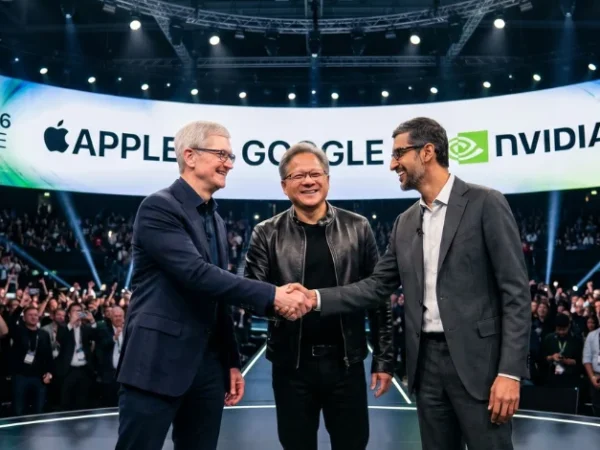
AI accelerators like NVIDIA Jetson, Google Coral, and Apple Neural Engine
-
Model compression techniques like quantization and pruning
-
TinyML frameworks that run machine learning on microcontrollers
-
5G and Wi-Fi 6 for hybrid edge-cloud connectivity
These innovations make it possible to run powerful AI models on devices as small as a smartwatch or a smart thermostat.
Industries Being Disrupted by Edge
-
Manufacturing: Predictive maintenance and quality checks
-
Agriculture: Smart irrigation and crop monitoring
-
Energy: Grid optimization and anomaly detection
-
Smart Homes: Voice and facial recognition without the cloud
-
Logistics: Route planning and inventory tracking
Edge-AI is not just a buzzword—it’s reshaping operational strategies across sectors.
Challenges in Implementing Edge-ai
While Edge is promising, it comes with hurdles:
-
Limited processing power: Devices must balance performance and battery life.
-
Model optimization complexity: Compressing AI models without losing accuracy is difficult.
-
Hardware costs: Edge Ai capable devices can be expensive.
-
Standardization: Lack of universal development frameworks.
However, ongoing research and open-source solutions are helping address these issues.
Future Outlook of Edge Ai
By 2030, the global Edge-ai market is expected to reach over $100 billion. Innovations in chip design, neural architecture search, and federated learning will make AI even more distributed and private.
Edge-ai isn’t just about smarter gadgets—it’s about building a truly intelligent world where decisions are made where they matter most: at the edge.
As we move deeper into the era of ubiquitous computing, Edge stands out as a powerful trend enabling real-time, private, and efficient intelligence. Whether it’s powering your smartwatch or managing industrial robots, Edge is bringing the future closer—literally and figuratively.
FAQs About Edge AI
1. What is Edge Ai ?
Edge refers to running AI algorithms directly on devices rather than in the cloud.
2. Why is Edge important in 2025?
It enables real-time, offline, and private AI-powered experiences across industries.
3. Is Edge-ai only for large enterprises?
No, small businesses and even individual developers are adopting Edge-AI using open-source tools and affordable hardware.
4. What devices use Edge?
Smartphones, drones, security cameras, wearables, and industrial sensors.
5. Can Edge-Ai work without the internet?
Yes, many Edge-Ai applications work offline or in intermittent connectivity environments.
6. What are some platforms for developing Edge?
NVIDIA Jetson, TensorFlow Lite, Google Coral, and Apple Core ML.
7. Does Edge-AI require machine learning expertise?
Basic AI knowledge helps, but platforms are becoming more user-friendly for non-experts.
8. How does Edge-ai enhance privacy?
By keeping data on the device instead of sending it to external servers.
9. Is Edge better than Cloud ai?
Each has its strengths. Edge AI is better for real-time, low-latency tasks; cloud AI excels at heavy computation.
10. What’s the future of Edge?
It will play a central role in smart cities, autonomous vehicles, and intelligent edge devices worldwide.
Read more blogs: Alitech.io
Realancer is a flexible freelancing platform built of real life. Whether you want to work part-time , weekend , or just when you are free , Realancer lets you offer locally or remotely – on your own terms. Fair flexible and built for freelancers and clients alike.
Join the waiting list now: https://app.realancer.net/


Leave a Reply