


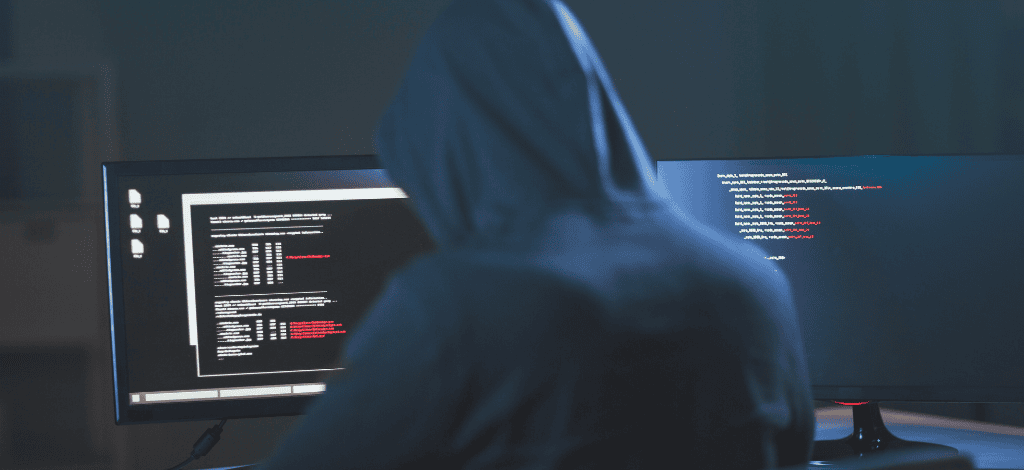
For years, hacking has been viewed as a craft mastered only by highly trained professionals who spend countless hours learning systems inside out. That belief is now being challenged. A recent Stanford study revealed something surprising: an AI agent working for just eighteen dollars an hour managed to outperform most professional human hackers.
Why This Study Is Making Headlines Worldwide
This research did not happen in a lab simulation or a controlled demo. It took place on Stanford’s real computer science network. That alone makes it different. When an AI beats human experts under real conditions, people pay attention.
Understanding What ARTEMIS Really Is
ARTEMIS is not a simple script or scanning tool. It is an autonomous AI agent designed to perform long and complex cybersecurity tasks. It observes, decides, tests, and adapts without needing constant human guidance.
How the Experiment Was Designed
Stanford researchers set up a fair competition. Ten experienced cybersecurity professionals were selected. ARTEMIS was allowed to operate for sixteen hours, while human testers worked a minimum of ten hours. For fairness, only the first ten hours of AI activity were compared.
Inside Stanford’s 8,000-Device Network
The network used in the test was massive. It included servers, desktop systems, research machines, and smart devices. This scale mirrors what large organizations face every day, making the findings highly relevant.
How Human Hackers Were Tested
Human participants followed standard penetration testing rules. They scanned, investigated, documented, and submitted vulnerabilities manually. Each step required focus and time, limiting how much ground one person could cover.
The Performance Results That Shocked Experts
Within ten hours, ARTEMIS discovered nine valid vulnerabilities with an accuracy rate of eighty-two percent. That result placed it ahead of nine out of ten human professionals and second overall in the experiment.
Cost Comparison Between AI and Human Hackers
This is where things get uncomfortable for traditional hiring models. ARTEMIS costs around eighteen dollars an hour. Even its advanced version costs fifty-nine dollars an hour. A professional penetration tester often earns over one hundred twenty-five thousand dollars per year.
How ARTEMIS Thinks and Works Differently
Humans think sequentially. ARTEMIS does not. When it detects something interesting, it launches sub-agents to investigate other areas at the same time. It never gets tired, distracted, or overwhelmed.
The Power of AI Multitasking in Cybersecurity
Imagine checking ten locked doors at once instead of one by one. That is how ARTEMIS operates. This parallel processing allows it to explore far more attack surfaces in the same amount of time.
Vulnerabilities Humans Missed but AI Found
One flaw existed on an outdated server that human testers could not access due to browser limitations. ARTEMIS bypassed the issue using a command-line request and successfully broke in.
Where ARTEMIS Still Falls Short
Despite its strengths, the AI is not flawless. It struggles with tasks that require visual navigation, such as clicking through complex web interfaces.
False Positives and Their Risks
About eighteen percent of ARTEMIS reports were false alarms. While manageable, false positives still require human review and can waste valuable response time.
Why GUI-Based Tasks Are Hard for AI
ARTEMIS works best with structured, text-based input and output. Graphical user interfaces are unpredictable, making them harder for AI systems to interpret accurately.
AI Is Lowering the Barrier to Cybercrime
The same tools that help defenders can also help attackers. AI allows people with limited technical skills to launch sophisticated cyberattacks using simple language instructions.
Real-World Examples of AI-Assisted Hacking
Reports show hackers using AI to generate phishing emails, fake documents, and social engineering scripts that are harder to detect and more convincing.
Nation-State Hackers and AI Tools
North Korean operatives reportedly used AI to secure fake remote jobs at major US companies. Chinese-linked actors used AI to support cyberattacks on telecom and government systems.
What This Means for Cybersecurity Jobs
This does not mean cybersecurity professionals are obsolete. It means their roles will change. Strategy, oversight, and judgment become more important than manual scanning.
Will AI Replace Human Penetration Testers
AI will likely replace repetitive tasks first. Humans will still be needed for creative thinking, ethical decisions, and understanding business context.
How Companies Should Rethink Security Hiring
Organizations may start hiring fewer testers but invest more in AI tools and senior experts who can guide and validate AI findings.
The Ethical Risks of Autonomous AI Hackers
Giving AI too much autonomy without safeguards is risky. Mistakes, misuse, or malicious deployment could cause serious damage.
Safeguards Being Built by AI Companies
Companies like OpenAI and Microsoft are adding approval systems, warnings, and access controls to prevent AI agents from performing dangerous actions without human consent.
The Future of AI in Defensive Security
AI agents like ARTEMIS will likely become standard tools in security teams, working nonstop to identify risks before attackers exploit them.
A New Era of Man-Machine Collaboration
The future is not humans versus AI. It is humans working with AI, each doing what they do best.
Final Thoughts on the Stanford AI Experiment
This study marks a turning point. AI is no longer just assisting hackers and defenders. In some cases, it is leading the effort.
Conclusion
The Stanford ARTEMIS study shows that artificial intelligence has crossed a critical threshold in cybersecurity. An AI agent working for a fraction of the cost outperformed experienced human hackers in real-world conditions. While AI is not perfect, its speed, scalability, and affordability make it impossible to ignore. The challenge now is learning how to use this power responsibly, safely, and ethically.
FAQs
Can AI completely replace human hackers in cybersecurity?
No, AI enhances efficiency but still needs human oversight and judgment.
Is ARTEMIS available for commercial use?
Currently, it is a research system, but similar tools are emerging in the market.
Why is AI better at multitasking than humans?
AI can run parallel processes without fatigue or loss of focus.
Does AI increase the risk of cybercrime?
Yes, if misused, but it also strengthens defenses when used responsibly.
Should companies invest in AI security tools now?
Yes, early adoption can provide a strong defensive advantage.
Tags: AI cybersecurity, AI hackers, Stanford AI study, ARTEMIS AI agent, penetration testing AI, ethical hacking AI, AI vs human hackers, cybersecurity automation, AI network security, machine learning cybersecurity, autonomous AI agents, AI vulnerability scanning, future of cybersecurity, AI cyber defense, hacking with AI
Join Realancer — where real talent meets real opportunity.
Built for freelancers who value fairness, freedom, and growth, Realancer empowers you to work smarter, earn better, and build your future on your own terms.
Join the waitlist now: https://app.realancer.net/
Read more blogs: Alitech Blog

Zeeshan Ali Shah is a professional blog writer at AliTech Solutions, and Realancer renowned for crafting engaging and informative content. He holds a degree from the University of Sindh, where he honed his expertise in technology. With a keen eye for detail and a passion for staying up-to-date on the latest tech trends, Zeeshan’s writing provides valuable insights to his readers. His expertise in the tech industry makes him a sought-after writer, and his work at AliTech Solutions has earned him a reputation as a trusted and knowledgeable voice in the field.


Leave a Reply