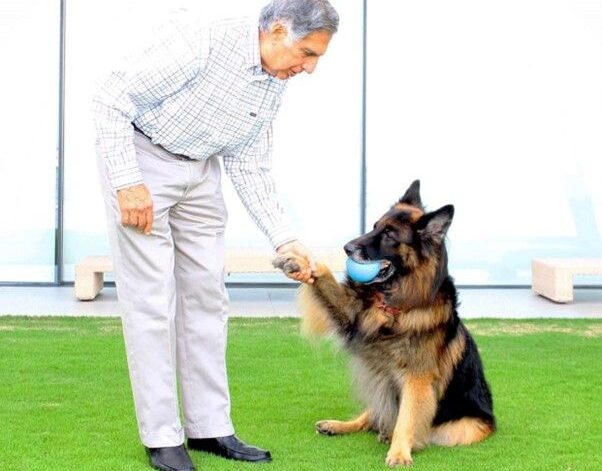
Farewell to Ratan Tata: The Passing of an Iconic Leader at 86
On October 9, 2024, India bid farewell to one of its most revered and beloved business icons, Ratan Tata, who passed away at the age of 86. The former chairman of Tata Sons, known for his visionary leadership and commitment to social good, died at Mumbai’s Breach Candy Hospital after being admitted for age-related issues. His passing marks the end of an era for Indian industry and philanthropy, leaving behind a legacy that has touched millions across the globe.
Early Life and the Journey to Leadership
Ratan Tata was born on December 28, 1937, into the illustrious Tata family, known for its contributions to Indian industry and philanthropy. He was the son of Naval Tata and was raised by his grandmother, Lady Navajbai Tata, after his parents separated when he was just 10 years old. Ratan Tata’s early education took place at Campion School and Cathedral and John Connon School in Mumbai, before he moved to the United States to pursue a degree in architecture from Cornell University.
His journey to leadership in the Tata Group wasn’t straightforward. After completing his education, he initially worked on the shop floor of Tata Steel in Jamshedpur, learning the ropes of the business. This hands-on experience, coupled with his determination and visionary thinking, prepared him for the challenges ahead.
A Transformational Leader for the Tata Group
Ratan Tata’s leadership of the Tata Group began in 1991, following the retirement of his uncle, JRD Tata. Taking over the reins of a business empire as diverse as Tata, with interests spanning steel, automotive, IT, power, and telecommunications, was no easy task. But under his leadership, Tata Group transformed from a primarily Indian-focused business into a global giant.
One of his first major moves was to streamline the conglomerate, consolidating ownership and focusing on a few core industries. He famously believed in pushing for innovation and risk-taking, which led to bold acquisitions such as Tetley Tea in 2000, Jaguar Land Rover in 2008, and Corus Steel in 2007. These moves made Tata Group a truly global name, with a presence in more than 100 countries.
The Vision Behind the Tata Nano: A Car for Every Indian
Among Ratan Tata’s many achievements, one of the most remarkable was the creation of the Tata Nano. Launched in 2008, the Tata Nano was envisioned as a “people’s car” that could provide affordable transportation to India’s growing middle class. Priced at just ₹1 lakh (approximately $2,000 at the time), the Nano aimed to revolutionize mobility in India.
Although the Nano did not achieve commercial success, Tata’s vision behind the car remains a testament to his deep understanding of India’s needs and his desire to make life better for ordinary people. In an interview, Tata had said that the idea for the Nano came when he saw an entire family of four riding a scooter in unsafe conditions. The Tata Nano, despite its commercial struggles, symbolized Ratan Tata’s unwavering commitment to addressing the needs of the common man.
Tata’s Global Expansion: Bold Acquisitions
Under Ratan Tata’s leadership, the Tata Group undertook several high-profile acquisitions, cementing its status as a global conglomerate. The acquisition of UK-based Tetley Tea in 2000 for $450 million marked one of the first major international expansions for the group. This move was followed by even bigger deals, including the purchase of steelmaker Corus in 2007 for $13 billion, which at the time was the largest acquisition by an Indian company.
However, it was the acquisition of the iconic British brands Jaguar and Land Rover from Ford in 2008 that truly placed Tata Group on the global map. Many industry analysts had been skeptical about whether an Indian company could successfully run these luxury car brands. But under Tata’s stewardship, both Jaguar and Land Rover saw a remarkable turnaround, becoming profitable and expanding their product lines.
A Leader with Humility and Integrity
Despite his remarkable success, Ratan Tata was known for his humility and down-to-earth personality. He never flaunted his wealth and led a relatively modest lifestyle compared to many of his business peers. This trait endeared him to millions of Indians, who admired his ability to remain grounded despite being at the helm of one of the largest business empires in the world.
Ratan Tata’s leadership style was characterized by a deep sense of integrity. He believed in ethical business practices and often took stands that others in his position might have avoided. His decision to withdraw from the Singur plant for the Tata Nano due to opposition from local farmers and activists is one such example of his principle-driven leadership.
Philanthropy: A Lifelong Commitment to Social Good
While Ratan Tata’s contributions to the business world are well-documented, his philanthropic efforts are equally, if not more, significant. He firmly believed that the purpose of business should be to improve society. Over two-thirds of Tata Sons’ profits are directed toward charitable trusts, which fund initiatives in education, healthcare, rural development, and more.
One of the most important contributions by the Tata Trusts is in the field of education. Ratan Tata personally donated significant amounts to universities and educational institutions worldwide, including Cornell University, Harvard Business School, and the Indian Institute of Technology, among others. His vision for creating opportunities for Indian students to access world-class education reflected his belief that education is the key to long-term development.
His philanthropic focus wasn’t limited to education. He was instrumental in setting up healthcare initiatives, especially in areas where access to quality healthcare was limited. From supporting cancer research to providing healthcare in rural areas, Tata’s charitable efforts have impacted millions of lives.
A Man of Modest Wealth: Ratan Tata’s Personal Life
Despite overseeing a global business empire, Ratan Tata lived a relatively simple life. His personal wealth, estimated at ₹3,800 crores ($460 million), was considerably lower than many of his peers. This is largely because much of the wealth generated by the Tata Group is tied to charitable trusts. Unlike many billionaires, Ratan Tata was never motivated by personal wealth but rather by a desire to create value for society.
Tata was also known for his love of cars and animals. His personal car collection includes a mix of modest Tata vehicles as well as luxury models like the Ferrari California, Mercedes-Benz SL500, and Maserati Quattroporte. Tata was also a passionate animal lover and devoted significant resources to animal welfare causes.
Global Tributes: Mourning the Loss of a Titan
The news of Ratan Tata’s death prompted an outpouring of tributes from across the world. Prime Minister Narendra Modi led the nation in paying homage, calling Tata a “visionary leader” who redefined business leadership and worked for the betterment of society. “His humility and kindness will always be remembered,” Modi remarked.
Business leaders from around the world also expressed their condolences. Sundar Pichai, CEO of Google, remembered Tata as a mentor who inspired countless individuals with his vision and generosity. “His legacy goes beyond business,” Pichai noted, highlighting how Tata’s influence reached far beyond the boardroom.
Mukesh Ambani, chairman of Reliance Industries, called Tata’s passing an “immeasurable loss” for the nation. Anand Mahindra of Mahindra Group said that Tata’s example of leadership with conscience and compassion would continue to inspire future generations.
Ratan Tata’s Enduring Legacy
Ratan Tata’s legacy will continue to resonate long after his passing. His contributions to business, philanthropy, and society as a whole have left an indelible mark on India and the world. Through his vision and leadership, Tata transformed a century-old business into a global powerhouse while never losing sight of the company’s core mission: to improve lives and communities.
As India mourns the loss of this legendary leader, it is clear that Ratan Tata’s impact will be felt for generations to come. His story is not just one of business success but of ethical leadership, humility, and an unwavering commitment to the greater good.
Ratan Tata’s life reminds us that true leadership is not just about financial success but about using one’s influence to create a lasting, positive change in the world. His legacy will forever remain an inspiration for aspiring entrepreneurs, leaders, and philanthropists alike.
FAQs:
1. Who was Ratan Tata?
Ratan Tata was an Indian industrialist, philanthropist, and former chairman of Tata Sons. He led the Tata Group, one of India’s largest conglomerates, from 1991 to 2012, transforming it into a global business empire.
2. What are Ratan Tata’s major achievements?
Ratan Tata is known for expanding Tata Group globally, overseeing key acquisitions like Tetley Tea, Corus Steel, and Jaguar Land Rover. He also launched the Tata Nano, the world’s most affordable car at the time.
3. When and how did Ratan Tata pass away?
Ratan Tata passed away on October 9, 2024, at the age of 86, after being admitted to Breach Candy Hospital in Mumbai for age-related health issues.
4. What is Ratan Tata’s legacy in Indian business?
Ratan Tata’s legacy is marked by his ethical leadership, internationalizing the Tata brand, and contributing significantly to India’s industrial and social development. His focus on philanthropy, through Tata Trusts, also left a lasting impact on education, healthcare, and rural development.
5. What industries did Ratan Tata expand the Tata Group into?
Under Ratan Tata, Tata Group expanded into diverse sectors including steel, automotive, IT services (through TCS), telecommunications, hospitality, and consumer goods, making it a global powerhouse.
6. How did Ratan Tata contribute to philanthropy?
Through Tata Trusts, Ratan Tata channeled a significant portion of the company’s wealth into social causes, including education, healthcare, and community development. He personally funded scholarships and healthcare initiatives, particularly in cancer research.
7. What was Tata Nano, and why is it significant?
The Tata Nano, launched in 2008, was a budget-friendly car designed to provide affordable transportation to India’s middle class. Though it didn’t succeed commercially, it remains a symbol of innovation and Tata’s vision for social impact.
8. How did Ratan Tata influence the global perception of Indian businesses?
Ratan Tata’s leadership helped put Indian businesses on the global map. Through strategic acquisitions like Jaguar Land Rover and Corus Steel, Tata Group became a recognized name worldwide, shifting the perception of Indian companies as major global players.
9. What personal values was Ratan Tata known for?
Ratan Tata was admired for his humility, integrity, and ethical leadership. Despite heading a massive business empire, he led a modest lifestyle and placed social responsibility above personal wealth, always advocating for corporate ethics.
10. What is Tata Trusts, and how did Ratan Tata shape it?
Tata Trusts are charitable organizations that hold a majority stake in Tata Sons, focusing on social causes. Ratan Tata played a crucial role in directing its efforts toward education, healthcare, and rural development, ensuring Tata’s profits benefited society.
11. What was Ratan Tata’s educational background?
Ratan Tata earned a degree in Architecture from Cornell University and completed an Advanced Management Program at Harvard Business School. His education influenced his approach to leadership and innovation within Tata Group.
12. How is Ratan Tata’s passing being remembered?
Ratan Tata’s passing has been met with tributes from across the world, with business leaders, politicians, and the public celebrating his contributions to industry, philanthropy, and society at large. His life is remembered as an embodiment of ethical leadership and corporate responsibility.
13. What impact did Ratan Tata have on Indian industry?
Ratan Tata transformed Tata Group into one of India’s largest and most respected business conglomerates, with operations in over 100 countries. His leadership inspired a new generation of Indian entrepreneurs and business leaders to think globally and act responsibly.
14. What was Ratan Tata’s net worth?
Despite being one of India’s most influential business leaders, Ratan Tata’s personal net worth was relatively modest, around ₹3,800 crore ($460 million). Much of Tata Group’s wealth is held in charitable trusts, rather than being owned personally by the Tata family.
15. What is Ratan Tata’s influence on modern Indian leadership?
Ratan Tata’s leadership style—focused on ethics, humility, and social responsibility—has set a benchmark for future Indian business leaders. His approach has become a model for balancing profitability with purpose, inspiring leaders in both business and social sectors.
Source: Google News
Read more blogs: Alitech Blog

Zeeshan Ali Shah is a professional blog writer at AliTech Solutions, and Realancer renowned for crafting engaging and informative content. He holds a degree from the University of Sindh, where he honed his expertise in technology. With a keen eye for detail and a passion for staying up-to-date on the latest tech trends, Zeeshan’s writing provides valuable insights to his readers. His expertise in the tech industry makes him a sought-after writer, and his work at AliTech Solutions has earned him a reputation as a trusted and knowledgeable voice in the field.