

The historic deal shakes the space world
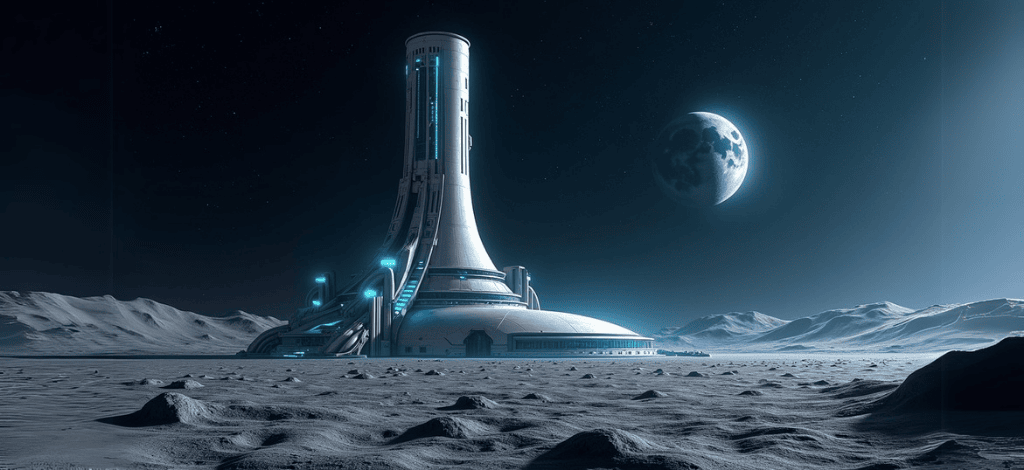
China and Russia have officially signed an agreement to build a nuclear power plant on the Moon. This collaboration will power the upcoming International Lunar Research Station (ILRS), a joint venture aiming to establish a permanent outpost on the moon’s south pole by 2036. It’s a bold move and a major step toward dominating space exploration for decades to come.
Signing of the space pact between two giants
The agreement between the China National Space Administration (CNSA) and Roscosmos, Russia’s space agency, was signed in early May 2025. This deal confirms their joint commitment to install a nuclear reactor on the Moon. The goal? Provide consistent and powerful energy for long-term scientific operations, both robotic and eventually human.
Why build a nuclear plant on the Moon?
Operating on the Moon requires a stable, long-lasting energy source. Solar energy might not cut it during long lunar nights. That’s where nuclear power comes in—offering constant, high-output energy to keep the ILRS running 24/7. It’s a game-changing technology that could support everything from labs to life support systems.
The ambitious lunar roadmap
The ILRS project is mapped out in stages. In 2028, China’s Chang’e-8 mission will set the groundwork. Between 2030 and 2035, five massive rocket launches will carry the plant’s components to the Moon. By 2036, the nuclear-powered ILRS should be fully operational. And all of this, they say, without a single human setting foot during construction.
Why the Moon’s south pole is a hot target
Both China-Russia’s ILRS and the US’s Artemis program are racing toward the same region—the Moon’s south pole. Why? It offers near-continuous sunlight and likely contains water ice, critical for sustaining life and creating fuel. Whoever gets there first could control the Moon’s most valuable real estate.
A robot-built reactor without humans
The plan to build the nuclear power plant relies heavily on robotics. Russian officials have stated the entire process will be handled autonomously. Advanced machines, guided by AI and remote systems, will assemble the reactor and other components. It’s a huge leap in tech and possibly the beginning of true space automation.
How will the Moon base be powered?
The ILRS is designed to use a mix of solar, nuclear, and radioisotope energy sources. The nuclear plant will serve as the main energy hub, but backup systems will ensure resilience. This setup allows the base to operate even during the long, dark lunar nights and during any future human missions.
What is the International Lunar Research Station?
ILRS is more than just a Moon base. It’s a science hub, a test bed for new technologies, and possibly the launchpad for missions to Mars and beyond. It will host robots and eventually astronauts who will conduct research, explore the Moon’s surface, and refine systems for deep space missions.
NASA’s lunar plans hit a wall
In contrast, NASA has recently proposed cutting its 2026 budget, scrapping its orbital lunar outpost plans. This shift has sparked concerns that the US may fall behind in the new space race. While Artemis still aims to put boots on the Moon, the momentum appears to be with China and Russia.
Seventeen nations join ILRS project
The ILRS is quickly becoming a global venture. So far, 17 nations including Egypt, Venezuela, and South Africa have signed on. China’s “555 Project” aims to expand that number to 50 countries, 500 institutions, and 5,000 scientists. The ILRS could rival or even surpass the international reach of the Artemis program.
US generals raise red flags
Retired US Air Force Lt. Gen. Steven Kwast warns that China’s activities on the Moon could give it a strategic edge. He claims that the US is “blind” to what China is doing on the far side of the Moon and worries that without better space infrastructure, America could fall victim to foreign space dominance.
Is helium-3 the real prize?
Helium-3 is a rare isotope that could fuel nuclear fusion reactors without dangerous waste. The Moon has tons of it. China has already shown strong interest in mining helium-3. If successful, this could give them a virtually unlimited energy source and possibly control over future energy markets on Earth.
Private sector joins the lunar gold rush
Companies like Interlune are racing to develop machines that can mine lunar soil for helium-3 and other valuable resources. Their prototypes are designed to harvest 100 metric tons of regolith per hour. Private innovation may soon play as big a role in lunar exploration as government space agencies.
Global power plays beyond Earth
This isn’t just about science. It’s about power, politics, and prestige. Much like the Cold War space race, today’s lunar rivalry is as much about who controls key resources and information as it is about who can land on the Moon. Space is quickly becoming the next battlefield for global influence.
China’s Moon vision for 2050
China’s endgame? A vast network of lunar stations powered by solar, nuclear, and radioisotope energy. Picture rovers, robots, high-speed data links, and even lunar trains connecting multiple moon bases. Their plans stretch to 2050 and beyond, with the Moon acting as a launchpad for human expansion into deep space.
Conclusion
The China-Russia plan to build a nuclear power plant on the Moon is more than a technical milestone. It’s a loud and clear message: the race for space dominance is back on. With bold missions, global partnerships, and eye-popping visions for the future, the Moon is once again at the center of human ambition. Whether the US can catch up remains to be seen—but one thing is clear: the new space race has already begun.
FAQs
1. What is the ILRS and what does it do?
The International Lunar Research Station (ILRS) is a joint China-Russia space project to build a long-term scientific base on the Moon. It will host robotic and human missions for research and testing new technologies.
2. Why is nuclear energy being used on the Moon?
Nuclear energy provides a stable and powerful source of electricity, especially useful during the Moon’s long nights when solar panels can’t function effectively.
3. What is helium-3 and why is it important?
Helium-3 is a rare gas found on the Moon that could power clean nuclear fusion reactors. It’s non-radioactive and could revolutionize global energy if successfully mined and used.
4. Who else is supporting the ILRS project?
Seventeen countries have already joined the project, and China aims to grow that number significantly through its “555 Project” initiative.
5. Is the US falling behind in space exploration?
Some experts believe the US is at risk of falling behind, especially after recent NASA budget cuts. However, the Artemis program is still aiming for lunar missions, and private companies may help close the gap.
Read more blogs: Alitech Blog
Realancer makes freelancing fairer and hiring smarter—on your terms.
👉 Join the waitlist at https://app.realancer.net
Tags: china russia moon nuclear power plant, international lunar research station project Nuclear Power Plant, china moon base nuclear energy , russia lunar space mission Nuclear Power Plant, lunar nuclear power plant station, moon base energy solutions Nuclear Power Plant, china russia space collaboration Nuclear Power Plant, ilrs china russia project Nuclear Power Plant, lunar base construction plan, china chang’e-8 mission, moon south pole base project, lunar research station 2036 Nuclear Power Plant, nuclear energy on the moon, moon mining helium-3, helium-3 future energy source, new lunar space race, moon base robotic construction Nuclear Power Plant, space exploration china russia Nuclear Power Plant, lunar power station timeline, china 2050 moon vision

Zeeshan Ali Shah is a professional blog writer at AliTech Solutions, and Realancer renowned for crafting engaging and informative content. He holds a degree from the University of Sindh, where he honed his expertise in technology. With a keen eye for detail and a passion for staying up-to-date on the latest tech trends, Zeeshan’s writing provides valuable insights to his readers. His expertise in the tech industry makes him a sought-after writer, and his work at AliTech Solutions has earned him a reputation as a trusted and knowledgeable voice in the field.