In a remarkable announcement that stirred the scientific community, three physicists — John Clarke, Michel Devoret, and John Martinis — have been awarded the 2025 Nobel Prize in Physics. Their pioneering work in quantum mechanics has shed light on how quantum effects can manifest on a macroscopic scale, bringing us closer to the next generation of quantum technologies.
The Big Announcement from Stockholm
The Royal Swedish Academy of Sciences revealed this year’s laureates on October 7, 2025, in Stockholm. The trio received recognition for their “discovery of macroscopic quantum mechanical tunnelling and energy quantisation in an electric circuit.” This breakthrough represents a major step forward in understanding how quantum principles operate beyond the atomic level.
Who Are the Nobel Laureates of 2025?
John Clarke, Michel Devoret, and John Martinis are all based in the United States, though their roots span multiple countries — a Briton, a Frenchman, and an American. Their collaboration dates back decades, driven by a shared curiosity about the boundaries between classical and quantum physics. Their work, which began in the 1980s at the University of California, Berkeley, continues to influence the design of today’s quantum computers.
The Groundbreaking Discovery Explained
At its core, their discovery deals with macroscopic quantum tunnelling — a phenomenon previously believed to occur only at the atomic level. Traditionally, quantum effects were thought to vanish as systems became larger. However, Clarke, Devoret, and Martinis demonstrated that even systems large enough to hold in one’s hand could display these strange quantum behaviors.
Understanding Quantum Mechanical Tunnelling
Quantum tunnelling allows particles to pass through barriers that would be insurmountable according to classical physics. Imagine throwing a tennis ball at a wall — normally, it would bounce back. But at the quantum level, a particle could mysteriously appear on the other side. The 2025 laureates showed that this same phenomenon could happen with electric circuits, an achievement that challenges everything we thought we knew about the limits of physics.
The Concept of Energy Quantisation
Alongside tunnelling, the trio’s work also explored energy quantisation — the idea that energy is not continuous but comes in discrete packets, or “quanta.” Their experiments confirmed that energy levels in certain macroscopic systems can jump between quantised states, much like electrons within atoms. This finding has massive implications for energy control in quantum computing.
Why This Discovery Matters
The laureates’ work has opened doors for quantum technology — an emerging field that powers everything from quantum computers to quantum cryptography and quantum sensors. These technologies promise faster processing, unbreakable encryption, and unparalleled precision in measurements. Their research laid the foundation for making the impossible seem possible.
The Role of the Royal Swedish Academy of Sciences
The Royal Swedish Academy of Sciences, which has awarded the Nobel Prize in Physics since 1901, once again demonstrated its commitment to recognizing breakthroughs that shape our understanding of the universe. The total prize amount of 11 million Swedish crowns (approximately $1.2 million) will be shared equally among the three scientists.
How Quantum Mechanics Changed Modern Physics
Quantum mechanics is the cornerstone of modern physics, describing how matter and energy behave at the smallest scales. It explains phenomena that defy intuition, such as wave-particle duality and quantum entanglement. Without it, technologies like semiconductors, lasers, and MRI machines wouldn’t exist.
Applications in Quantum Technology
The laureates’ work directly contributes to building quantum computers — machines that can solve complex problems exponentially faster than classical ones. It also enhances quantum cryptography, which ensures unhackable communications, and quantum sensing, which can measure with unmatched accuracy. These innovations could soon revolutionize industries like medicine, finance, and national security.
The Evolution of Quantum Computing
Quantum computing is no longer a far-off dream. Thanks to discoveries like those of Clarke, Devoret, and Martinis, researchers can now control and manipulate quantum states more effectively. Companies like Google and IBM are racing to build fully functional quantum systems, bringing us closer to solving challenges that classical computers could never tackle.
Previous Nobel Physics Winners and Their Legacy
The Nobel Prize in Physics has a storied history, honoring legends like Albert Einstein, Marie Curie, Max Planck, and Niels Bohr. Each discovery built the foundation for the next, weaving a rich tapestry of scientific progress. Last year’s award went to John Hopfield and Geoffrey Hinton for their contributions to machine learning — the same field driving today’s artificial intelligence boom.
The Prize Amount and Ceremony
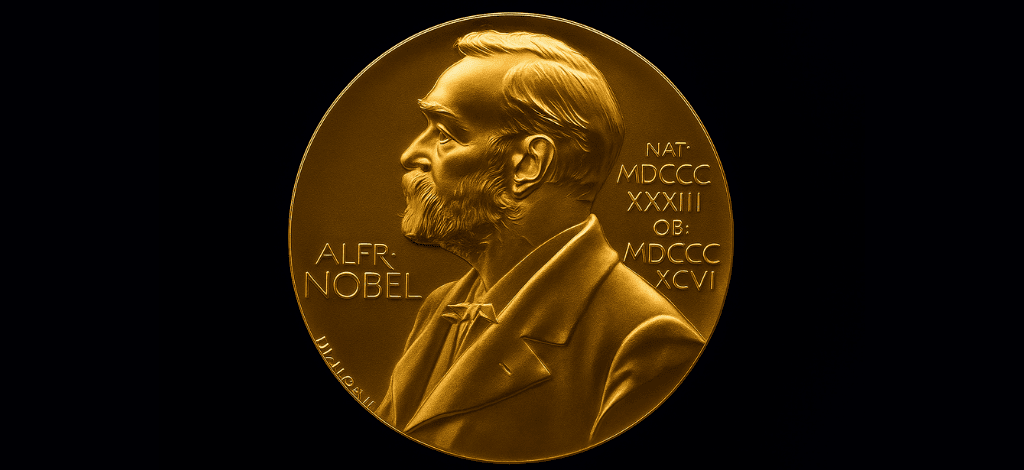
The Nobel Prize ceremony will take place on December 10 in Stockholm, commemorating the death anniversary of Alfred Nobel. The event will include a presentation by the King of Sweden and a grand banquet at Stockholm’s city hall. It’s a tradition that symbolizes the harmony between science, culture, and human achievement.
The Connection to Alfred Nobel’s Vision
Alfred Nobel’s will established the prizes to honor those who “conferred the greatest benefit to humankind.” Physics was the first category listed, highlighting its importance during Nobel’s era. Over a century later, that vision lives on — recognizing discoveries that redefine our understanding of nature and inspire new generations of scientists.
The Growing Relevance of Quantum Physics in Today’s World
Quantum physics is no longer confined to academic research; it’s shaping the future of technology and communication. From quantum internet to secure data transmission, the discoveries celebrated by the 2025 Nobel Prize are setting the stage for a new technological revolution.
Nobel Prize Traditions and Their Symbolism
Each Nobel Prize carries deep symbolism — not just in its medal and diploma but in its spirit of discovery. The prize ceremony connects generations of thinkers who dared to challenge accepted truths and push the boundaries of human knowledge.
Global Reaction to the 2025 Physics Nobel
The scientific world reacted with excitement and admiration. Researchers praised the laureates for bridging the gap between theory and application, while universities worldwide hailed this as a milestone in quantum innovation. Even on social media, hashtags like #NobelPrize2025 and #QuantumRevolution trended as scientists and enthusiasts shared their appreciation.
What’s Next for Quantum Science
The work of Clarke, Devoret, and Martinis is far from over. Their discoveries will continue to inspire future experiments, leading to new devices and deeper understanding. As we move toward the quantum era, their legacy will serve as a guiding light for physicists and engineers alike.
Conclusion
The 2025 Nobel Prize in Physics is more than just an award — it’s a celebration of human curiosity, collaboration, and the relentless pursuit of knowledge. By proving that quantum mechanics applies to the macroscopic world, these three scientists have blurred the line between the imaginable and the achievable, paving the way for breakthroughs that could reshape the world.
FAQs
1. What did the 2025 Nobel Prize winners discover?
They discovered that quantum tunnelling and energy quantisation can occur in macroscopic systems, not just at the atomic level.
2. Who are the 2025 Nobel Physics laureates?
John Clarke, Michel Devoret, and John Martinis — physicists known for their work in quantum mechanics and superconducting circuits.
3. How does quantum tunnelling work?
It allows particles to pass through barriers they shouldn’t be able to cross under classical physics — like a tennis ball passing through a wall.
4. Why is this discovery important?
It provides a foundation for modern quantum technologies, including quantum computing and quantum sensors.
5. When will the Nobel ceremony take place?
The ceremony will be held on December 10, 2025, in Stockholm, Sweden.
Join Realancer — where real talent meets real opportunity.
Built for freelancers who value fairness, freedom, and growth, Realancer empowers you to work smarter, earn better, and build your future on your own terms.
Join the waitlist now: https://app.realancer.net/
Read more blogs: Alitech Blog
Tags: Nobel Prize 2025, Nobel Prize in Physics, Nobel Prize Quantum Mechanics, Quantum Tunnelling, Quantum Physics, John Clarke, Michel Devoret, John Martinis, Royal Swedish Academy of Sciences, Nobel Prize Quantum Computing, Physics News, Quantum Technology, Nobel Laureates 2025, Scientific Discoveries,

Zeeshan Ali Shah is a professional blog writer at AliTech Solutions, and Realancer renowned for crafting engaging and informative content. He holds a degree from the University of Sindh, where he honed his expertise in technology. With a keen eye for detail and a passion for staying up-to-date on the latest tech trends, Zeeshan’s writing provides valuable insights to his readers. His expertise in the tech industry makes him a sought-after writer, and his work at AliTech Solutions has earned him a reputation as a trusted and knowledgeable voice in the field.