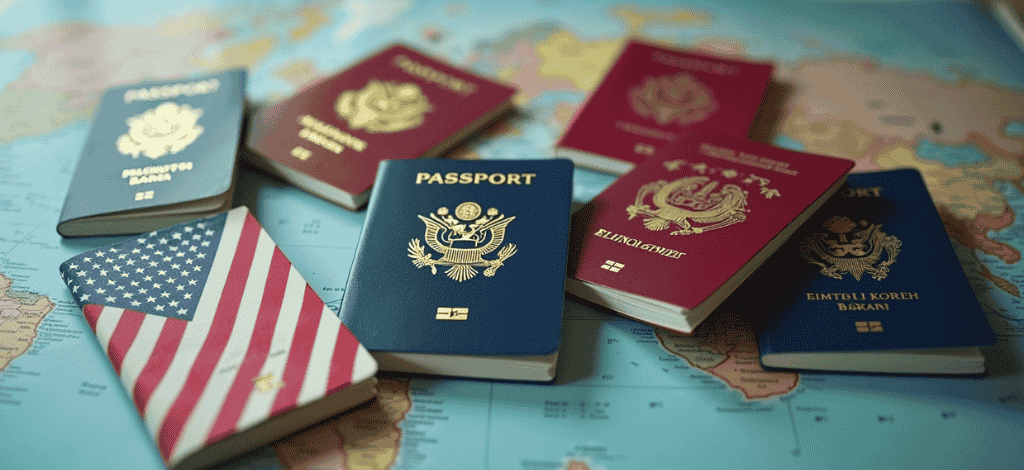
For the first time in 20 years, the United States has dropped out of the list of the world’s top 10 most powerful passports. This marks a major shift in global travel freedom and soft power. The latest Henley Passport Index ranks the U.S. at 12th place, sharing the position with Malaysia. It’s a surprising fall for a country once considered a symbol of open global mobility.
The Meaning of Passport Power
A passport’s power is measured by how many countries its holder can visit without applying for a visa in advance. This is more than a travel perk—it reflects a nation’s global relationships, openness, and influence. A powerful passport means easier movement, better opportunities, and stronger international partnerships.
Overview of the Henley Passport Index
The Henley Passport Index is one of the most respected global rankings. It is updated quarterly and uses data from the International Air Transport Association (IATA). The index ranks passports based on visa-free or visa-on-arrival access to 227 destinations worldwide. Countries that promote mutual openness tend to score higher.
The U.S. Slips to 12th Place
According to the latest Henley report, U.S. passport holders can now travel visa-free to 180 destinations. This puts the country in 12th place, a significant drop from the top position it shared with the UK back in 2014. Malaysia now holds the same rank as the U.S., signaling that America’s once-unquestioned travel advantage is fading.
Historical Strength of the U.S. Passport
In the early 2010s, the American passport was among the most powerful in the world. U.S. citizens enjoyed unmatched global access and prestige. But in recent years, changing visa policies and declining diplomatic reciprocity have weakened that influence.
Reasons Behind the Decline
The fall of the U.S. passport is linked to multiple factors, including reduced reciprocity, stricter U.S. immigration rules, and new global visa arrangements that favor other nations. As countries like China, Singapore, and South Korea open more doors, the U.S. is struggling to keep up.
Impact of Brazil’s Visa Policy
One major blow came from Brazil. In April 2025, Brazil reinstated visa requirements for Americans, Canadians, and Australians. The decision was based on a lack of reciprocity—since the U.S. still requires Brazilian citizens to obtain visas. This shift cost the U.S. valuable points on the global ranking.
The Rise of Asian Passports
Asia is now dominating the top spots. Singapore leads the world with access to 193 destinations, followed by South Korea with 190 and Japan with 189. These countries are benefiting from their diplomatic efforts to improve international relations and encourage travel freedom.
Singapore Leads the Global Rankings
Singapore’s success is remarkable. The country’s commitment to openness, trade, and travel cooperation has given its citizens unprecedented mobility. Travelers from Singapore can enter nearly every major economy without prior visa arrangements, a true symbol of soft power.
Other Countries on the Rise
Several European nations are also performing well. Germany, Italy, Luxembourg, and Spain share the fourth position with access to 188 destinations. The United Arab Emirates is another success story, having jumped 34 places in just ten years—now ranking eighth in the world.
The UK’s Decline Alongside the U.S.
The United Kingdom, which once stood at the top of the index alongside the U.S., has also slipped. It now ranks eighth, tied with the UAE and several European nations. This decline mirrors a broader shift in global travel influence from Western to Asian nations.
The Role of Reciprocity in Rankings
Reciprocity is at the heart of passport power. While Americans can visit 180 countries visa-free, the U.S. only allows 46 nationalities to enter without a visa. This imbalance lowers the country’s score on the Henley Openness Index, ranking it 77th—barely ahead of Iraq.
China’s Climb and Strategic Openness
China has risen from 94th place in 2015 to 64th in 2025, gaining visa-free access to 37 new destinations. The country has signed visa-exemption agreements with Russia, Gulf states, and European countries, showing its focus on expanding diplomatic ties and tourism.
The UAE’s Remarkable Progress
The United Arab Emirates has made one of the fastest climbs in passport power history. From 42nd place in 2015 to 8th in 2025, the UAE’s active global diplomacy and strong economic ties have boosted its citizens’ travel freedom worldwide.
Declining U.S. Soft Power and Global Mobility
Experts see the decline of the U.S. passport as a sign of reduced soft power. Nations that embrace cooperation and global mobility are advancing, while those prioritizing isolationist policies are losing influence. This change reflects how global travel freedom now mirrors diplomatic strength.
How Visa Policies Reflect Global Relations
Visa policies are often a direct reflection of international relationships. Countries granting mutual travel rights tend to have better diplomatic and trade ties. In contrast, nations with strict or one-sided visa requirements signal limited trust and cooperation.
The American “Isolationist Mindset”
Analysts believe the U.S.’s isolationist mindset is partly responsible for the decline. Policies from previous administrations, focusing on tighter borders and restricted immigration, have created barriers that are now visible in passport rankings. These decisions have long-term diplomatic consequences.
Effects on American Travelers
For most Americans, the fall in rankings might not drastically change their travel plans, but it could lead to more visa applications, longer waits, and higher travel costs. It’s a symbolic loss that also reflects shifting global attitudes toward U.S. travelers.
The Growing Trend of Dual Citizenship
As the U.S. passport weakens, more Americans are exploring second citizenships. Wealthy individuals and frequent travelers are turning to investment-based residency programs offered by countries in Europe and the Caribbean. For many, dual citizenship has become the new American dream.
What the Future Holds for U.S. Passport Holders
The U.S. still offers strong global access, but maintaining that position will require policy changes and better reciprocity agreements. By adopting more open travel policies and strengthening diplomatic relationships, the country could regain its position in the top 10 in the coming years.
Top 12 Most Powerful Passports in the World (Henley Passport Index 2025)
- Singapore – 193 visa-free destinations
- South Korea – 190 destinations
- Japan – 189 destinations
- Germany, Italy, Luxembourg, Spain, Switzerland – 188 destinations
- Austria, Belgium, Denmark, Finland, France, Ireland, Netherlands – 187 destinations
- Greece, Hungary, New Zealand, Norway, Portugal, Sweden – 186 destinations
- Australia, Czech Republic, Malta, Poland – 185 destinations
- Croatia, Estonia, Slovakia, Slovenia, United Arab Emirates, United Kingdom – 184 destinations
- Canada – 183 destinations
- Latvia, Liechtenstein – 182 destinations
- Iceland, Lithuania – 181 destinations
- United States, Malaysia – 180 destinations
Conclusion
The decline of the U.S. passport marks a significant turning point in global mobility. Once a symbol of unrivaled power, the American passport now reflects a world where openness and cooperation define travel freedom. As Asia’s influence grows and Western dominance fades, global citizens are entering a new era of mobility—one where policy, partnership, and diplomacy matter more than prestige.
FAQs
1. Why did the U.S. passport fall out of the top 10?
Because of reduced reciprocity, stricter visa rules, and the withdrawal of visa-free access by countries like Brazil, China, and Vietnam.
2. Which passport is the most powerful in 2025?
Singapore ranks first with visa-free access to 193 destinations.
3. How many countries can Americans visit without a visa?
U.S. citizens can visit 180 countries visa-free as of 2025.
4. What can the U.S. do to improve its ranking?
By adopting more reciprocal visa policies, building global partnerships, and promoting openness in travel and trade.
5. Does this change affect average American travelers?
Most travelers won’t notice drastic changes, but some destinations will now require visas or longer approval processes.
Join Realancer — the next-generation freelancing platform connecting top talent with global businesses.
Read more blogs: Alitech Blog

Zeeshan Ali Shah is a professional blog writer at AliTech Solutions, and Realancer renowned for crafting engaging and informative content. He holds a degree from the University of Sindh, where he honed his expertise in technology. With a keen eye for detail and a passion for staying up-to-date on the latest tech trends, Zeeshan’s writing provides valuable insights to his readers. His expertise in the tech industry makes him a sought-after writer, and his work at AliTech Solutions has earned him a reputation as a trusted and knowledgeable voice in the field.