


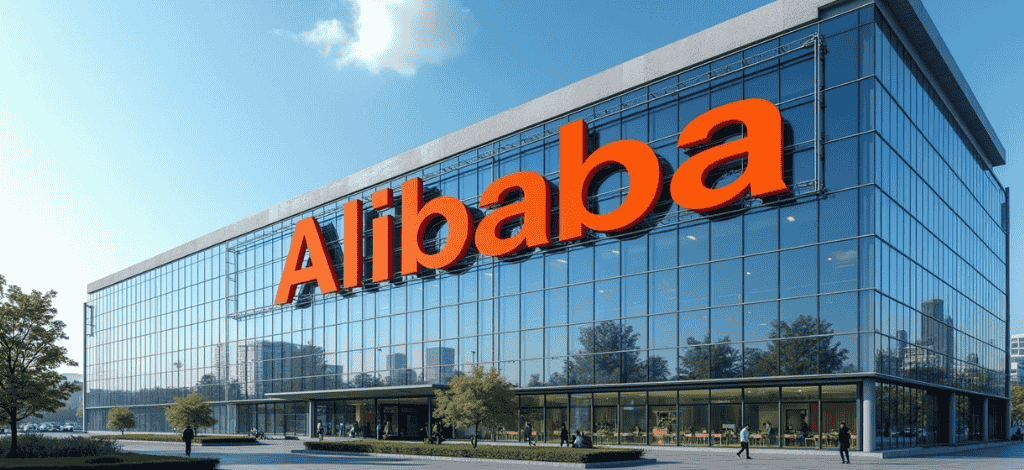
Alibaba is reportedly considering one of the largest AI hardware purchases in recent years, with plans to order between 40,000 and 50,000 AMD MI308 AI accelerators. This move highlights how serious Alibaba is about strengthening its AI and cloud infrastructure at a time when computing power is becoming the backbone of digital innovation.
Why AI Chips Matter in 2025
In 2025, AI chips are no longer just technical components, they are strategic assets. From large language models to enterprise automation, everything depends on fast, memory-rich accelerators. Companies that secure reliable access to these chips gain a clear advantage in speed, scalability, and cost efficiency.
Overview of AMD MI308 AI Accelerators
The AMD MI308 is a data-center-class AI accelerator designed for heavy inference workloads. While it is not AMD’s most powerful global chip, it is carefully engineered to meet US export requirements for China, making it one of the few advanced options legally available in the market.
MI308 Designed Specifically for China
The MI308 is tailored for the Chinese market, balancing performance with regulatory compliance. This makes it especially attractive to companies like Alibaba that need large-scale AI capacity without risking export violations or sudden supply disruptions.
Export Approval and Licensing Fee Explained
Although the MI308 has received US export approval, it comes with a cost. AMD reportedly pays a 15 percent licensing fee to US authorities for each chip. Even with this fee, the chip remains competitively priced, which helps explain Alibaba’s strong interest.
Memory as the Real Competitive Advantage
While pricing grabs headlines, memory capacity is where the MI308 truly stands out. In AI workloads, memory often matters more than raw compute, especially for inference tasks involving long documents or extended conversations.
192GB HBM3 and What It Enables
With 192GB of HBM3 memory, the MI308 offers double the memory of Nvidia’s H20. This allows developers to load larger models and datasets directly onto a single card, reducing complexity and improving efficiency.
Running 70B Parameter Models on a Single Card
One major benefit of this memory capacity is the ability to run 70-billion-parameter language models on a single GPU. This eliminates the need for model sharding across multiple cards, which simplifies deployment and reduces engineering overhead.
MI308 vs Nvidia H20 Comparison
The natural comparison for the MI308 is Nvidia’s H20, another export-limited chip for China. While both are constrained by regulations, their design choices create meaningful differences in real-world use.
Price Difference and Market Positioning
The MI308 is priced at around $12,000, roughly 15 percent cheaper than the H20. For orders in the tens of thousands, this difference adds up quickly and can translate into millions of dollars in savings.
Performance Trade-offs and Deployment Simplicity
Although Nvidia still leads in software maturity, the MI308’s larger memory allows for simpler deployments. For enterprises focused on inference rather than training, this simplicity can outweigh minor performance gaps.
Alibaba’s Motivation Behind the Order
Alibaba’s interest in the MI308 is not just about cost or availability. It reflects a broader strategy to future-proof its AI infrastructure in an uncertain geopolitical environment.
Scaling Cloud and AI Services
Alibaba Cloud is expanding rapidly, supporting enterprise AI, internal models, and customer-facing applications. All of these require massive inference capacity, which makes large GPU orders unavoidable.
Reducing Dependency on Nvidia
For years, Nvidia has dominated Alibaba’s AI stack. Export restrictions have forced a rethink, and AMD now represents a viable alternative that reduces reliance on a single supplier.
Impact of US Export Controls
US export controls continue to shape the global AI hardware market. While they limit peak performance, they also create space for specialized chips like the MI308 to thrive.
Policy Shifts Creating New Openings
Recent policy adjustments have allowed limited GPU sales to China, reopening doors that were previously closed. This narrow window is critical for companies racing to expand AI capacity.
Why MI308 Faces Less Scrutiny
Unlike some higher-end chips, the MI308 has not faced intense security scrutiny. This lowers regulatory risk for buyers and makes long-term planning easier.
Software Challenge: ROCm vs CUDA
Hardware is only half the story. Software ecosystems play a huge role in total cost and performance, and this is where AMD still faces challenges.
Migration Costs and Engineering Effort
Many AI workloads are built on Nvidia’s CUDA platform. Moving these workloads to AMD’s ROCm requires porting and optimization, which can reduce or even cancel out hardware savings.
Microsoft’s CUDA-to-ROCm Toolkits
Microsoft is developing CUDA-to-ROCm translation tools that could ease this transition. If these tools mature, they may significantly lower the barrier to adopting AMD GPUs at scale.
Opportunities for Infrastructure Vendors
A deal of this size creates ripple effects across the ecosystem, opening doors for vendors that specialize in hardware integration and software optimization.
System Integrators and Consulting Demand
System integrators can offer complete stacks that hide differences between AMD and Nvidia hardware. Consulting firms can also profit by helping Alibaba and others migrate workloads efficiently.
Hybrid GPU Orchestration Trends
Many enterprises may choose hybrid environments using both AMD and Nvidia GPUs. This approach hedges against future export limits while maintaining flexibility.
Broader Impact on China’s AI Ecosystem
If Alibaba successfully deploys tens of thousands of MI308 chips, it could change how AI infrastructure is built across China.
Alibaba as a Blueprint for Smaller Players
Alibaba’s experience with ROCm and large-scale AMD deployments could serve as a model for smaller cloud providers and AI labs, accelerating broader adoption.
What This Deal Means for AMD
For AMD, this potential order represents far more than revenue. It is a strategic foothold in a market long dominated by Nvidia.
Breaking Nvidia’s Dominance in China
Even limited success in China gives AMD credibility and leverage. It shows that alternatives are viable, even under strict export controls.
Conclusion
Alibaba’s reported plan to order over 40,000 AMD MI308 AI chips signals a major shift in the global AI hardware landscape. Memory capacity, regulatory compliance, and strategic diversification are driving decisions as much as raw performance. If the deal moves forward, it will not only strengthen Alibaba’s AI capabilities but also reshape opportunities for AMD, infrastructure vendors, and China’s broader AI ecosystem.
FAQs
What is the AMD MI308 AI chip used for
The MI308 is designed for large-scale AI inference workloads, especially long-context language models and enterprise AI applications.
Why is Alibaba interested in AMD instead of Nvidia
Export restrictions and supply risks have pushed Alibaba to diversify beyond Nvidia, making AMD a practical alternative.
How much memory does the MI308 have
The MI308 features 192GB of HBM3 memory, which is a key advantage over competing chips.
Is the MI308 cheaper than Nvidia H20
Yes, it is priced around 15 percent lower, at approximately $12,000 per chip.
What is the main challenge with adopting MI308
The biggest challenge is software migration from Nvidia’s CUDA platform to AMD’s ROCm ecosystem.
AliTech Solutions delivers secure, scalable Cloud Services for AI, enterprise, and high-performance workloads — contact 📩 [email protected]
Read more blogs: Alitech Blog

Zeeshan Ali Shah is a professional blog writer at AliTech Solutions, and Realancer renowned for crafting engaging and informative content. He holds a degree from the University of Sindh, where he honed his expertise in technology. With a keen eye for detail and a passion for staying up-to-date on the latest tech trends, Zeeshan’s writing provides valuable insights to his readers. His expertise in the tech industry makes him a sought-after writer, and his work at AliTech Solutions has earned him a reputation as a trusted and knowledgeable voice in the field.


Leave a Reply