


The AI Revolution Is Reshaping the Tech Workforce
Artificial intelligence is rapidly transforming how companies operate, and the impact is now clearly visible in the global technology workforce. Over the past year, several major tech companies have begun restructuring their teams as AI tools become more capable of handling tasks that were previously done by humans. Automation in areas such as customer support, software development assistance, data analysis, and administrative work has increased efficiency for many organizations. However, this shift has also triggered a wave of layoffs across the tech industry. Companies argue that AI systems can perform repetitive and routine work faster, cheaper, and often with fewer errors. As a result, businesses are rethinking how large their workforces need to be. While the technology itself promises enormous productivity gains, it also raises serious questions about job security, workforce planning, and the long-term future of employment in a world increasingly powered by intelligent machines.
Tech Companies Are Cutting Jobs as AI Becomes More Powerful
In recent months, several technology firms have announced layoffs while citing artificial intelligence as one of the main drivers behind the restructuring. Software company Atlassian recently revealed plans to reduce its workforce by around ten percent as part of a broader shift toward AI-driven enterprise tools. The company explained that AI is changing the types of skills required within modern organizations, which means some roles are becoming less relevant while others are growing more important. At the same time, companies are under pressure to invest heavily in AI infrastructure, including data centers, specialized hardware, and engineering talent. These investments are expensive, and many businesses are balancing their budgets by reducing staff in other areas. For many employees across the tech industry, this transition has created uncertainty about job stability as companies move quickly to integrate new technologies into their daily operations.
Block’s Massive Layoffs Highlight the AI Shift
One of the most dramatic examples of AI-related restructuring came from fintech company Block, co-founded by Jack Dorsey. The company reportedly cut around forty percent of its workforce, eliminating roughly four thousand positions in a major organizational overhaul. Block’s leadership openly stated that artificial intelligence tools were enabling the company to automate many internal processes that previously required large teams. By relying more heavily on AI-powered systems, the company believes it can operate more efficiently while reducing operational costs. The announcement sent shockwaves through the tech sector because of the scale of the layoffs and the direct connection to AI adoption. At the same time, the company’s stock price reportedly surged after the announcement, reflecting investor confidence that automation could significantly improve profitability. The situation illustrates the growing tension between technological progress and workforce stability as businesses race to remain competitive in an AI-driven economy.
Meta May Be Preparing for One of Its Largest Layoffs
Another tech giant reportedly considering major workforce reductions is Meta, the company behind Facebook, Instagram, and WhatsApp. According to multiple reports, Meta could potentially cut up to twenty percent of its workforce as it increases spending on artificial intelligence infrastructure. With nearly seventy-nine thousand employees at the end of 2025, such a move could affect thousands of workers. The possible layoffs are believed to be linked to Meta’s aggressive push into AI development, which requires enormous financial investment in computing power and research talent. Over the past few years, Meta has already gone through multiple rounds of layoffs as it shifted priorities away from some metaverse initiatives and toward AI technologies. While company representatives have described these reports as speculative, analysts believe that the growing cost of AI infrastructure may force many tech companies to restructure their teams as they redirect resources toward the next generation of digital innovation.
Elon Musk Says Tesla Will Move in the Opposite Direction
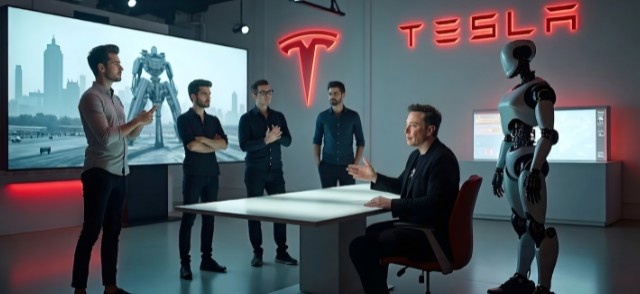
While many technology companies are cutting jobs, Tesla CEO Elon Musk has publicly stated that his company is planning a different approach. Speaking at the Abundance Summit, Musk explained that Tesla does not intend to reduce its workforce despite the rapid growth of artificial intelligence and robotics. Instead, he said the company expects to increase its number of employees over time. Musk emphasized that AI and automation will significantly improve productivity, allowing each worker at Tesla to produce far more output than before. According to him, the combination of advanced software systems, automated factories, and robotics will dramatically increase efficiency across the company. Rather than replacing humans entirely, Tesla plans to combine human expertise with machine capabilities to achieve better results. Musk described the future productivity of Tesla employees as becoming “extremely high,” highlighting the company’s belief that AI can amplify human work instead of simply replacing it.
Tesla’s Optimus Robot Could Transform Manufacturing
A major part of Tesla’s long-term strategy involves the development of its humanoid robot known as Optimus. The robot is designed to perform repetitive physical tasks in factories and other industrial environments, potentially helping companies address labor shortages and improve efficiency. Optimus represents Tesla’s vision of a future where robots handle dangerous, repetitive, or physically demanding tasks while humans focus on higher-level problem solving and innovation. In manufacturing environments, robots could assist with assembling parts, moving materials, and handling logistics within factories. Musk has repeatedly said that robotics will play a critical role in the next phase of industrial productivity. If Tesla successfully scales this technology, it could reshape how manufacturing plants operate around the world. Instead of replacing workers completely, robots may work alongside them, helping companies increase output while maintaining human oversight and decision-making.
Experts Warn Some Companies Are Blaming AI for Other Problems
Despite the growing narrative around AI-driven layoffs, some experts believe that not every job cut is truly caused by artificial intelligence. OpenAI CEO Sam Altman has suggested that some companies may be engaging in what he calls AI washing. This refers to situations where organizations blame layoffs on AI even though the real reasons may include economic pressures, over-hiring during the pandemic, or broader restructuring strategies. During the pandemic years, many technology companies expanded their workforces rapidly to meet surging demand for digital services. As growth slowed, those same companies found themselves with larger teams than necessary. In such cases, layoffs may have been inevitable regardless of AI adoption. By linking job cuts to AI, companies may be framing the decision as a technological necessity rather than a correction of earlier hiring decisions. This perspective has added another layer to the debate about how much AI is actually responsible for current layoffs.
The Future of Work May Look Very Different
Even though some layoffs may be attributed to other factors, there is little doubt that artificial intelligence will eventually transform the job market. As machines become more capable, many routine tasks will likely be automated across industries ranging from manufacturing and logistics to finance and healthcare. However, history suggests that technological revolutions rarely eliminate work entirely. Instead, they tend to change the kinds of jobs that exist. New roles often emerge as technology creates new industries and opportunities. For example, the rise of computers led to the creation of entirely new professions such as software engineering, cybersecurity, and digital marketing. A similar pattern may occur with artificial intelligence, where workers who understand how to build, manage, and collaborate with AI systems become increasingly valuable in the workforce.
Musk’s Long-Term Vision Includes Universal Basic Income
Elon Musk has frequently discussed a future where robots and artificial intelligence produce goods and services so efficiently that traditional employment may no longer be necessary for everyone. In such a world, Musk believes governments may need to introduce universal basic income, a system where citizens receive financial support regardless of employment status. His argument is that if machines generate enormous economic productivity, society could afford to distribute resources more widely. Musk has suggested that the production of goods could become so abundant that prices might fall dramatically, potentially creating a world where basic needs are easily met. While this idea remains highly debated among economists and policymakers, it highlights how dramatically artificial intelligence could reshape society if automation continues to advance at its current pace.
The AI Workforce Transformation Is Only Beginning
The contrasting strategies of companies like Meta and Tesla reveal that the impact of artificial intelligence on employment is still unfolding. Some organizations are reducing staff to redirect investments toward AI technologies, while others are exploring ways to combine human workers with advanced automation systems. The next decade will likely determine which approach proves most effective. Businesses that successfully integrate AI while maintaining skilled human teams may gain a significant competitive advantage. At the same time, workers who learn how to collaborate with intelligent systems will likely find new opportunities in the evolving digital economy. Rather than simply replacing jobs, artificial intelligence may ultimately reshape how work is performed across nearly every industry.
FAQs
Why are tech companies laying off employees due to AI
Many companies believe artificial intelligence can automate repetitive tasks, improve efficiency, and reduce operational costs. As businesses integrate AI tools, they may require fewer workers for certain roles, which can lead to layoffs.
Is Tesla really planning to hire more workers
Yes, Tesla CEO Elon Musk has stated that the company expects to increase its workforce even as it expands automation and robotics technologies to boost productivity.
What is Tesla’s Optimus robot
Optimus is Tesla’s humanoid robot designed to perform repetitive and physically demanding tasks, particularly in manufacturing and industrial environments.
What does AI washing mean
AI washing refers to situations where companies blame layoffs on artificial intelligence even though the real reasons may include economic conditions, restructuring, or previous over-hiring.
Will AI eventually replace most jobs
Experts believe AI will change many jobs rather than completely eliminate them. New roles related to AI development, management, and collaboration are expected to emerge as the technology continues to evolve.
✨ Build your freelancing career with Realancer.
Join the waitlist now 👉 https://realancer.net/registration
Read more blogs: Alitech Blog

Zeeshan Ali Shah is a professional blog writer at AliTech Solutions, and Realancer renowned for crafting engaging and informative content. He holds a degree from the University of Sindh, where he honed his expertise in technology. With a keen eye for detail and a passion for staying up-to-date on the latest tech trends, Zeeshan’s writing provides valuable insights to his readers. His expertise in the tech industry makes him a sought-after writer, and his work at AliTech Solutions has earned him a reputation as a trusted and knowledgeable voice in the field.


Leave a Reply