


Introduction
OpenAI has taken a bold step into the search market with the introduction of SearchGPT, an AI-powered search engine designed to provide real-time access to information across the internet. This move is significant, as it positions OpenAI as a direct competitor to search giants like Google and emerging services like Perplexity. SearchGPT promises to revolutionize the way users interact with search engines by offering more organized and insightful responses.
What is SearchGPT?
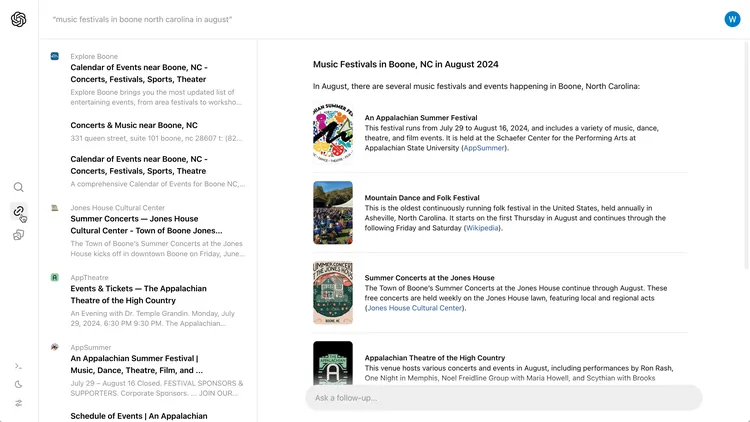
SearchGPT is a cutting-edge search engine powered by OpenAI’s advanced GPT-4 family of models. Unlike traditional search engines that return a list of links, SearchGPT aims to understand and organize search results. For example, when users search for “music festivals in Boone, North Carolina,” SearchGPT not only lists the events but also provides a summary and detailed descriptions, making the information more accessible and engaging.
Features
Real-time Information Access
SearchGPT pulls information from the web in real-time, ensuring that users get the most current data available. This feature is crucial for searches that depend on timely information, such as news updates or event schedules.
Summary of Findings
One of the standout features of SearchGPT is its ability to summarize search results. Instead of overwhelming users with a long list of links, it presents a concise overview of the findings, followed by links for further reading.
Follow-up Questions and Sidebar Links
After delivering initial results, SearchGPT allows users to ask follow-up questions or explore additional relevant links via a sidebar. This interactive approach enhances the user experience by making it easier to dive deeper into topics of interest.
Visual Answers
SearchGPT introduces a “visual answers” feature, which incorporates multimedia elements like images and videos into the search results. This feature is designed to provide a richer understanding of the search topic.
The Prototype Stage
Currently, SearchGPT is in its prototype phase, with access limited to 10,000 test users. OpenAI is working closely with third-party partners and using direct content feeds to build its search results. This phased rollout allows for testing and feedback before a broader release.
Comparison with Google and Perplexity
Google’s Current AI Features
Google has been integrating AI features into its search engine, including AI Overviews that summarize search results. However, these features have faced criticism for inaccuracies and lack of user control.
Perplexity’s AI “Answer” Engine
Perplexity, another competitor, offers an AI-driven “answer” engine but has been criticized for allegedly ripping off publisher content. SearchGPT aims to differentiate itself by emphasizing collaboration with news partners and providing clear attributions.
Unique Selling Points of SearchGPT
In-line Attribution and Linking
SearchGPT ensures that responses include clear, in-line attributions and links, allowing users to see the sources of information. This transparency builds trust and encourages engagement with original content.
Visual and Multimedia Integration
The inclusion of visual answers and multimedia content sets SearchGPT apart, providing users with a more immersive and informative search experience.
Potential Impact on Google
SearchGPT’s launch poses a significant challenge to Google’s dominance in the search market. As users seek more intuitive and organized search experiences, Google may need to innovate further to maintain its market share.
Collaboration with News Partners
OpenAI has developed SearchGPT in collaboration with various news organizations, including The Wall Street Journal, The Associated Press, and Vox Media. These partnerships ensure that SearchGPT respects publisher content and provides accurate attributions.
Monetization Challenges
Currently, SearchGPT is free to use, which raises questions about its long-term monetization strategy. OpenAI will need to explore revenue models, such as advertising or subscription services, to sustain the platform.
Real-time Web Integration
SearchGPT represents an evolution from earlier ChatGPT models that offered limited web browsing capabilities. By integrating real-time web access, SearchGPT significantly enhances the accuracy and relevance of its responses.
User Experience Enhancements
SearchGPT’s user interface is designed to be natural and intuitive, encouraging users to interact with it like they would in a conversation. This approach, combined with the ability to ask follow-up questions, makes the search experience more engaging.
Technical and Cost Implications
Developing and maintaining SearchGPT involves substantial infrastructure and training costs. OpenAI’s financial burden is considerable, especially as it aims to provide free access during the prototype phase.
Future Developments and Integrations
OpenAI plans to eventually integrate SearchGPT’s features into ChatGPT, creating a unified platform for AI-driven search and conversational interactions. This long-term vision aligns with OpenAI’s goal of leading in multimodal AI applications.
The Competitive Landscape
As OpenAI enters the search market, it faces competition from both established players like Google and newer entrants like Perplexity. The industry will likely see rapid innovations as companies strive to offer the best AI-powered search experiences.
Conclusion
OpenAI’s announcement of SearchGPT marks a significant milestone in the evolution of search technology. By combining real-time information access, summarized findings, and interactive features, SearchGPT offers a compelling alternative to traditional search engines. As it continues to develop and integrate with ChatGPT, SearchGPT has the potential to redefine how we search and interact with information online.
FAQs
What makes SearchGPT different from traditional search engines?
SearchGPT provides real-time, summarized search results with clear attributions and links, along with interactive features like follow-up questions and visual answers.
How does SearchGPT handle content attribution?
SearchGPT includes in-line attributions and links to sources, ensuring transparency and encouraging engagement with original content.
Will SearchGPT remain free?
SearchGPT is free during its prototype phase. OpenAI will need to explore monetization strategies for long-term sustainability.
How does SearchGPT ensure accurate information?
SearchGPT collaborates with news partners and uses real-time web access to provide accurate and up-to-date information.
What are the long-term plans for SearchGPT?
OpenAI aims to integrate SearchGPT’s features into ChatGPT, creating a unified platform for AI-driven search and conversational interactions.
Read more: Openai.com

Zeeshan Ali Shah is a professional blog writer at AliTech Solutions, and Realancer renowned for crafting engaging and informative content. He holds a degree from the University of Sindh, where he honed his expertise in technology. With a keen eye for detail and a passion for staying up-to-date on the latest tech trends, Zeeshan’s writing provides valuable insights to his readers. His expertise in the tech industry makes him a sought-after writer, and his work at AliTech Solutions has earned him a reputation as a trusted and knowledgeable voice in the field.