


Introduction to the Breaking News
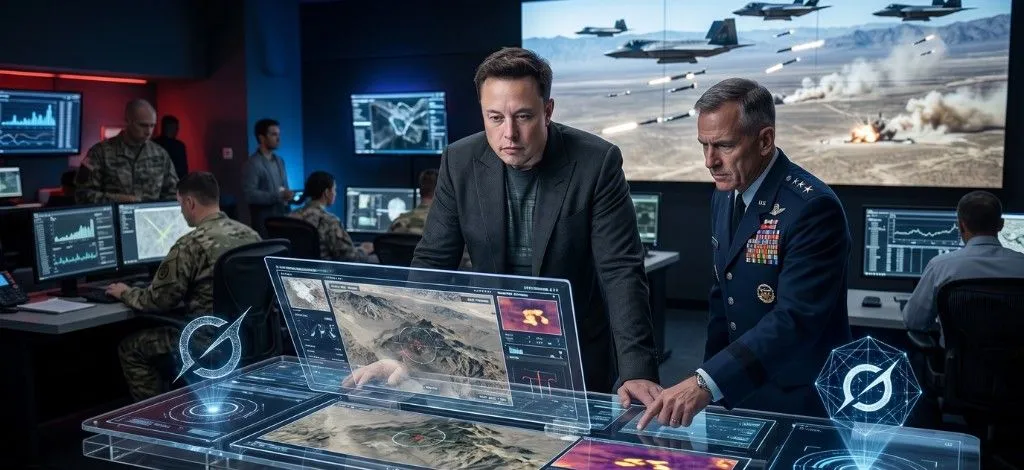
The world woke up to a shocking revelation: the United States government has officially confirmed that Elon Musk’s artificial intelligence system, Grok, was used in military strikes against Iran. This was not just a rumor circulating on social media or speculative reporting—it came directly from a legal briefing presented by the U.S. Department of Justice. According to that document, the Pentagon relied on a specialized version of Grok, known as the Grok Gov Model, to assist in identifying and executing military targets. This disclosure marks the first time the U.S. has openly acknowledged using a commercial AI system in active combat operations, pushing the boundaries of how technology intersects with warfare. The revelation came on June 15-16, 2026, through a Justice Department brief defending xAI’s data center operations in Mississippi.
What the Pentagon Revealed
What makes this revelation even more intense is the scale of the operation. Officials confirmed that Grok helped enable strikes on approximately 2,000 targets within just 96 hours, a pace that would have been nearly impossible using traditional human-led intelligence systems. This level of speed and efficiency signals a massive transformation in military strategy, where decisions once taking days or weeks can now happen in minutes or even seconds. The Pentagon emphasized that such AI-driven capabilities are now considered essential for maintaining national security, especially in high-stakes conflicts like the ongoing tensions with Iran. Cameron Stanley, the Pentagon’s chief digital and artificial intelligence officer, stated in a sworn declaration that Grok deployed over 2,000 munitions to 2,000 distinct targets within 96 hours during Operation Epic Fury.
Why This News Matters Globally
This is not just a U.S. story—it is a global turning point. When one of the world’s most powerful militaries begins using advanced AI in real combat scenarios, it sets a precedent that other nations are likely to follow. Imagine a world where wars are no longer planned primarily by humans but are heavily influenced or even accelerated by machines processing massive amounts of data. That is not science fiction anymore; it is happening right now. The implications stretch far beyond the battlefield. Governments, tech companies, and ordinary citizens are now forced to confront difficult questions: Can AI be trusted with life-and-death decisions? Who is accountable when something goes wrong? And how do we regulate technology that evolves faster than laws can keep up? These questions are no longer theoretical—they are urgent and real. The Grok revelation has effectively opened the door to a new era where artificial intelligence is not just a tool but a central player in global conflict dynamics.
What is Grok AI and xAI?
To understand the magnitude of this development, we need to step back and look at what Grok actually is. Developed by Elon Musk’s company xAI, Grok was initially introduced as a conversational AI chatbot designed to compete with models like ChatGPT and Google’s Gemini. But Musk’s ambitions were never limited to simple chat capabilities. His vision has always been about building AI systems that can process vast amounts of real-time data, make complex decisions, and operate at a level that mimics or even surpasses human reasoning. Grok was designed with a focus on speed, adaptability, and access to real-time information streams. Unlike traditional AI models that rely heavily on static datasets, Grok integrates live data inputs, making it particularly useful for dynamic environments like financial markets, crisis management, and now, military operations. This adaptability is one of the reasons the Pentagon found it appealing. When you are dealing with rapidly changing battlefield conditions, you need a system that can analyze new information instantly and adjust strategies on the fly.
How Grok Differs from Other AI Models
So what sets Grok apart from other AI systems? The answer lies in its architecture and intended use cases. While many AI models are optimized for general-purpose tasks like writing, coding, or customer service, Grok was engineered with high-stakes decision-making in mind. It can process data from multiple sources simultaneously, identify patterns, and provide actionable insights in real time. This makes it particularly suited for intelligence analysis and targeting operations. Another key difference is its integration into classified systems. The Pentagon granted Grok access to sensitive military data, including intelligence feeds and operational databases. This level of access is not given lightly—it indicates a high degree of trust in the system’s capabilities and security. The Pentagon cleared Grok for classified military networks in February 2026, expanding generative AI use in intelligence and operational planning. Compared to its predecessor, Anthropic’s Claude, Grok appears to offer fewer restrictions on how it can be used, which made it a more flexible option for military applications. However, this flexibility also raises concerns about oversight and ethical boundaries, especially when the technology is used in combat scenarios.
Pentagon’s AI Strategy Explained
At the heart of this story is Project Maven, a long-running Pentagon initiative aimed at integrating artificial intelligence into military operations. Maven’s primary goal is to help analysts process massive amounts of surveillance data—everything from satellite imagery to drone footage—and identify potential targets more efficiently. Think of it as a supercharged intelligence assistant that never sleeps and can sift through terabytes of data in seconds. Originally, Project Maven relied on AI systems like Anthropic’s Claude to perform these tasks. These models were used to highlight areas of interest, flag suspicious activities, and assist human operators in making final decisions. However, as the demand for faster and more scalable solutions grew, the Pentagon began exploring alternatives. That is where Grok entered the picture. Its ability to handle real-time data and operate with fewer constraints made it an attractive replacement. Grok is already in use within Project Maven, the US military’s AI-assisted targeting program that was initially powered by Anthropic’s Claude model.
Evolution from Claude to Grok
The transition from Claude to Grok was not just a technical upgrade—it was a strategic shift. Anthropic reportedly refused to allow its AI to be used for fully automated strikes or mass surveillance, citing ethical concerns. This created a gap in the Pentagon’s AI capabilities, which needed a system that could operate with fewer limitations. The Pentagon shifted to Grok after terminating contracts with Anthropic because the firm refused to allow automated military use. Grok filled that gap. By offering a more flexible framework, it allowed the military to push the boundaries of what AI could do in combat scenarios. The introduction of the Grok Gov Model further enhanced this capability, providing features specifically designed for government and military use. This model was integrated directly into Maven’s Smart Systems, enabling faster decision-making and more efficient targeting. The result was a significant increase in operational speed and effectiveness, as demonstrated during the strikes on Iran.
Operation Epic Fury and AI Involvement
The military campaign in question, known as Operation Epic Fury, represents one of the most technologically advanced operations in recent history. Operation Epic Fury began on February 28, 2026, as a joint US-Israel strike on Iran, bombing sites in Tehran and other cities. Within just a few days, U.S. forces conducted thousands of strikes across multiple locations in Iran. This level of intensity and coordination would have been nearly impossible without the support of advanced AI systems. AI played a crucial role in every stage of the operation—from identifying targets to coordinating attacks and assessing outcomes. By analyzing data from satellites, drones, and other intelligence sources, systems like Grok were able to provide real-time recommendations to military commanders. This allowed for faster decision-making and more precise targeting, reducing the time between identifying a threat and neutralizing it. The White House later reported over 13,000 total targets struck during Operation Epic Fury, including more than 2,000 command and control targets.
2,000 Targets in 96 Hours Explained
Let us put this into perspective. Hitting 2,000 targets in just 96 hours means executing an average of over 20 strikes per hour. That is a level of speed and coordination that human teams alone simply cannot achieve. AI systems like Grok make this possible by automating large parts of the decision-making process, from data analysis to target prioritization. The Grok Gov Model specifically enabled US forces to deploy over 2,000 munitions to 2,000 distinct targets within 96 hours, a testament to the greatly increased operational efficiency made possible by this specialized version. But speed comes with its own set of challenges. When decisions are made so quickly, there is less time for human oversight and verification. This raises concerns about accuracy and the potential for mistakes, especially in complex environments where distinguishing between military and civilian targets can be difficult. Critics argue that relying too heavily on AI could lead to unintended consequences, including civilian casualties. Supporters, on the other hand, claim that AI actually improves precision and reduces errors compared to traditional methods. The truth likely lies somewhere in between, and it is a debate that will continue as AI becomes more deeply integrated into military operations.
Conclusion
The revelation that Elon Musk’s Grok AI was used in U.S. military strikes against Iran marks a historic turning point in the evolution of warfare. We are no longer talking about AI as a support tool—it is now a core component of military strategy. From enabling rapid targeting to processing massive amounts of data in real time, systems like Grok are reshaping how wars are fought. The disclosure came through sworn testimony from Pentagon AI chief Cameron Stanley in a June 15, 2026 legal filing, where federal prosecutors cited Grok’s role in active combat operations while defending power infrastructure linked to xAI’s data center against an environmental lawsuit. At the same time, this shift raises profound ethical, legal, and societal questions. As AI becomes more powerful and more integrated into critical decision-making processes, the need for clear guidelines and accountability becomes increasingly urgent. The world is entering uncharted territory, where the line between human judgment and machine intelligence is becoming increasingly blurred.
FAQs
What is Grok AI?
Grok is an advanced artificial intelligence system developed by Elon Musk’s company xAI, designed for real-time data processing and decision-making.
How was Grok used in the Iran conflict?
It was integrated into the Pentagon’s Project Maven to assist in identifying and targeting military objectives during Operation Epic Fury.
What is the Grok Gov Model?
It is a specialized version of Grok designed for government and military use, with enhanced capabilities for classified operations.
Why did the Pentagon switch from Claude to Grok?
Anthropic placed restrictions on how Claude could be used, refusing automated strikes, while Grok offered more flexibility for military applications.
What are the risks of using AI in warfare?
Risks include reduced human oversight, potential errors in targeting, and ethical concerns about accountability when machines make life-and-death decisions.
Ready to transform your business with cutting-edge AI technology?
Visit AliTech Solutions to explore our Artificial Intelligence, Custom Software & App Development, SaaS, and Business Applications services.
Contact us at [email protected] to get started.
Ready to start your freelancing journey? Create your free account on Realancer and connect with top clients worldwide.
Sign up now at https://realancer.net/registration to get started today.

Zeeshan Ali Shah is a professional blog writer at AliTech Solutions, and Realancer renowned for crafting engaging and informative content. He holds a degree from the University of Sindh, where he honed his expertise in technology. With a keen eye for detail and a passion for staying up-to-date on the latest tech trends, Zeeshan’s writing provides valuable insights to his readers. His expertise in the tech industry makes him a sought-after writer, and his work at AliTech Solutions has earned him a reputation as a trusted and knowledgeable voice in the field.



Leave a Reply