


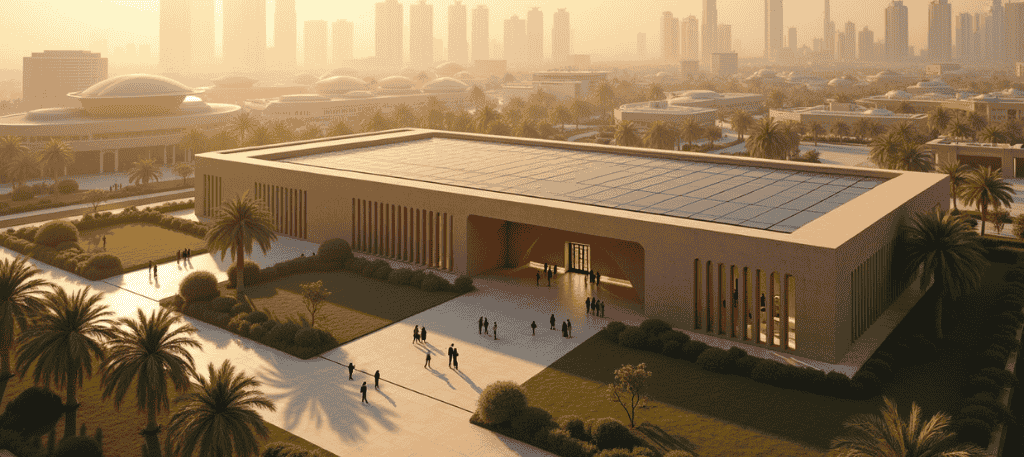
Abu Dhabi has always been known for its ambitious projects, but now the city is setting a new global milestone. In Masdar City, a hub of sustainable development, the world’s first net-zero energy mosque is being built. This mosque will not only serve as a place of worship but also as a symbol of how tradition and modern sustainability can blend perfectly. The mosque will generate all its energy on-site, use mud walls inspired by ancient building techniques, and employ smart technology to reduce energy and water consumption.
What does net-zero energy mean for a mosque?
Net-zero energy means that the building will produce as much energy as it consumes. This is a huge achievement, especially in the Gulf region where extreme heat and high energy use are common. The mosque in Masdar City will achieve this through solar panels, passive cooling designs, and circular systems that reduce waste.
Why Abu Dhabi chose Masdar City
Masdar City is already a pioneer in green and sustainable urban planning. Building the first net-zero mosque here makes sense because the city has been developed as a living lab for eco-friendly technologies. This new mosque will become a model not only for the UAE but for the whole world.
Blending old traditions with modern design
The architects drew inspiration from Al Bidyah Mosque, the UAE’s oldest surviving mosque from the 15th century. Using rammed-earth construction, which means building with compacted mud, they created thick walls that naturally keep the interior cooler. This design reduces the need for air conditioning, saving a large amount of energy.
The unique challenge of the qibla wall
Every mosque must face Mecca, which limits how the building can be oriented. Normally, architects try to position a building to minimize solar heat. Since this was not possible, the design team added extra solutions like angled windows, canopies, skylights, and double-layered insulation. This kept the mosque energy-efficient while still respecting religious requirements.
A closer look at the qibla wall
The qibla wall is not just functional but also a key part of the mosque’s sustainability plan. Built with soil from a local quarry, it is 60 meters wide and seven meters tall. Its natural thickness helps block heat, and its earthy tones allow the mosque to blend into the desert landscape. This method of construction has never been attempted on such a large scale in the UAE before.
Smart technology inside the mosque
The mosque will have sensors that monitor occupancy, temperature, and humidity. Fans and air conditioning will only turn on when needed, saving energy. These smart systems mean that worshippers will still enjoy comfort while the mosque avoids unnecessary energy use.
Reducing water consumption
Water is another critical resource in the UAE. The mosque’s design will cut water usage by more than half compared to regular mosques. This will be achieved with efficient fixtures, recycling systems, and designs that minimize waste.
Capacity and design for the community
The mosque is designed to host up to 1,300 worshippers. With a circular footprint and 1,595 square meters of space, it has a modern yet minimalist style. The design balances spirituality with functionality, giving worshippers a serene space that also stands as a global example of eco-conscious architecture.
Innovations in construction materials
Besides mud walls, the mosque will also use hydrogen-based steel rebar. This is the first time in the Middle East and North Africa region that such low-carbon steel is being used in construction. It could reduce structural emissions by up to 95%. Other materials include low-emission concrete and sustainable prayer carpets.
A new language of mosque design
Mosque architecture in the UAE has been shifting over the past decade. Traditional features like domes, minarets, and the mihrab remain, but the rest of the design has become more flexible. The focus is now on blending Islamic tradition with modern sustainability.
The Estidama Mosque – a step before net-zero
This new net-zero mosque is not the first green mosque in Masdar City. The Estidama Mosque, which opened in 2023, already showed what sustainable mosque design can achieve. It uses solar panels, greywater recycling, and a sunken courtyard to save energy. It was awarded LEED Platinum certification, the highest international green building standard.
Inspiration from Islamic principles
The architects wanted this mosque to stay true to Islamic values while reflecting today’s society. They included natural light, open spaces, and sustainable materials that honor both the environment and faith. This connection between spirituality and sustainability makes the mosque more than just a building—it becomes a statement of responsibility toward the planet.
A blueprint for future mosques
Amna Al Zaabi, one of the project leaders, has said that this mosque can be a model for future community structures, not just in Abu Dhabi but worldwide. The lessons learned here can be applied to schools, community centers, and even residential buildings.
A broader shift in sacred spaces
Beyond mosques, Abu Dhabi is also rethinking how sacred spaces in general are designed. The Abrahamic Family House, which includes a mosque, church, and synagogue, opened in 2023 with minimalist and geometric designs. These projects show a clear movement towards sustainable, inclusive, and modern places of worship.
Balancing faith and sustainability
Building a mosque in one of the hottest regions in the world and still achieving net-zero energy is no small task. But Abu Dhabi has shown that faith and sustainability can go hand in hand. This project proves that modern technology and ancient wisdom can combine to create a path for the future.
Conclusion
The world’s first net-zero energy mosque in Abu Dhabi is more than just a religious building—it’s a global landmark in sustainable design. By merging mud walls with solar panels, tradition with technology, and spirituality with environmental responsibility, the mosque shows what’s possible when innovation respects culture. It is a blueprint for future generations and a shining example of how we can build responsibly without losing our identity.
FAQs
Q1: What makes the mosque net-zero?
It produces all its energy on-site using solar panels and reduces waste through passive cooling and smart technology.
Q2: How many people can the mosque hold?
The mosque can accommodate up to 1,300 worshippers.
Q3: Why was mud used in construction?
Mud walls naturally regulate temperature, keeping the mosque cooler without heavy reliance on air conditioning.
Q4: Where is the mosque located?
It is in Masdar City, about 30 kilometers from downtown Abu Dhabi.
Q5: Can this model be applied to other buildings?
Yes, the techniques used here can inspire future mosques, schools, and community spaces around the world.
Read more blogs: Alitech Blog

Zeeshan Ali Shah is a professional blog writer at AliTech Solutions, and Realancer renowned for crafting engaging and informative content. He holds a degree from the University of Sindh, where he honed his expertise in technology. With a keen eye for detail and a passion for staying up-to-date on the latest tech trends, Zeeshan’s writing provides valuable insights to his readers. His expertise in the tech industry makes him a sought-after writer, and his work at AliTech Solutions has earned him a reputation as a trusted and knowledgeable voice in the field.


Leave a Reply