


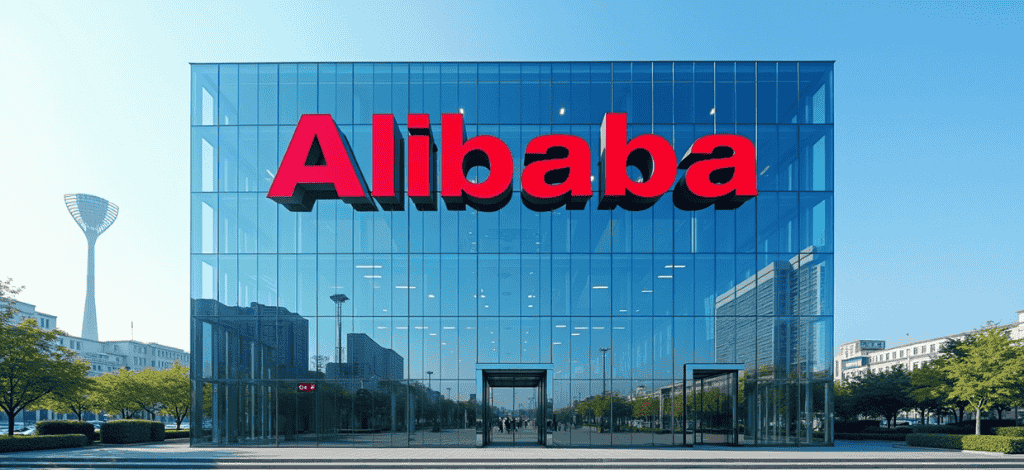
Why Alibaba Entered the AI-to-Consumer Market
Alibaba has always been known as a giant in e-commerce and cloud computing, but artificial intelligence has now become its next big battlefield. For years, most Chinese tech companies focused their AI efforts on businesses, selling tools to enterprises rather than individuals. That approach made sense at the time because the technology was expensive and complex. But things have changed. AI models are now powerful, cheaper, and ready for everyday use, and Alibaba clearly does not want to miss this moment.
From Enterprise Focus to Everyday Users
The launch of the Qwen app marks a clear turning point. Instead of limiting AI to corporate dashboards and internal tools, Alibaba is bringing it straight to consumers. This move signals confidence that AI has matured enough to be useful for daily tasks, not just experimental chats. It is similar to moving from a factory machine to a household appliance. Same power, but now designed for everyone.
What the Qwen App Is Designed to Do
The Qwen app is built as a general-purpose AI assistant powered by the Qwen3 model family. Users can ask it to write reports, summarize documents, create presentations, or answer complex questions within seconds. The goal is simple. Make AI feel practical, fast, and helpful rather than abstract or technical.
Early Release Capabilities and First Impressions
Even in its trial version, Qwen shows strong capabilities. A single command can generate a full research report and turn it into a multi-page PowerPoint presentation. That alone saves hours of work. While this version is still early, it already demonstrates how Alibaba wants Qwen to become a productivity companion rather than just a chatbot.
How Qwen Competes With Global AI Leaders
Alibaba is positioning Qwen as a direct competitor to ChatGPT. The strategy is not just about matching performance but also about accessibility. Qwen offers free access and deep integration with local services. Instead of standing alone as a chat interface, it is designed to live inside ecosystems people already use.
Free Access and Ecosystem Integration
This ecosystem-first approach could be Qwen’s biggest strength. Alibaba plans to connect mapping, food delivery, ticket booking, office tools, education, shopping, and healthcare services into the app. Imagine asking AI to plan your day, order lunch, book a ride, and prepare a meeting presentation without switching apps. That is the experience Alibaba is aiming for.
Qwen3 and Its Technical Strength
Behind the scenes, Qwen3 is doing the heavy lifting. The model family has reached performance levels comparable to leading closed-source models from the US. What makes it special is its balance between power and efficiency. It delivers strong multilingual and enterprise-grade performance while keeping costs low.
Open-Source Advantage and Cost Efficiency
Being open-source has helped Qwen spread rapidly. Developers can fine-tune it, adapt it, and build on top of it without heavy licensing fees. This openness has driven global downloads beyond 600 million. In a world where AI costs can quickly spiral, Qwen’s cost advantage is a major reason for its adoption.
Why Developers Prefer Qwen
Developers see Qwen as flexible and reliable. It supports multiple languages, scales well, and integrates smoothly into existing systems. Many developers also appreciate that Alibaba treats the model like a product rather than a research experiment. This mindset leads to better documentation, faster updates, and more stable releases.
Enterprise Use Cases Across Industries
Enterprises are using Qwen in manufacturing, customer service, content creation, and internal automation. Companies report improved speed, lower operational costs, and better performance. This enterprise success laid the foundation for Alibaba’s move into the consumer market. It proved that the technology works at scale.
Shift From B-End to C-End AI
The move from business-focused AI to consumer-focused AI is a big deal in China’s tech landscape. For a long time, consumers only experienced AI as simple chat tools. Now, AI is becoming something that actually helps people get work done. The Qwen app represents this shift clearly.
Competing Chinese AI Apps
Alibaba is not alone in this race. ByteDance’s Doubao and Tencent’s Yuanbao are also pushing aggressively into consumer AI. This competition is heating up fast, and that is good news for users. More competition means better features, lower costs, and faster innovation.
AI Inside Maps, Food, Shopping, and Healthcare
One of Alibaba’s most ambitious plans is to embed Qwen into real-world services. Instead of asking AI abstract questions, users can ask practical ones. Find the fastest route, order food that fits your diet, book tickets, or manage health appointments. AI becomes a layer on top of daily life.
Turning AI Into a Daily Assistant
This approach transforms AI from a novelty into a habit. When AI helps with small, frequent tasks, people start relying on it. That reliance builds user stickiness, which is critical for long-term success. Alibaba understands this well.
International Version of the Qwen App
Alibaba has confirmed that an international version of the Qwen app is coming soon. This move aims to leverage Qwen’s existing overseas traction and compete directly with ChatGPT on a global stage. It is a bold step that shows confidence in the model’s maturity.
Competing for Global Users
Global competition will not be easy. ChatGPT, Gemini, and other platforms already have strong brand recognition. However, Qwen’s open-source roots, cost efficiency, and ecosystem-driven design could help it carve out a loyal user base, especially in emerging markets.
Downloads, Active Users, and Momentum
The numbers tell a strong story. Qwen models have crossed 600 million downloads globally. The consumer app reportedly reached over 10 million downloads in its first week and tens of millions of monthly active users shortly after. That kind of momentum is hard to ignore.
Investor Confidence and AI Revenue Growth
Alibaba has invested around $53 billion in AI infrastructure over three years. AI-related product revenue has grown at triple-digit rates for multiple quarters. For investors, Qwen is not just a tech experiment. It is a core growth engine.
Open Models Are No Longer Scarce
Experts note that high-level AI models are no longer rare resources. Thanks to open-source contributions, advanced capabilities are widely available. This shifts competition away from raw model performance toward user experience, integration, and specialization.
Vertical AI Applications Are Rising
As more people use AI, vertical applications will surge. Companies will build tailored tools on top of open models like Qwen. Individuals will use AI to upgrade skills, automate tasks, and improve productivity. This creates a ripple effect across industries.
Models as Products
Alibaba’s technical leadership emphasizes that models should be treated like products. This means focusing on usability, reliability, and real-world value. Research alone is not enough. The goal is to turn breakthroughs into systems people actually use.
Agents, Automation, and Embodied Reasoning
Looking ahead, AI agents capable of long-term tasks are the next frontier. These agents could plan, act, and adapt over time. As AI moves beyond screens into physical environments, possibilities like robotics and embodied reasoning come into play.
User Stickiness and Monetization
Despite strong momentum, challenges remain. Building user stickiness and a sustainable business model will require deeper specialization and smarter integration. AI must become essential, not optional.
Competition at Home and Abroad
Alibaba faces intense competition both domestically and internationally. Winning this race will require constant innovation, fast iteration, and a deep understanding of user needs.
AI for White-Collar Productivity
For users, Qwen represents a chance to work smarter. From writing and research to presentations and planning, AI can act like a digital co-worker that never gets tired.
Lower Barriers to AI Innovation
For businesses and developers, Qwen lowers the barrier to entry. Open models mean faster experimentation and broader access. This could spark a wave of innovation across China and beyond.
Long-Term Opportunities
Qwen’s success shows that Alibaba is serious about AI as a long-term strategy. The combination of open models, consumer apps, and ecosystem integration creates a powerful foundation.
AI as Alibaba’s Growth Engine
As traditional markets mature, AI offers Alibaba a new growth curve. If executed well, Qwen could become as central to Alibaba’s future as e-commerce once was.
Conclusion
Alibaba’s expansion into the AI-to-consumer market with Qwen is more than just a product launch. It is a strategic shift that reflects how far AI has come and where it is heading next. By combining open-source strength, ecosystem integration, and a consumer-first mindset, Alibaba is positioning Qwen as a serious global contender. Whether it can truly challenge ChatGPT worldwide remains to be seen, but one thing is clear. The AI race just entered a new phase, and Alibaba is running at full speed.
FAQs
What is the Qwen app by Alibaba?
The Qwen app is a consumer-facing AI assistant powered by Alibaba’s Qwen models, designed to help with tasks like writing, research, and presentations.
Is Qwen free to use?
Yes, the current version of the Qwen app offers free access, making it more accessible to a wide range of users.
How does Qwen compare to ChatGPT?
Qwen competes directly with ChatGPT by offering similar capabilities, open-source advantages, and deep integration with everyday services.
Why is Qwen popular among developers?
Developers prefer Qwen because it is open-source, cost-efficient, multilingual, and easy to customize for different applications.
Will Qwen be available internationally?
Alibaba has confirmed that an international version of the Qwen app will be launched soon to target global users.
Read more blogs: Alitech Blog
Tired of platforms that make you pay just to apply for jobs?
Sign up now on Realancer – Free Freelancing Always!
👉 Join the waitlist now: https://realancer.net

Zeeshan Ali Shah is a professional blog writer at AliTech Solutions, and Realancer renowned for crafting engaging and informative content. He holds a degree from the University of Sindh, where he honed his expertise in technology. With a keen eye for detail and a passion for staying up-to-date on the latest tech trends, Zeeshan’s writing provides valuable insights to his readers. His expertise in the tech industry makes him a sought-after writer, and his work at AliTech Solutions has earned him a reputation as a trusted and knowledgeable voice in the field.


Leave a Reply