


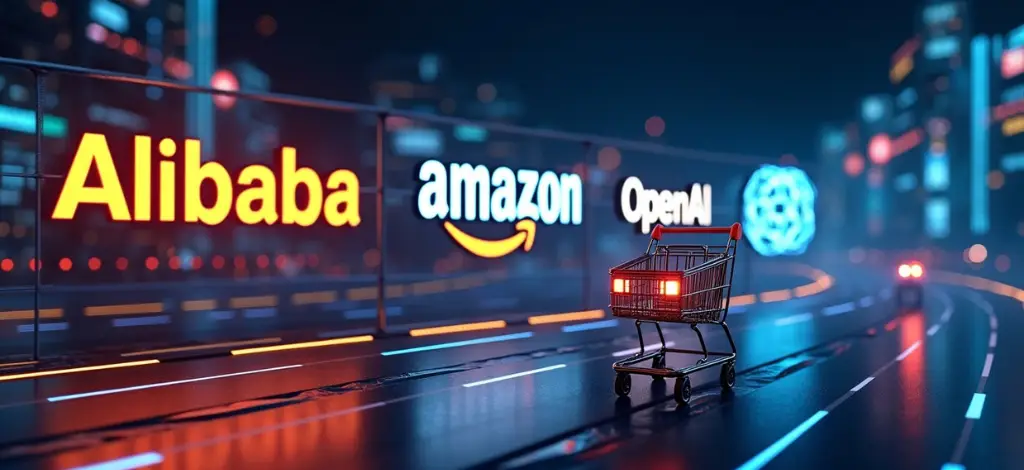
When you think about artificial intelligence and shopping, your mind probably goes to Amazon suggesting products or ChatGPT helping you find what to buy. But Alibaba, the Chinese tech giant, is moving at lightning speed and changing how we think about buying things online.
Alibaba is often seen in the West as just another Amazon-like company, but it is doing something remarkable. Alibaba is building AI that doesn’t just recommend products but actually buys them for you, completes the payment, and arranges delivery without you lifting a finger. Alibaba is doing this right now, not somewhere in the future.
The Big Difference Between Suggesting and Doing
Most shopping assistants we have seen so far work like helpful friends who point you in the right direction. Amazon’s Rufus can answer questions about products. ChatGPT can suggest what to buy. But then you still have to do all the work yourself. You click, you add to cart, you enter payment details, you confirm the order.
Alibaba took a different path. Their AI inside the Qwen app actually does the shopping for you. Imagine telling your phone “order forty cups of bubble tea for the office” and the AI figures out the best store, applies any available discounts, uses your saved payment method, and confirms the delivery time. This is not a demo or a future feature. This happened millions of times during a recent festival in China.
Why Owning Everything Matters
The secret behind Alibaba’s speed comes from something simple but powerful. They own the whole process from start to finish. When you shop on Alibaba’s platforms, you are using their marketplace, their payment system, their delivery network, and their cloud computing. This means when they want to add AI anywhere in that chain, they can just do it.
Compare this to companies trying to build shopping into chatbots in the West. If OpenAI wants ChatGPT to buy you something, they need to connect to Amazon or Walmart or thousands of individual stores. Each connection requires agreements, technical work, and constant updates when prices change or items go out of stock. It becomes a nightmare very quickly.
Amazon has its own ecosystem, but it grew differently. It started as a bookstore, then became everything store, then added cloud services, then added ads. Each piece grew at different times and in different ways. Making them all work together with new AI is like renovating a house while living in it. Possible, but slow and careful.
Real Numbers That Show Real Change
The numbers coming out of China are hard to ignore. During the Spring Festival celebration, the Qwen app saw its daily users jump from 17 million to over 73 million. That is more than four times growth in a short period. Even more impressive, the app processed 200 million orders for things like drinks, movie tickets, and flights.
These are not small experiments. These are real transactions with real money. People are trusting AI to handle their purchases, and the system is delivering.
On the business side, the impact is just as big. More than eight out of ten sellers in Taiwan now use Alibaba’s AI tools every week. These tools help them write product descriptions, create marketing content, and even generate images. The result is that high-quality leads have gone up by more than forty percent. For small business owners who used to spend hours writing listings, this is life changing.
Amazon’s Different Approach to AI
Let us be fair to Amazon. They are not sitting still. The company is spending an enormous amount on AI infrastructure, something like 200 billion dollars in 2026 alone. They signed major deals with OpenAI and Visa earlier this year. Their AWS cloud division powers AI for countless other companies.
But when it comes to shopping, Amazon is moving carefully. Their Rufus assistant answers questions but does not complete purchases. Their AI tools for sellers are helpful but not revolutionary. The company is so large and has so many moving parts that changing direction quickly is genuinely difficult.
Amazon also has to think about trust in a way that Alibaba approaches differently. Western shoppers might feel uncomfortable letting AI spend their money without supervision. In China, where digital payments and super apps have been normal for years, the leap to AI agents feels smaller.
OpenAI’s Commerce Experiment Hits Reality
OpenAI tried to get into shopping directly. The idea made sense. ChatGPT is already the place millions go for information and recommendations. Why not let them buy things right there in the chat?
But building a commerce engine turned out to be much harder than building a language model. Shopping requires real time data on prices, inventory, shipping costs, and return policies. It requires relationships with thousands of merchants. It requires handling payments securely and resolving disputes when things go wrong.
OpenAI recently adjusted its plans, stepping back from handling payments directly inside ChatGPT. This was the smart move. They realized their strength is in building smart models, not in running complex shopping infrastructure. Now they focus on being the brain while letting others handle the commerce part.
What Shopping Will Feel Like Tomorrow
The biggest change coming our way is how we interact with stores. For the last twenty years, online shopping meant browsing. You scrolled through pages, clicked on things that caught your eye, compared options, read reviews, and finally bought something. The interface was visual and required your attention.
AI agents change this to conversation. You tell the system what you need, and it handles the rest. For routine purchases like groceries, office supplies, or gifts, this saves enormous time and mental energy. You stop being a shopper and become more like a manager who gives instructions.
This does not mean browsing disappears. Sometimes you want to explore and discover. But for the millions of purchases we make because we need something specific, conversation will become the new normal.
Small Businesses Benefit Too
The AI tools Alibaba built are not just for big companies. Small sellers get the most help from automation. A person running a small shop might not speak multiple languages or have design skills. AI tools can translate product descriptions, create professional looking images, and write marketing copy that actually sells.
This levels the playing field in ways we have not seen before. The seller with the best product can compete with the seller who has the biggest marketing budget. AI handles the creative work that used to require hiring specialists.
The Global Race Is Just Beginning
Alibaba has a clear lead right now, especially in applying AI to actual commerce. But this race is just starting. Amazon has enormous resources and deep technical talent. OpenAI continues to push what AI models can do. Google is working on its own shopping integrations.
What happens in China often predicts what comes to the rest of the world. The super app model where one platform handles messaging, payments, shopping, and travel took years to catch on in the West but is now clearly the direction things are moving. AI agents will likely follow the same path.
Trust Will Be the Final Hurdle
For all the technical progress, the biggest challenge remains human. Will people trust AI to spend their money? Will they feel comfortable letting an algorithm choose which bubble tea shop to order from or which flight to book?
Alibaba’s early numbers suggest that when the system works well and saves time, trust builds quickly. Each successful transaction makes the next one easier. Each mistake, when it happens, will test that trust.
Companies that build reliable, transparent AI agents will win. Those that rush and disappoint users will find people going back to doing things themselves.
A New Way to Think About Shopping
We are moving toward a world where shopping becomes invisible. You need something, you mention it, and it arrives. The store, the payment, the delivery all happen behind the scenes. This is not laziness. It is efficiency. It frees your attention for things that actually matter to you.
Alibaba understood this vision earlier than most. They built the pieces slowly over years and are now connecting them with AI in ways that feel magical but are actually just good engineering.
Amazon and OpenAI will catch up in their own ways and their own time. But right now, the company moving fastest in AI for commerce is the one many people still overlook. That is worth paying attention to.
Frequently Asked Questions
What exactly is Alibaba’s Qwen app and how is it different from ChatGPT?
Qwen is Alibaba’s AI assistant that can actually complete purchases for you like ordering food or booking flights directly inside the chat. ChatGPT gives suggestions but cannot complete transactions from start to finish.
Why is Alibaba moving faster than Amazon in AI commerce?
Alibaba owns the entire process from marketplace to payment to delivery. They can add AI anywhere in that chain without waiting for partners. This vertical integration gives them speed that Amazon cannot match right now.
Is it safe to let AI spend my money automatically?
Alibaba includes safeguards like saved payment methods and order confirmations. Start with small routine purchases to build trust. Always review what the AI has done until you are completely comfortable.
Can I use Alibaba’s shopping AI if I live in the United States or Europe?
Not right now. These features are mainly available in China and parts of Asia where Alibaba’s platforms like Taobao and Alipay are commonly used. No confirmed timeline for Western release.
What happened with OpenAI’s attempt to get into shopping?
OpenAI tried to let ChatGPT handle payments directly but stepped back from that plan. They realized building commerce infrastructure is very different from building language models. Now they focus on being the brain while others handle transactions.
Will Amazon ever catch up to what Alibaba is doing?
Yes, Amazon has the resources to catch up but it will take time. Their business grew in pieces over decades so connecting everything smoothly is harder. It is a question of when, not if.
How many people are actually using Alibaba’s AI for shopping?
During the recent Spring Festival, daily users jumped from 17 million to over 73 million. The app processed 200 million orders for drinks, movie tickets, and flights in a short period.
What does this mean for small business owners who sell online?
This is great news for small sellers. AI tools that generate listings, write descriptions, and create marketing images level the playing field. Small sellers can now compete with much larger companies.
Will AI shopping assistants replace browsing and discovery?
Not completely. AI agents are best for routine purchases where you know what you need. Browsing and discovery will stick around for entertainment shopping and finding new things.
What is the biggest challenge for AI shopping assistants?
Trust is the biggest challenge. People need to feel comfortable letting AI spend their money and make choices. Companies that build reliable and transparent systems will win in the long run.
⚡ Need fast reliable talent? Realancer gives you access to verified freelancers ready to start immediately on your next project.
Join the waitlist now 👉 https://realancer.net/registration
Read more blogs: Alitech Blog

Zeeshan Ali Shah is a professional blog writer at AliTech Solutions, and Realancer renowned for crafting engaging and informative content. He holds a degree from the University of Sindh, where he honed his expertise in technology. With a keen eye for detail and a passion for staying up-to-date on the latest tech trends, Zeeshan’s writing provides valuable insights to his readers. His expertise in the tech industry makes him a sought-after writer, and his work at AliTech Solutions has earned him a reputation as a trusted and knowledgeable voice in the field.

Leave a Reply