


What actually happened in the Gulf region
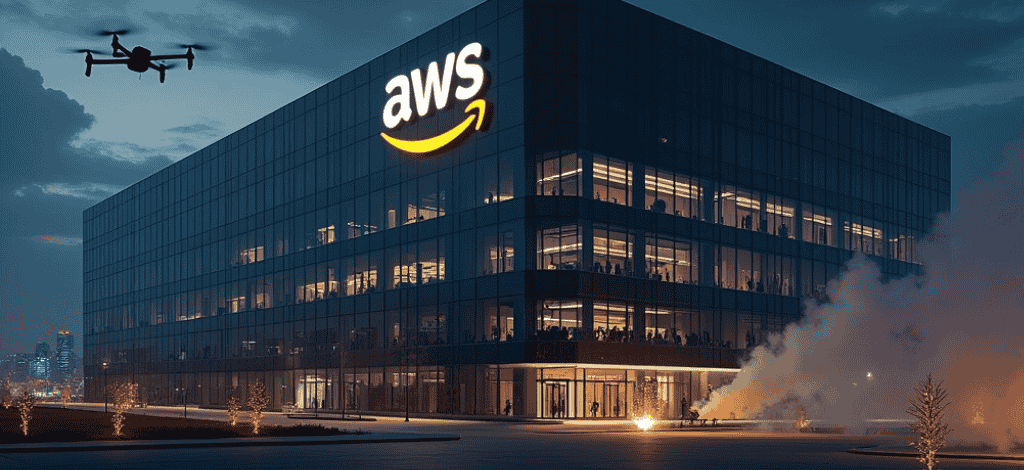
Amazon confirmed that drone strikes hit its cloud infrastructure, creating fires and outages. The incidents affected Amazon Web Services facilities in the Gulf. These were not minor glitches but real physical attacks. It shows how even digital systems depend on physical safety.
Timeline of the incident explained simply
The issue started on Sunday when AWS reported “objects” hitting a data center in the United Arab Emirates. Soon after, users noticed outages and slow services. By Monday, AWS confirmed drones caused the damage. A nearby strike also impacted a facility in Bahrain.
Why AWS is so important globally
AWS powers a huge part of the internet, from apps to business systems. Many companies rely on it daily without even realizing it. When AWS faces issues, it affects thousands of services at once. That’s why this incident gained global attention quickly.
Key cloud services that were affected
Services like EC2, S3, and DynamoDB saw disruptions and errors. These tools handle servers, storage, and databases for apps. When they slow down, apps crash or stop working. Even monitoring tools struggled, making recovery harder.
What damage occurred in UAE facilities
The UAE data centers were directly hit by drones, causing sparks and fire. Structural damage and power disruption followed immediately. Fire suppression systems activated but caused water damage too. This made recovery more complex than usual outages.
Impact on the Bahrain data center
The Bahrain facility was not directly hit but still suffered damage. A nearby drone strike caused infrastructure disturbance. Even small shocks can affect sensitive systems. This shows how fragile data center environments can be.
How cloud services were disrupted technically
Cloud systems rely on stable power and hardware to function. When infrastructure fails, services begin to degrade quickly. Users saw high error rates and downtime across platforms. Physical damage makes recovery slower than software issues.
Regions that faced major outages
Two AWS regions were heavily impacted: UAE and Bahrain zones. These regions serve many Middle Eastern businesses. When they went down, companies had to switch to other regions. This often caused delays and slower performance.
Why data centers are becoming targets
In modern conflicts, infrastructure is a strategic target. Data centers hold critical data and power digital systems. Disrupting them can affect economies and communication. That makes them valuable in geopolitical tensions.
Risks to global internet stability
The internet feels decentralized, but it depends on key hubs. If those hubs fail, services worldwide can suffer. This incident showed how local damage can have global effects. It raises concerns about future resilience.
Business impact on companies using AWS
Companies relying on AWS faced serious disruptions. Transactions slowed, services stopped, and customers were affected. For some, even minutes of downtime means losses. This event pushed businesses to rethink cloud strategies.
Effect on e-commerce and deliveries
Amazon also warned about delays in deliveries in the region. Logistics systems depend on cloud infrastructure heavily. When systems fail, supply chains slow down. Customers may experience longer waiting times.
AWS immediate response to the crisis
AWS quickly investigated and confirmed drone strikes as the cause. It worked to restore services and stabilize systems. Customers were advised to back up data immediately. Migration to other regions was also recommended.
Challenges in restoring damaged infrastructure
Fixing physical damage takes time compared to software fixes. Hardware must be replaced and systems rebuilt carefully. Water and fire damage complicate recovery efforts. AWS warned that restoration could take longer than expected.
Role of ongoing Middle East conflict
The attacks are linked to rising tensions involving Iran. Military actions in the region triggered retaliation using drones and missiles. This creates unpredictable risks for infrastructure. Businesses now face uncertainty in such regions.
Statements from global leadership
Donald Trump indicated that military actions could continue for weeks. This signals prolonged instability in the region. Ongoing conflict increases risks for tech infrastructure. Companies must prepare for extended disruptions.
Why data backup is now critical
AWS advised users to back up their data immediately. Data loss can destroy businesses if not handled properly. Backup ensures quick recovery during crises. It is now more important than ever.
Importance of multi-region cloud strategy
Relying on one region is risky in today’s world. Businesses should spread workloads across multiple regions. This reduces the impact of regional failures. It’s like having multiple safety nets.
Lessons learned from this incident
This event shows that even top tech systems are vulnerable. Physical threats are now part of digital risk planning. Companies must think beyond cybersecurity. Real-world risks matter just as much.
What the future of cloud security looks like
Cloud providers may increase physical protection and redundancy. More distributed infrastructure will become common. Businesses will also invest in resilience strategies. The goal is to stay online no matter what happens.
Conclusion
The AWS drone strike incident is more than just a technical failure—it’s a warning. It shows how modern conflicts can directly impact global technology systems. As reliance on cloud computing grows, so does the need for stronger protection and smarter strategies. Businesses that adapt quickly will survive and thrive in this unpredictable environment.
FAQs
What caused the AWS outage in UAE and Bahrain?
Drone strikes damaged AWS data centers, causing outages and service disruptions.
Which AWS services were affected the most?
EC2, S3, DynamoDB, and other core services experienced issues and downtime.
Was the Bahrain data center directly hit?
No, it was affected by a nearby drone strike, not a direct hit.
How can businesses avoid such risks?
By using multi-region setups, regular backups, and flexible cloud strategies.
Is cloud infrastructure safe in conflict zones?
It can be risky, especially during active geopolitical tensions.
✨ Realancer — The future of freelancing is here
Join now 👉 https://realancer.net/registration
Read more blogs: Alitech Blogs

Zeeshan Ali Shah is a professional blog writer at AliTech Solutions, and Realancer renowned for crafting engaging and informative content. He holds a degree from the University of Sindh, where he honed his expertise in technology. With a keen eye for detail and a passion for staying up-to-date on the latest tech trends, Zeeshan’s writing provides valuable insights to his readers. His expertise in the tech industry makes him a sought-after writer, and his work at AliTech Solutions has earned him a reputation as a trusted and knowledgeable voice in the field.



Leave a Reply