



Introduction to Anthropic’s AI Advances
Anthropic has recently made waves in the artificial intelligence landscape with the release of a powerful update for its Claude AI, specifically the Claude 3.5 Sonnet model. What’s particularly groundbreaking about this update is the introduction of a new feature called “computer use.” This feature allows Claude to control a computer like a human, making it possible for the AI to view a screen, move a cursor, click buttons, and even type text. It marks a significant leap toward more interactive and capable AI systems, building on the strides made by Microsoft, OpenAI, and Google in the AI space.
What is the ‘Computer Use’ Feature?
The “computer use” feature, which is available in public beta, enables Claude to perform tasks on a computer with minimal human input. This ability is similar to what we do on a daily basis—navigating websites, using software, and interacting with various online platforms. It’s a step forward in automating repetitive and complex tasks that typically require human effort. Developers now have access to this feature through the API, giving them the chance to integrate Claude’s computer control into their applications.
How Claude’s ‘Computer Use’ Works
Claude’s interaction with computers isn’t as simple as a human looking at a screen. Instead, it takes a series of screenshots and pieces them together in a “flipbook” manner to understand what is happening on the screen. It uses these snapshots to determine where to move the mouse, where to click, and what to type. However, it’s important to note that this method can miss brief actions or notifications, making the system not as smooth as real-time video observation.
Comparison with Other AI Systems
Anthropic’s move is seen as a direct competitor to other major players in the AI space. Microsoft’s Copilot Vision and OpenAI’s desktop app for ChatGPT have shown early examples of AI-driven computer interaction. However, these systems stop short of offering the ability to click around and complete tasks autonomously in the way Claude now can. Google’s Gemini app for Android phones also provides some degree of computer-like control, but none have fully embraced the potential of allowing AI to manage tasks directly on your computer. Anthropic’s Claude has taken the next step.
Current Limitations of Claude’s Computer Use
Though groundbreaking, Claude’s new feature isn’t without its drawbacks. Anthropic has emphasized that the feature is still experimental, and users may experience “cumbersome and error-prone” interactions. As it stands, there are still several tasks—like dragging, zooming, and handling rapid notifications—that Claude struggles to handle effectively. The method Claude uses to “see” the screen, which relies on screenshots, means it could miss short-lived actions, making it less reliable for tasks requiring precise timing.
Safeguards and Ethical Considerations
One notable aspect of Claude’s computer use feature is the built-in safeguards. The AI is programmed to avoid engaging in certain activities, particularly those involving social media, election-related tasks, or government websites. Anthropic has implemented systems to monitor when Claude is asked to perform tasks that could be ethically or legally questionable. This ensures that the AI isn’t used to generate or post content on social media, register domains, or perform potentially harmful actions online.
Improvements in Coding and Tool Use
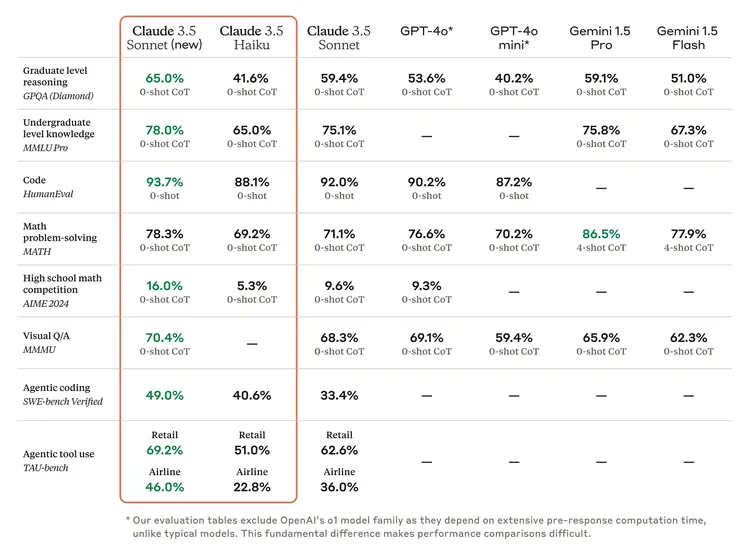
Alongside the new computer use feature, the Claude 3.5 Sonnet model brings significant improvements in coding and tool use tasks. According to Anthropic, the AI’s performance in agentic coding tasks has dramatically improved, boosting scores from 33.4% to 49.0% on the SWE-bench Verified benchmark. This places Claude above other publicly available models, including those designed specifically for reasoning and coding. Additionally, the model has shown progress in tool use tasks across various domains, including retail and airlines.
A Step Towards AI Agents
Claude’s computer use feature represents a key milestone in the development of AI agents—programs that can operate with minimal human supervision. These agents go beyond simple chatbots that can generate text or code; they are capable of carrying out multi-step tasks, potentially saving users time and effort. Anthropic’s demonstration of Claude coding a basic website and using programs like Google Search and Apple Maps is a glimpse into how AI agents might evolve to handle more complex workflows in the future.
Developer Feedback and Future Improvements
Anthropic is keen to gather feedback from developers who are experimenting with the new computer use feature. By releasing the feature in an early beta stage, the company aims to identify where improvements are needed and how it can refine the system for broader use. This feedback will be crucial in shaping the future of Claude’s capabilities, and there’s little doubt that we’ll see rapid advancements in the near future.
Consumer Applications on the Horizon
While the computer use feature is currently limited to developers and select business customers, Anthropic has expressed a desire to make it available to consumers. Imagine booking flights, scheduling appointments, or conducting research online—all without needing to touch your keyboard. For instance, Anthropic’s Chief Product Officer, Mike Krieger, has openly discussed his wish for the feature to become fully automated for personal use cases, hinting at a future where AI agents can handle everyday tasks for individual users.
The Race for AI Supremacy: Anthropic vs. OpenAI and Microsoft
Anthropic’s introduction of this new feature places it squarely in competition with other major tech companies, particularly OpenAI and Microsoft. While OpenAI has dominated the conversation with ChatGPT, and Microsoft has made moves with its own AI-driven agents, Anthropic’s innovation in the field of autonomous computer control is a significant challenge. All three companies, along with Google, are racing to create AI tools that are more productive and versatile, with the goal of shaping the future of personal and professional productivity.
Anthropic’s Claude 3.5 Sonnet: A Competitive Edge
The Claude 3.5 Sonnet model, along with the computer use feature, is available at the same price and speed as its predecessor, making it an attractive option for developers and businesses. This version of Claude offers notable improvements in both coding tasks and tool usage, which are essential for developers looking to automate complex workflows. Anthropic’s focus on providing affordable yet powerful AI solutions could give it a competitive edge over other AI models in the market.
AI Agents: The Future of Productivity
AI agents like Claude represent the next frontier of artificial intelligence. No longer are we simply dealing with chatbots that respond to text prompts; we’re moving into a world where AI can handle multi-step, complex tasks on our behalf. These agents are particularly promising for businesses, where the automation of processes such as inventory management, customer service, and even complex data analysis could lead to massive productivity gains.
The Consumer Potential of AI Agents
While business applications are the primary focus of current AI agent development, there’s no denying the consumer potential of these tools. Imagine having an AI assistant that can browse the web for you, purchase items, manage your calendar, or even handle your taxes. The possibilities are nearly endless, and companies like Anthropic are laying the groundwork for these AI tools to become everyday staples in both our professional and personal lives.
Conclusion: Anthropic’s Role in the AI Revolution
Anthropic’s latest update to Claude, particularly the introduction of the computer use feature, is a major step forward in the AI industry. While still in its early stages, this feature opens the door to a future where AI can handle tasks traditionally reserved for humans, saving time, effort, and resources. As the technology improves and becomes more widely available, we can expect to see even more innovative applications of AI agents across various industries.
FAQs
1. What is Anthropic’s computer use feature?
The computer use feature allows Claude AI to interact with a computer like a human, moving the cursor, clicking buttons, and typing text. It is currently available in public beta for developers.
2. How does Claude’s computer use feature work?
Claude takes screenshots of the screen, piecing them together to understand what’s happening. It then decides where to move the mouse, where to click, and what to type, though it can miss short-lived actions.
3. Is Claude’s computer use feature available to consumers?
Currently, the feature is limited to developers and select business customers. However, Anthropic plans to make it available to consumers in the future.
4. How does Claude compare to other AI systems like ChatGPT?
Claude offers similar capabilities to other AI systems like OpenAI’s ChatGPT, but it has advanced features such as computer use, which allows it to perform tasks autonomously on a computer.
5. What are the limitations of Claude’s new feature?
While impressive, Claude’s computer use feature is still experimental and can be cumbersome. It may struggle with certain tasks like dragging, zooming, and handling notifications.
Source: Google News
Read more blogs: Alitech Blog

Zeeshan Ali Shah is a professional blog writer at AliTech Solutions, and Realancer renowned for crafting engaging and informative content. He holds a degree from the University of Sindh, where he honed his expertise in technology. With a keen eye for detail and a passion for staying up-to-date on the latest tech trends, Zeeshan’s writing provides valuable insights to his readers. His expertise in the tech industry makes him a sought-after writer, and his work at AliTech Solutions has earned him a reputation as a trusted and knowledgeable voice in the field.

Leave a Reply