


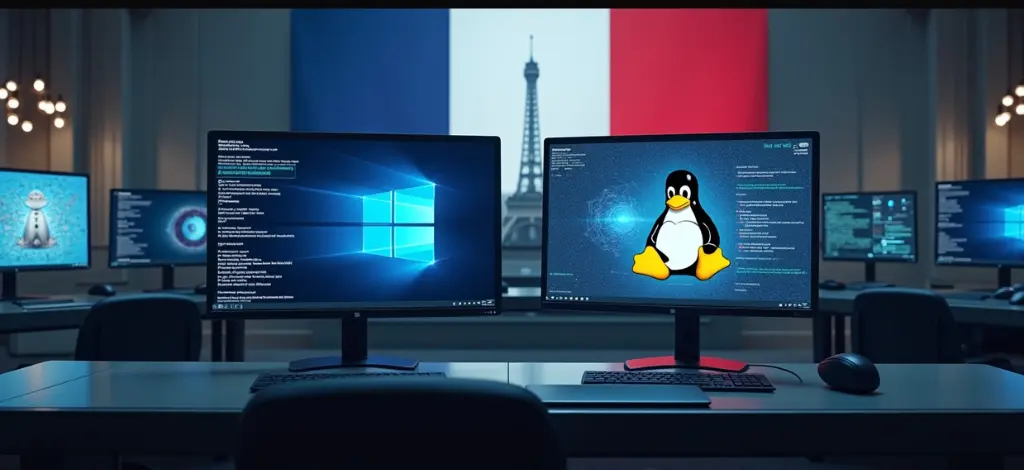
Introduction to France’s Strategic Move
France has taken a bold and strategic step by deciding to move its government workstations from Windows to Linux, and this is not just a simple software upgrade but a major shift in how a country views control over its digital infrastructure. This move reflects a deeper concern that many governments around the world are starting to feel, which is the risk of relying too heavily on foreign technology providers. Imagine running an entire country’s digital systems on tools that are controlled by companies based in another continent; it naturally raises questions about control, security, and long-term independence. France’s decision shows that these concerns are no longer theoretical but are now driving real policy changes. With millions of government computers expected to transition, this initiative is shaping up to be one of the largest public-sector migrations to open-source technology in modern history, signaling a new era of digital sovereignty.
Why Governments Are Rethinking Tech Dependency
Across the globe, governments are beginning to question their reliance on large tech companies, especially those based outside their own regions. The issue is not just about software functionality but about who controls the data, updates, and infrastructure behind it. When a government depends on foreign technology, it also depends on foreign rules, pricing structures, and sometimes even political relationships. France’s move reflects a growing awareness that digital systems are as important as physical infrastructure like roads or power grids. If a country cannot fully control its digital backbone, it risks losing autonomy in critical areas such as cybersecurity, data protection, and public administration. This shift in thinking is pushing nations to explore alternatives like Linux, which offers more transparency and control.
What Triggered France’s Decision
The decision to move away from Windows was not made overnight but came as part of a broader government strategy aimed at reducing reliance on non-European technology providers. This strategy was formalized during an interministerial seminar where leaders emphasized the importance of controlling national digital assets. The French government recognized that continuing to depend on external providers could limit its ability to innovate and respond to future challenges. By adopting Linux, France is taking a proactive approach to secure its digital future rather than reacting to potential risks later. This decision also aligns with broader European efforts to strengthen regional technology ecosystems and reduce dependence on global tech giants.
The Role of Government Directives
Government directives played a crucial role in initiating this transition, as ministries were instructed to create detailed plans for reducing their dependence on external technology suppliers. These plans cover not only operating systems but also collaboration tools, artificial intelligence, databases, and network infrastructure. This comprehensive approach shows that France is not just making a symbolic change but is building a structured framework for long-term digital independence. Each ministry is required to evaluate its current systems and identify areas where dependency can be reduced, creating a coordinated effort across the entire government. This level of organization ensures that the transition is not chaotic but carefully planned and executed.
Digital Sovereignty Explained
Digital sovereignty might sound like a complex term, but it essentially means having full control over a nation’s digital systems, data, and technologies. For France, this means being able to decide how data is stored, processed, and protected without relying on external entities. Think of it like owning your own house instead of renting; you have full control over what happens inside. By switching to Linux, France gains access to open-source code that can be modified and audited, giving the government greater transparency and flexibility. This is particularly important in an era where data is often referred to as the new oil, making control over digital resources a critical aspect of national security.
Scope of the Linux Transition
The scale of France’s transition is massive, with plans to move over 2.5 million government workstations from Windows to Linux. This includes computers used by civil servants across various ministries, making it one of the largest migrations of its kind. The transition will begin with key departments and gradually expand to cover the entire public sector. Such a large-scale change requires careful planning, testing, and coordination to ensure that essential services are not disrupted. The government is approaching this in phases, allowing time for adjustments and improvements along the way.
Number of Workstations Affected
With more than 2.5 million workstations involved, the sheer size of this project highlights its महत्व and complexity. Each workstation represents a user who must adapt to a new operating system, making user training and support a critical component of the transition. This also means that the impact of the change will be felt across all levels of government, from administrative staff to high-level officials. Managing such a large number of devices requires robust infrastructure and strong coordination between different departments, making this a technically challenging but highly rewarding initiative.
Key Departments Involved
Several key government bodies are leading this transition, including the Interministerial Directorate for Digital Affairs, the Directorate General for Enterprises, and the National Cybersecurity Agency. These organizations are responsible for ensuring that the migration is secure, efficient, and aligned with national goals. Their involvement ensures that the transition is not just about replacing software but about building a stronger and more resilient digital ecosystem. By bringing together expertise from different areas, France is creating a collaborative approach to digital transformation.
Understanding Linux as an Alternative
Linux is not just another operating system but a completely different approach to computing. Unlike Windows, which is proprietary and controlled by a single company, Linux is open source, meaning its code is freely available for anyone to use and modify. This openness allows governments like France to customize the system according to their specific needs, improving both efficiency and security. Linux is already widely used in servers, data centers, and even smartphones, proving its reliability and versatility. Its flexibility makes it an ideal choice for large-scale deployments where control and customization are essential.
What Makes Linux Different from Windows
The key difference between Linux and Windows lies in control and transparency. Windows operates as a closed system where users have limited visibility into how it works, while Linux provides full access to its underlying code. This means that potential vulnerabilities can be identified and fixed more quickly, reducing security risks. Linux also tends to be lighter and more efficient, making it suitable for a wide range of hardware configurations. For governments, this translates into better performance and lower costs over time.
Open Source Benefits
Open-source software like Linux offers several advantages, including cost savings, flexibility, and community-driven innovation. Since there are no licensing fees, governments can allocate resources to other महत्वपूर्ण areas such as cybersecurity and infrastructure development. The open-source community continuously improves the software, ensuring that it stays up to date with the latest technological advancements. This collaborative model creates a dynamic ecosystem where improvements are shared globally, benefiting all users.
Replacement of Microsoft Ecosystem
France’s move goes beyond replacing Windows and includes a broader shift away from Microsoft’s ecosystem of tools. This includes alternatives to Microsoft 365, Teams, and other widely used applications. By developing and adopting local solutions, France aims to create a self-sufficient digital environment that aligns with its sovereignty goals. This transition requires careful planning to ensure that users can continue their work without disruptions while adapting to new tools.
Shift Away from Microsoft Tools
The decision to move away from Microsoft tools is a significant one, considering their widespread use in government operations. France has already taken steps to replace video conferencing tools with locally developed alternatives, showing its commitment to reducing dependency. This shift is not about rejecting technology but about choosing solutions that offer greater control and alignment with national interests. It reflects a broader trend of governments seeking to diversify their technology stack.
Introduction of LaSuite Numérique
LaSuite Numérique is a set of open-source tools designed to meet the needs of French public sector employees. It serves as a replacement for Microsoft 365, offering similar functionalities while ensuring data sovereignty. By using locally developed tools, France can ensure that its data remains within its jurisdiction, reducing the risk of external interference. This initiative also supports the growth of local tech industries, creating opportunities for innovation and रोजगार.
Benefits of Moving to Linux
The benefits of switching to Linux are numerous, ranging from cost savings to improved security. By eliminating licensing fees, the government can save significant amounts of money over time. Linux also offers greater control over system configurations, allowing for better optimization and performance. These advantages make it an attractive option for large-scale deployments in the public sector.
Cost Efficiency
One of the biggest advantages of Linux is its cost efficiency, as it eliminates the need for expensive software licenses. This can result in significant savings, especially when applied to millions of workstations. These savings can be reinvested into other areas such as infrastructure development and cybersecurity. Over time, this creates a more sustainable and efficient use of public resources.
Security and Control
Security is a major concern for any government, and Linux offers several features that enhance system protection. Its open-source nature allows for continuous monitoring and improvement, reducing the risk of vulnerabilities. Governments can also customize security measures to meet their specific needs, ensuring a higher level of control over their digital environment. This makes Linux a strong choice for critical सरकारी systems.
Challenges in Migration
Despite its benefits, the transition to Linux is not without challenges. One of the main issues is compatibility, as some existing applications may not work seamlessly on the new system. This requires either adapting the software or finding suitable alternatives, which can be time-consuming. Another challenge is user training, as employees need to learn how to use the new system effectively.
Compatibility Issues
Compatibility is one of the biggest hurdles in any large-scale migration. Many government systems are built around specific software that may not be available on Linux. This requires careful planning and testing to ensure that essential services continue to function smoothly. In some cases, custom solutions may need to be developed, adding to the complexity of the transition.
Training and Adaptation
Training is another critical aspect of the migration process, as users need to become familiar with the new system. This involves not only learning new interfaces but also adapting to different workflows. Providing adequate training and support is essential to ensure a smooth transition and minimize disruptions. Over time, users can become more comfortable with Linux, unlocking its full potential.
Global Trend Toward Digital Independence
France is not alone in its efforts to reduce dependency on foreign technology, as several countries are exploring similar strategies. This reflects a growing global trend toward digital independence, where nations seek to control their own technological مستقبل. By adopting open-source solutions, governments can reduce reliance on external providers and build more resilient systems.
Examples from Other Countries
Countries like Germany and Denmark have also taken steps to move away from proprietary software in favor of open-source alternatives. These initiatives show that the shift toward digital sovereignty is gaining momentum across Europe. Each country approaches the transition differently, but the underlying goal remains the same: greater control and independence.
Rise of Open Source Adoption
The rise of open-source adoption is not limited to governments but extends to businesses and individuals as well. As awareness grows about the benefits of open-source software, more organizations are choosing it over proprietary solutions. This trend is reshaping the tech landscape, creating new opportunities for innovation and collaboration.
Impact on the Tech Industry
France’s decision is likely to have a significant impact on the global tech industry, particularly for companies like Microsoft. Losing a major government client could influence future business strategies and encourage innovation. At the same time, it creates opportunities for European tech companies to grow and compete on a larger scale.
Effect on Microsoft
The shift away from Windows represents a चुनौती for Microsoft, as it highlights the risks of relying on a single provider. This could lead to increased competition and innovation as companies adapt to changing market dynamics. It also sends a strong message to other governments about the importance of diversifying technology providers.
Opportunities for European Tech
European tech companies stand to benefit from this transition, as governments look for local alternatives to global solutions. This creates فرص for growth and innovation within the region, strengthening its technology ecosystem. By supporting local companies, France is contributing to the development of a more مستقل digital economy.
Future of Government IT Infrastructure
The future of government IT infrastructure is likely to involve a mix of technologies, combining open-source and proprietary solutions. This hybrid approach allows governments to balance control with access to advanced features. As technology continues to evolve, flexibility will be key to maintaining efficient and secure systems.
Hybrid Tech Environments
Hybrid environments offer the best of both worlds, allowing governments to use open-source solutions while still benefiting from certain proprietary tools. This approach provides flexibility and reduces risk, making it a practical choice for large-scale deployments. It also allows for gradual transitions rather than abrupt changes.
Long-Term Vision
France’s long-term vision is to create a self-sufficient digital ecosystem that supports innovation, security, and economic growth. By investing in open-source technologies and local solutions, the country is positioning itself for the future. This move could inspire other nations to follow suit, shaping the global landscape of technology and governance.
Conclusion
France’s decision to move from Windows to Linux is more than just a technical upgrade; it is a strategic move toward digital independence and sovereignty. By reducing reliance on external technology providers, the country is taking control of its digital future and setting an example for others to follow. While challenges exist, the benefits of cost savings, security, and flexibility make this transition a compelling choice. As more countries explore similar paths, the global tech landscape is likely to become more diverse and competitive.
FAQs
1. Why is France switching from Windows to Linux?
France aims to reduce dependence on non-European technology providers and gain greater control over its digital infrastructure.
2. How many computers will be affected by this transition?
More than 2.5 million government workstations are expected to transition to Linux.
3. What are the main benefits of Linux?
Linux offers cost savings, improved security, customization, and transparency due to its open-source nature.
4. Will this affect Microsoft globally?
While it may not drastically impact Microsoft immediately, it signals a growing trend that could influence future market dynamics.
5. Are other countries adopting similar strategies?
Yes, countries like Germany and Denmark are also exploring open-source solutions to enhance digital independence.
Start your freelancing journey with Realancer — find clients, grow faster, and build your future. Join the waitlist now 👉 https://realancer.net
Read more blogs: Alitech Blog
https://www.hostingbyalitech.com/

Zeeshan Ali Shah is a professional blog writer at AliTech Solutions, and Realancer renowned for crafting engaging and informative content. He holds a degree from the University of Sindh, where he honed his expertise in technology. With a keen eye for detail and a passion for staying up-to-date on the latest tech trends, Zeeshan’s writing provides valuable insights to his readers. His expertise in the tech industry makes him a sought-after writer, and his work at AliTech Solutions has earned him a reputation as a trusted and knowledgeable voice in the field.


Leave a Reply