


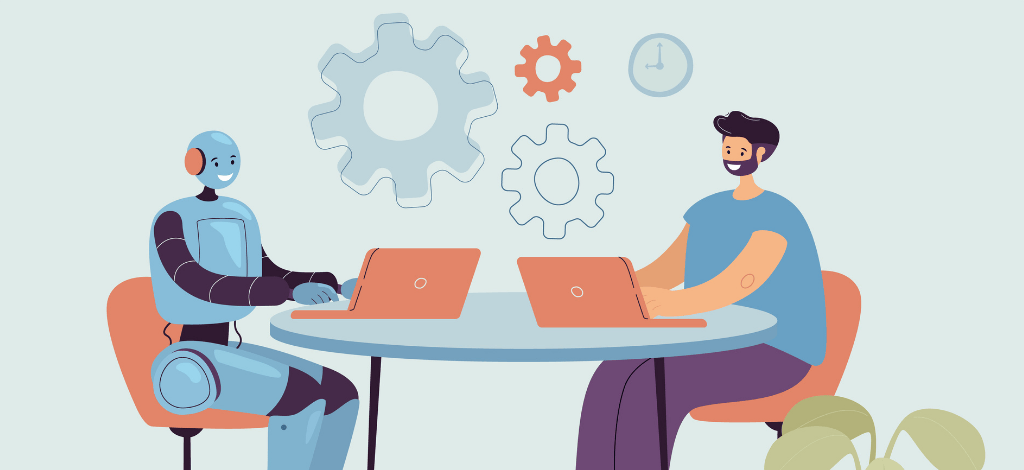
The rapid rise of artificial intelligence has sparked conversations about its potential to disrupt industries, with software development being one of the areas heavily scrutinized. OpenAI, one of the leaders in AI research, has recently conducted a study that challenges the hype around large language models (LLMs) and their ability to replace human software engineers. According to their findings, even the most advanced AI models are still far from being able to match the expertise and problem-solving abilities of skilled engineers in real-world coding tasks. The study, conducted using OpenAI’s SWE-Lancer benchmark, provides crucial insights into why LLMs are not yet ready for prime time in software engineering.
The SWE-Lancer Benchmark: A New Approach to AI Evaluation
OpenAI developed a new benchmark called SWE-Lancer, specifically designed to test the capabilities of LLMs in performing freelance software engineering tasks. This benchmark is based on over 1,400 real-world tasks sourced from Upwork, the popular freelancing platform. The tasks range from simple bug fixes to more complex feature implementations, collectively valued at over $1 million in payouts. The goal was to see how well LLMs like GPT-4o, o1, and Anthropic’s Claude 3.5 Sonnet could perform in this challenging environment.
Testing the AI Models
The three models were put through a series of tasks that simulated real freelance work, which included both individual coding tasks and managerial decisions. The individual tasks required the models to solve specific coding issues, such as debugging or implementing new features. The managerial tasks involved higher-level decision-making, like choosing between different technical approaches for a project. These tasks were carefully structured to reflect real-world challenges, such as interacting with APIs or dealing with complex multi-file codebases.
The Results: AI Models Fail to Meet Expectations
Despite their impressive capabilities, the results of the SWE-Lancer tests were underwhelming. Even the best-performing model, Claude 3.5 Sonnet, only managed to correctly resolve 26.2% of the individual contributor tasks. The models were better at completing smaller tasks, like bug fixes, but struggled with more complex problems that required a deep understanding of the codebase and the root causes of issues. The models excelled at quickly pinpointing where issues were located but often failed to provide comprehensive solutions.
Why AI Models Struggle with Complex Coding Problems
The main issue with current LLMs is their inability to understand the full context of a coding problem. While they can quickly identify issues in isolated parts of a codebase, they often lack the ability to comprehend how different components of a system interact with each other. This makes it difficult for them to tackle larger, more complex projects, where the root cause of a problem may span across multiple files or modules. In contrast, human engineers are able to understand the broader context of a problem and find solutions that address the underlying issues.
Speed vs. Accuracy: AI Models Are Fast but Flawed
One of the key findings of the study was that while LLMs were able to perform tasks much faster than humans, their solutions were often incomplete or incorrect. In many cases, the models could identify the source of an issue quickly but failed to understand the nuances of the problem, leading to flawed solutions. This is a common issue with AI models: they are good at generating answers based on patterns but struggle with reasoning and critical thinking, especially in complex and dynamic environments like software development.
The Role of Human Engineers in the Future
Despite the shortcomings of AI models, OpenAI acknowledges that LLMs have the potential to assist human engineers by speeding up certain tasks. For example, AI models can handle repetitive and mundane tasks, like finding and fixing simple bugs, allowing human engineers to focus on more strategic and creative aspects of software development. However, AI is still a long way from being able to replace human engineers, especially for tasks that require higher-level thinking, problem-solving, and decision-making.
Claude 3.5 Sonnet: The Best of the LLMs
Out of the three models tested, Claude 3.5 Sonnet performed the best. It was able to complete more tasks than GPT-4o and o1, and it even earned more money from the freelance tasks. However, its performance still fell short of human-level capabilities. While it was faster than humans in some cases, it lacked the depth of understanding necessary to provide reliable solutions across a wide range of tasks. According to the researchers, any model aiming to be used for real-world software engineering tasks would need to demonstrate higher reliability and more accurate problem-solving abilities.
AI’s Limitations in Freelance Work
One of the key insights from the study is that AI models are still not ready for real-world freelance work, where a combination of technical and managerial skills is required. The models were able to complete simple tasks, but they struggled with the complexity of freelance engineering, which often involves multiple stakeholders, shifting requirements, and the need for creative solutions. The researchers noted that even though LLMs can perform certain coding tasks at a faster rate than humans, their lack of deeper reasoning and contextual understanding makes them unsuitable for freelance work, where reliability and comprehensive problem-solving are essential.
The Economic Impact of AI in Software Engineering
OpenAI’s SWE-Lancer benchmark also highlights the economic implications of AI in software engineering. The study attempts to map AI model performance to real-world monetary value, demonstrating that while AI can assist in completing freelance software engineering tasks, it is not yet capable of fully replacing human workers. This raises important questions about the future of the software industry, especially as AI continues to evolve and improve. The researchers suggest that in the long run, AI could enhance productivity and reduce barriers to entry in the field, but it could also lead to job displacement for lower-level engineers in the short term.
Challenges Ahead for AI in Software Development
The results of the SWE-Lancer study suggest that while AI models are making impressive strides in software engineering, there are still significant challenges to overcome before they can replace human engineers. The key hurdle is improving the models’ ability to understand complex codebases and identify root causes of problems. Additionally, AI models need to become more reliable and accurate, as even small errors in coding can have major consequences in real-world applications.
Human Engineers: Still the Gold Standard
For now, human engineers remain the gold standard in software development. While AI can be a valuable tool in speeding up certain tasks, it is not yet capable of handling the full range of challenges that come with real-world coding. Human engineers bring not only technical expertise but also critical thinking, creativity, and problem-solving skills that are difficult for AI to replicate. Until AI models can match these qualities, they will remain a supplement to human engineers rather than a replacement.
Looking to the Future: Can AI Catch Up?
The future of AI in software engineering is promising, but it will require further advancements in model development. OpenAI’s research suggests that LLMs will continue to improve, but they will need to demonstrate higher reliability and more sophisticated problem-solving abilities before they can fully compete with human engineers. As AI technology evolves, it is likely that AI will become more adept at handling complex tasks, but for now, human engineers are still necessary for the majority of coding challenges.
Conclusion
In conclusion, OpenAI’s SWE-Lancer study has made it clear that while AI models like GPT-4o and Claude 3.5 Sonnet are capable of completing certain coding tasks, they are far from being ready to replace human engineers in the real world. The study shows that LLMs still struggle with understanding the full context of complex coding problems and often fail to provide accurate or comprehensive solutions. While AI will undoubtedly play an increasingly important role in software development in the future, it is clear that human engineers are still essential for tackling the most challenging coding tasks.
FAQs
1. Can AI models replace human engineers in software development?
No, AI models are still not capable of replacing human engineers in software development, especially for complex and high-level tasks. They can assist with simple tasks but lack the critical thinking and contextual understanding that humans bring to the table.
2. What is the SWE-Lancer benchmark?
SWE-Lancer is a new benchmark developed by OpenAI to evaluate the performance of large language models in completing real-world freelance software engineering tasks. It uses over 1,400 tasks from Upwork to simulate real coding challenges.
3. Why do AI models struggle with software engineering tasks?
AI models struggle with understanding the full context of complex coding problems. They can identify issues quickly but often fail to comprehend how different parts of the code interact, leading to incomplete or incorrect solutions.
4. How does AI help software engineers?
AI can assist software engineers by speeding up repetitive tasks, like bug fixes, and providing suggestions for solutions. However, human engineers are still needed for tasks that require higher-level problem-solving and creativity.
5. What does the future hold for AI in software development?
The future of AI in software development is promising, but AI models need to improve their reliability, contextual understanding, and problem-solving abilities before they can fully compete with human engineers. AI will likely become a valuable tool for assisting engineers but will not replace them entirely.
Read more blogs: Alitech Blog

Zeeshan Ali Shah is a professional blog writer at AliTech Solutions, and Realancer renowned for crafting engaging and informative content. He holds a degree from the University of Sindh, where he honed his expertise in technology. With a keen eye for detail and a passion for staying up-to-date on the latest tech trends, Zeeshan’s writing provides valuable insights to his readers. His expertise in the tech industry makes him a sought-after writer, and his work at AliTech Solutions has earned him a reputation as a trusted and knowledgeable voice in the field.

Leave a Reply