


Introduction
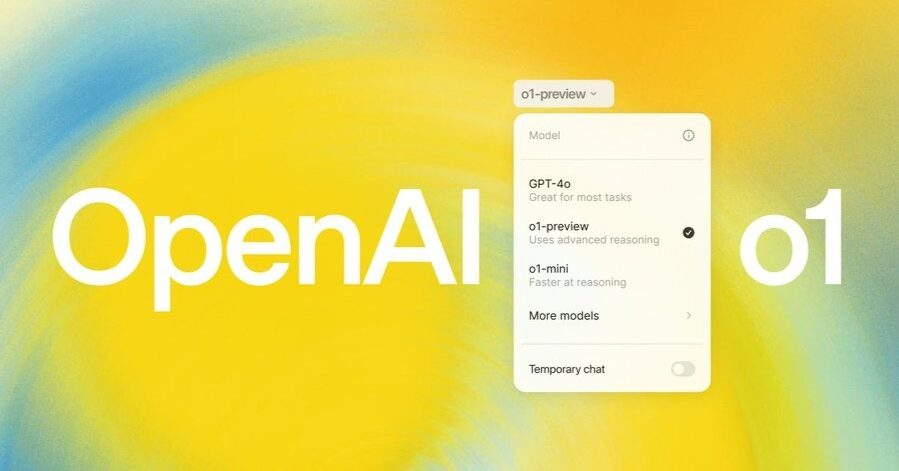
OpenAI, the innovative force behind the popular ChatGPT, has just launched a groundbreaking update designed to tackle some of the most persistent challenges in AI: flawed math solutions, buggy code, and occasional inaccuracies. This new version, powered by the novel OpenAI o1 technology, brings a fresh approach to problem-solving across math, coding, and science. Here’s an in-depth look at this exciting advancement.

The Evolution of ChatGPT: From Instant Responses to Deliberate Reasoning
Previously, ChatGPT provided immediate responses based on patterns learned during training. However, the new ChatGPT, equipped with the o1 model, takes a different approach. Instead of generating quick answers, it now performs more thoughtful deliberation, analyzing and strategizing before delivering its responses. This shift aims to enhance the accuracy and reliability of its outputs significantly.
Introducing OpenAI o1: A Major Leap Forward
OpenAI’s new model, o1, is a major leap forward in the quest for AI that can reason like a human. Unlike its predecessors, o1 is designed to handle more complex queries with improved problem-solving capabilities. This includes everything from solving intricate puzzles to addressing advanced scientific and mathematical problems.
Key Features of the New ChatGPT: Enhanced Problem-Solving Capabilities
With o1, ChatGPT now excels in solving complex math problems and coding challenges. It can tackle advanced chemistry questions and even diagnose illnesses based on detailed patient data. This improved capability is a significant step toward achieving more human-like reasoning in AI systems.
The Chain of Thought Approach: Processing Problems Step-by-Step
One of the standout features of o1 is its “chain of thought” processing. This approach allows the model to work through problems step-by-step, similar to how a human might. This methodology helps in breaking down complex problems into manageable parts, leading to more accurate and detailed solutions.
Comparison with Previous Models: Accuracy and Reliability
The new ChatGPT model demonstrates a marked improvement over previous versions in terms of accuracy. For example, o1 performed significantly better in solving AP math tests and qualifying exams for the International Mathematics Olympiad, showcasing its advanced problem-solving skills.
Industry Impact: The Broader Push Towards AI Reasoning
This development reflects a broader industry trend towards creating AI systems capable of complex reasoning. While Google and Meta are also pursuing similar technologies, Microsoft and GitHub are integrating OpenAI’s advancements into their products, highlighting the significance of these improvements.
Challenges and Limitations: A Cautious Optimism
Despite its advancements, experts caution that AI reasoning is still in its early stages and not without flaws. The new ChatGPT, while promising, still faces challenges in translating these capabilities into real-world applications effectively. Its potential limitations include occasional inaccuracies and a slower processing speed compared to earlier models.
The Road Ahead: Future Developments and Goals
OpenAI’s goal with the o1 model is to advance toward creating AI systems that can fully mimic human-like reasoning. This ambitious vision aims to revolutionize fields such as computer programming, education, and scientific research, although it remains to be seen how these capabilities will evolve.
Developer Access and Pricing: A Costly Yet Promising Upgrade
The o1 model, while offering enhanced capabilities, comes at a premium price for developers. Access to o1-preview is priced at $15 per 1 million input tokens and $60 per 1 million output tokens, compared to GPT-4o’s lower costs. This reflects the advanced nature of the new model and its development costs.
Training and Technology: A New Optimization Algorithm
The training behind o1 involves a new optimization algorithm and a specialized dataset, setting it apart from previous models. This new approach, known as reinforcement learning, enables the model to solve problems more effectively by using rewards and penalties to guide its learning process.
User Experience: A More Human-Like Interaction
The new ChatGPT model is designed to simulate human-like thought processes, providing an illusion of more deliberate reasoning. Features like “I’m curious about” and “Let me see” during problem-solving aim to enhance the user experience by mimicking human thinking patterns, even though the model itself is not conscious.
The Role of AI in Future Research: Advancing Human-Level Intelligence
For AI researchers, improving reasoning capabilities is a crucial step toward achieving human-level intelligence. The advancements seen in o1 could unlock significant breakthroughs in areas such as medicine, engineering, and beyond, although much work remains to be done.
Conclusion
The release of OpenAI’s new ChatGPT model with enhanced reasoning capabilities marks a significant milestone in the evolution of AI technology. With its ability to tackle complex problems and simulate human-like reasoning, o1 represents a promising advancement. However, as with any cutting-edge technology, its real-world impact and effectiveness will be closely watched in the coming years.
FAQs
1. What makes OpenAI’s new ChatGPT model different from previous versions?
The new model, powered by o1 technology, features enhanced reasoning capabilities that allow it to tackle complex math, coding, and science problems more accurately. It also uses a “chain of thought” approach to process problems step-by-step.
2. How does the “chain of thought” approach improve problem-solving?
The “chain of thought” approach helps the model break down complex problems into manageable steps, leading to more accurate and detailed solutions by mimicking human-like reasoning processes.
3. What are the limitations of the new ChatGPT model?
Despite its advancements, the new model still faces challenges such as occasional inaccuracies and slower processing speeds compared to earlier versions. Its effectiveness in real-world applications remains to be fully seen.
4. How does the cost of the new model compare to previous ones?
Access to the o1 model is more expensive than previous versions, with prices set at $15 per 1 million input tokens and $60 per 1 million output tokens. This reflects the advanced capabilities and development costs associated with the new model.
5. What future developments are expected from OpenAI?
OpenAI aims to further advance AI systems to achieve human-like reasoning and capabilities. Future developments may focus on improving accuracy, reducing costs, and expanding the model’s applications in various fields.
Source: Google News
Read more blogs: Alitech Blog

Zeeshan Ali Shah is a professional blog writer at AliTech Solutions, and Realancer renowned for crafting engaging and informative content. He holds a degree from the University of Sindh, where he honed his expertise in technology. With a keen eye for detail and a passion for staying up-to-date on the latest tech trends, Zeeshan’s writing provides valuable insights to his readers. His expertise in the tech industry makes him a sought-after writer, and his work at AliTech Solutions has earned him a reputation as a trusted and knowledgeable voice in the field.



Leave a Reply