



Understanding Pakistan’s Internet Firewall: A Deep Dive into Digital Censorship and Control
Introduction
In the digital age, access to the internet is often seen as a basic human right, offering individuals the ability to connect, communicate, and access information freely. However, in some parts of the world, governments impose strict regulations on internet access, often under the guise of national security, morality, or public order. Pakistan’s internet firewall is a prime example of such regulation, raising significant concerns about censorship, freedom of expression, and privacy.
This blog post explores the intricate details of Pakistan’s internet firewall, its implications for Pakistani society, and the broader context of internet freedom globally.
-
A Brief History of Internet Regulation in Pakistan
Pakistan’s journey toward internet regulation began in the early 2000s when the country first began to experience the rapid growth of internet usage. Initially, the internet was seen as a tool for economic growth and social development. However, as the internet became more widespread, the government started to view it as a potential threat to national security and societal values.
In 2006, the Pakistan Telecommunications Authority (PTA) started blocking access to websites deemed “offensive”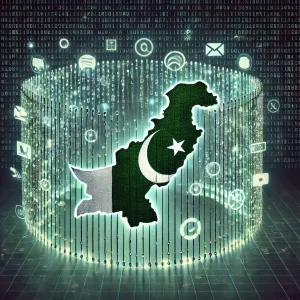 or “immoral.” This move was met with criticism from civil society organizations, who argued that the government was infringing on freedom of expression. Over time, the scope of internet censorship expanded, with the government blocking access to websites that were critical of its policies, as well as those that hosted content considered blasphemous or politically sensitive.
The turning point in Pakistan’s internet regulation came in 2016, with the enactment of the Prevention of Electronic Crimes Act (PECA). PECA provided the legal framework for the government to monitor and control online content. It allowed the PTA to block or remove content that threatened the “glory of Islam,” “integrity, security, or defense of Pakistan,” “public order,” or was considered “obscene” or “immoral.”
-
The Development of Pakistan’s Internet Firewall
The concept of an “internet firewall” in Pakistan became more concrete in the late 2010s, with the government seeking to build a comprehensive system that could monitor and control internet traffic on a national scale. The idea was to create a mechanism similar to the “Great Firewall of China,” which would allow the government to filter and block content at will.
In 2019, reports emerged that the Pakistani government had signed agreements with several Chinese technology companies to develop a nationwide internet filtering system. This system was intended to give the government complete control over what content could be accessed within the country. The internet firewall would not only block websites but also monitor online activity, track users, and potentially censor any content deemed undesirable by the state.
-
Technical Aspects of the Internet Firewall
Pakistan’s internet firewall operates on several technical levels, making it a sophisticated tool for digital censorship and control. Some of the key technical aspects include:
- DNS Filtering: The firewall uses Domain Name System (DNS) filtering to block access to specific websites. When a user tries to access a blocked website, the firewall intercepts the request and redirects it to a government-controlled page, usually displaying a message that the site is not accessible.
- IP Blocking: In addition to DNS filtering, the firewall also blocks access to specific IP addresses associated with websites that are blacklisted by the government. This method is more comprehensive, as it prevents users from accessing websites even if they attempt to use alternative domain names.
- Deep Packet Inspection (DPI): The firewall employs Deep Packet Inspection technology to monitor and analyze internet traffic in real-time. DPI allows the government to inspect the contents of data packets being transmitted over the internet, enabling them to block or censor specific types of content, such as certain keywords or file types.
- SSL/TLS Interception: The firewall is also capable of intercepting Secure Sockets Layer (SSL) and Transport Layer Security (TLS) connections, which are commonly used to encrypt data transmitted between users and websites. By intercepting these connections, the government can decrypt and monitor encrypted traffic, further enhancing its ability to control online content.
- Proxy and VPN Blocking: To prevent users from circumventing the firewall, the government has also implemented measures to block access to proxy servers and Virtual Private Networks (VPNs). These tools are often used by individuals seeking to bypass internet censorship, but the firewall’s sophisticated filtering capabilities make it difficult for users to access them.
-
Impact on Society and Digital Rights
The implementation of Pakistan’s internet firewall has had profound implications for society, particularly in terms of digital rights, freedom of expression, and access to information. Some of the key impacts include:
- Censorship of Dissent: One of the most significant consequences of the firewall is the censorship of dissenting voices. Journalists, activists, and ordinary citizens who criticize the government or discuss sensitive topics often find their content blocked or removed. This has created a chilling effect on free speech, with many individuals self-censoring to avoid repercussions.

- Suppression of Religious and Cultural Diversity: The firewall has also been used to suppress content that challenges the dominant religious and cultural norms in Pakistan. Websites and social media accounts that promote religious tolerance, minority rights, or progressive social values are often targeted, leading to a narrowing of the public discourse.
- Privacy Concerns: The government’s ability to monitor and track online activity through the firewall has raised serious privacy concerns. Individuals’ online communications, browsing habits, and personal data can be accessed and scrutinized by the authorities, potentially leading to misuse or abuse of power.
- Economic Impact: The firewall’s restrictions on internet access have also had an economic impact. Businesses that rely on the internet for communication, marketing, or e-commerce have faced challenges due to blocked websites and services. Additionally, the blocking of certain online platforms, such as social media or video-sharing sites, has affected the ability of entrepreneurs and content creators to reach their audiences.
- Access to Information: The firewall’s censorship of certain websites and online platforms has limited access to information for the general public. This is particularly problematic in a country where traditional media is often state-controlled or heavily regulated. The internet serves as an alternative source of information, and its restriction has left many individuals with fewer avenues to access unbiased news and diverse perspectives.
-
Government Justifications and Public Reactions
The Pakistani government has justified the implementation of the internet firewall on several grounds, including national security, protection of religious sentiments, and maintenance of public order. Government officials argue that the firewall is necessary to prevent the spread of extremist content, hate speech, and blasphemy, all of which are seen as threats to the country’s stability.
However, these justifications have been met with skepticism by many in the public and civil society. Critics argue that the firewall is primarily a tool for political control, allowing the government to suppress dissent and maintain its grip on power. The lack of transparency in the decision-making process and the absence of judicial oversight have further fueled concerns about the potential for abuse.
Public reaction to the firewall has been mixed. While some segments of society support the government’s efforts to curb online extremism and protect religious values, others see the firewall as an infringement on their fundamental rights. Protests and campaigns against internet censorship have been organized by digital rights groups, journalists, and activists, but these efforts have often been met with resistance from the authorities.
-
International Perspectives and Comparisons
Pakistan’s internet firewall is not an isolated phenomenon; it is part of a broader trend of digital authoritarianism observed in several countries around the world. Countries like China, Iran, and Saudi Arabia have implemented similar systems to control online content and monitor internet usage. These countries have often been cited as models for Pakistan’s internet regulation efforts.
The international community, particularly organizations that advocate for internet freedom and human rights, has expressed concern over Pakistan’s internet firewall. Reports from organizations like Freedom House and Human Rights Watch have highlighted the negative impact of the firewall on freedom of expression and access to information in Pakistan. The country has consistently ranked low in global internet freedom indexes, reflecting the restrictive nature of its digital environment.
Comparatively, Pakistan’s internet firewall is less extensive than China’s “Great Firewall,” but it is still one of the most comprehensive and sophisticated systems of internet censorship in the region. Unlike in China, where the firewall is deeply embedded in the country’s internet infrastructure, Pakistan’s system is still evolving, and its full capabilities are not yet fully realized. However, the trajectory suggests that the government is moving towards a more centralized and controlled digital environment.
-
Legal and Ethical Implications
The implementation of Pakistan’s internet firewall raises several legal and ethical questions. From a legal standpoint, the firewall challenges the principles of freedom of expression and privacy enshrined in the Pakistani Constitution and international human rights treaties to which Pakistan is a signatory.
Article 19 of the Pakistani Constitution guarantees the right to freedom of speech and expression, subject to reasonable restrictions imposed by law. However, the broad and vague language used in laws like PECA has allowed the government to impose sweeping restrictions on online content, often without clear justification or due process.
From an ethical perspective, the firewall represents a significant overreach of state power into the private lives of individuals. The government’s ability to monitor and control internet usage raises concerns about the potential for surveillance, abuse of power, and the erosion of civil liberties. The lack of transparency and accountability in the implementation of the firewall further exacerbates these concerns.
-
The Future of Internet Freedom in Pakistan
The future of internet freedom in Pakistan remains uncertain. On one hand, the government’s continued investment in the development of the internet firewall suggests that.
Source: Google News
Read more: Alitech Blog




Leave a Reply