


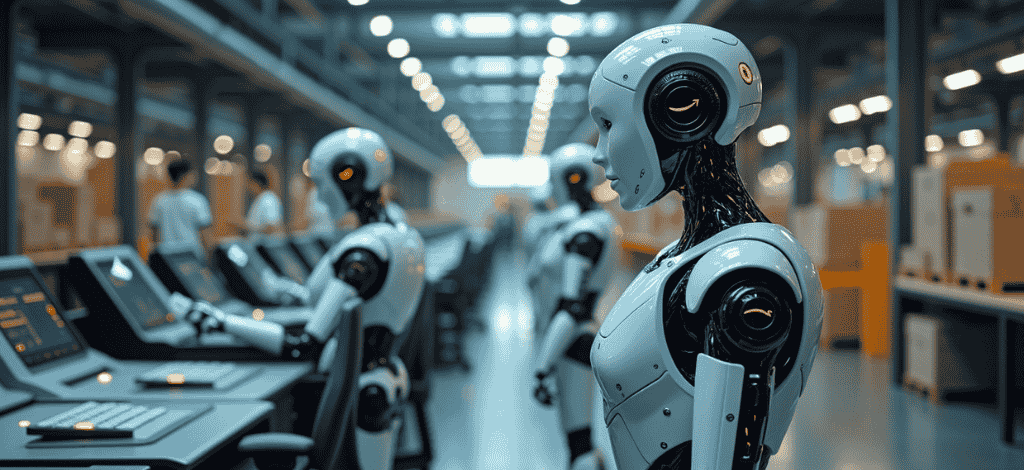
Amazon has always been at the forefront of innovation, but a recent leaked report claims that the company may take automation to a whole new level. According to internal documents cited by the New York Times, Amazon could replace up to 600,000 human workers with robots by 2033 as it seeks to automate nearly 75% of its warehouse operations. The news has sparked debates about the future of work, technology, and human value in the age of AI.
Amazon’s Automation Journey Over the Years
Automation at Amazon is not new. The company has been integrating robotics into its warehouse operations for over a decade. It began with simple conveyor belts and robotic arms, and now uses advanced AI-driven machines capable of sorting, packing, and transporting items faster than any human. These robots have improved efficiency, but they’ve also raised questions about job security.
The Leaked Report and What It Reveals
The leaked report indicates Amazon’s plan to massively expand its robot workforce in the coming years. It states that by 2033, the company aims to replace as many as 600,000 human roles through automation. The goal is to make warehouse operations 75% automated, potentially reducing the need for human intervention across major facilities.
Amazon’s Response to Automation Claims
Amazon was quick to respond, calling the report incomplete and misleading. A spokesperson told CNET that the materials represent the perspective of one internal team and do not reflect the company’s overall hiring strategy. They emphasized that Amazon continues to create new jobs and remains one of America’s biggest employers.
Current Workforce and Hiring Patterns
With over 1.5 million employees, Amazon ranks as the third-largest employer in the United States, after the federal government and Walmart. While automation might reduce some roles, the company insists it is still hiring—especially for technical and maintenance jobs. Amazon recently announced plans to add 250,000 seasonal workers for the holiday rush.
Why Amazon Is Focusing on Robots
The main reason behind Amazon’s automation push is efficiency. As global demand for e-commerce grows, the company faces pressure to deliver faster while reducing operational costs. Robots don’t need breaks, vacations, or benefits, and they can operate 24/7, which translates into higher productivity and lower expenses.
How Automation Works Inside Amazon Warehouses
In Amazon’s warehouse in Shreveport, Louisiana, more than a thousand robots handle sorting, packing, and shipping tasks. This facility runs with 25% fewer human workers than traditional warehouses. By 2026, the site is expected to operate with half the number of human employees it would need without robots. Amazon plans to replicate this model in around 40 more facilities by 2027.
Impact on Human Jobs and Wages
Studies show that every robot added per 1,000 workers reduces wages by roughly 0.42%. That might sound small, but at scale, it could result in significant job losses—up to 400,000 across the U.S. As automation expands, low-skill workers will feel the most impact, potentially widening the economic gap between skilled and unskilled labor.
The Concept of “Cobots” and “Advanced Technology”
To soften the public image of full automation, Amazon is reportedly planning to use friendlier language like “advanced technology” or “cobots,” meaning collaborative robots that work alongside humans. The goal is to shift the narrative from replacement to partnership, making automation seem like a shared evolution rather than a threat.
Corporate Strategy and Public Relations Approach
According to the leaked materials, Amazon’s leadership is keenly aware of public concern around job losses. The company is considering community engagement initiatives and PR campaigns to highlight the positive aspects of automation—such as improved safety and opportunities for upskilling workers in technical roles.
Concerns About Racial and Economic Inequality
Critics note that automation may disproportionately affect certain communities. The New York Times report mentions that a large portion of Amazon’s warehouse workforce consists of Black and lower-income employees. As automation replaces many of these roles, it could further deepen racial and economic disparities.
Elon Musk’s Take on AI and Robot-Driven Economies
The news about Amazon’s automation efforts caught the attention of Elon Musk, who has long predicted that AI and robotics would replace all jobs. Musk responded on social media, agreeing with the claim that humans will no longer be essential for most labor tasks. He envisions a world where working becomes entirely optional.
Future of Work According to Musk
In a 2025 interview with Senator Ted Cruz, Musk said that AI will make goods and services “almost free.” He believes automation will drastically reduce production costs, giving people access to abundant resources. The real challenge, according to Musk, will not be survival, but finding purpose and fulfillment in a world where work is no longer required.
How Automation Might Redefine Human Fulfillment
As AI and robots take over repetitive and labor-intensive tasks, humans may shift their focus toward creativity, innovation, and personal growth. Musk describes future work as similar to gardening or cooking for pleasure—activities done out of choice rather than necessity.
The Bigger Picture — AI’s Effect on Global Employment
Amazon’s case is just one example of a much larger trend. Across industries, automation is rapidly transforming how we work. From self-driving trucks to AI-powered customer service, every sector faces disruption. The question is not if automation will happen, but how societies will adapt to it.
Meta’s AI Layoffs and Industry Competition
Amazon is not the only tech giant reshaping its workforce. Meta recently announced layoffs of around 600 employees within its AI unit as part of a restructuring effort led by Alexandr Wang. The company wants to operate more efficiently while investing heavily in its “Superintelligence Labs.” This demonstrates how even leading tech firms are recalibrating their strategies to stay competitive in AI.
The Race for AI Dominance Between Tech Giants
Companies like Amazon, Meta, Google, and Microsoft are all racing to dominate AI. Each one invests billions in infrastructure and talent. For Amazon, the focus is on robotics and logistics; for Meta, it’s social intelligence and data centers. The race is not just about technology—it’s about shaping the future of human labor and digital economies.
Possible Social and Ethical Implications
As machines become more capable, societies face serious ethical questions. Who benefits from automation? How do we protect displaced workers? And what happens to human identity when jobs—one of our main sources of meaning—become obsolete? Governments may need to introduce universal basic income or new forms of social support to ensure stability.
What Governments and Workers Can Do Next
To manage this transition, governments and organizations must prioritize reskilling programs. Workers should be trained in AI maintenance, robotics, and data management—fields that will thrive in the new economy. Collaboration between private companies, public institutions, and educational systems will be key to building a balanced, human-centered future.
Conclusion
Amazon’s automation journey reflects both the promise and peril of technological progress. While robots may bring efficiency and profitability, they also challenge traditional notions of work and community. The future may indeed see fewer humans in warehouses, but more people exploring creative and meaningful pursuits. The key lies in ensuring that this transformation benefits everyone, not just corporations.
FAQs
1. Will Amazon really replace 600,000 human workers with robots?
The leaked report suggests that possibility, but Amazon has denied any definitive plans for mass layoffs.
2. What are “cobots” at Amazon?
“Cobots” are collaborative robots designed to work alongside humans rather than replace them entirely.
3. How will automation affect wages at Amazon?
Studies indicate that automation tends to lower average wages and reduce job availability in low-skill sectors.
4. What did Elon Musk say about robots replacing jobs?
Musk believes AI and robots will eventually replace all jobs, making work optional and goods nearly free.
5. What can workers do to prepare for automation?
Workers should focus on learning technical and creative skills—especially in AI, robotics, and data management—to stay relevant in the evolving job market.
Grow your freelance career with Realancer — the ultimate platform for global talent
Read more blogs: Alitech Blog

Zeeshan Ali Shah is a professional blog writer at AliTech Solutions, and Realancer renowned for crafting engaging and informative content. He holds a degree from the University of Sindh, where he honed his expertise in technology. With a keen eye for detail and a passion for staying up-to-date on the latest tech trends, Zeeshan’s writing provides valuable insights to his readers. His expertise in the tech industry makes him a sought-after writer, and his work at AliTech Solutions has earned him a reputation as a trusted and knowledgeable voice in the field.


Leave a Reply