


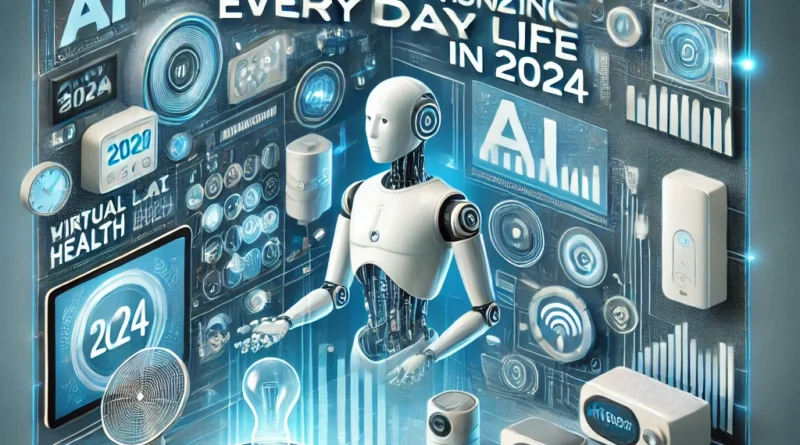
Introduction:
Artificial Intelligence (AI) is no longer just a futuristic concept; it has become an integral part of our daily lives. From the way we communicate and work to how we shop, learn, and entertain ourselves, AI is reshaping our experiences in profound ways. This blog explores the various dimensions of AI’s influence on our everyday routines and examines both the benefits and challenges it presents.
1. The Rise of AI in Communication

1.1 Enhancing Personal Communication
AI-driven tools are transforming personal communication, making interactions more efficient and personalized. Virtual assistants like Siri, Google Assistant, and Alexa enable users to send messages, set reminders, and manage schedules through voice commands. These tools make communication hands-free and accessible, especially for those with disabilities or busy lifestyles.
1.2 Social Media Algorithms
Social media platforms utilize AI algorithms to curate content tailored to individual preferences. These algorithms analyze user behavior, including likes, shares, and comments, to present a personalized news feed. As a result, users are more engaged, but they may also find themselves in echo chambers where they are only exposed to familiar viewpoints.
1.3 AI in Translation
Language barriers are diminished through AI-powered translation tools like Google Translate. These tools utilize natural language processing (NLP) to provide real-time translations, enabling seamless communication between people who speak different languages. This capability fosters global connections and enhances international collaboration.
2. AI in Daily Work Routines
2.1 Automation of Repetitive Tasks
AI is automating repetitive tasks across various industries, allowing employees to focus on more strategic and creative responsibilities. For instance, robotic process automation (RPA) tools can handle data entry, scheduling, and invoicing, improving efficiency and reducing human error.

2.2 Intelligent Virtual Assistants
In the workplace, AI-driven virtual assistants are helping professionals manage their workloads. Tools like Microsoft Cortana and Slack’s AI bot can schedule meetings, set reminders, and prioritize tasks. These assistants streamline workflows, contributing to enhanced productivity.
2.3 Enhanced Data Analytics
AI’s ability to process vast amounts of data quickly and accurately empowers organizations to make informed decisions. Businesses use AI analytics tools to interpret trends, customer preferences, and market shifts, enabling them to develop strategies that resonate with their target audience.
3. AI in Healthcare: A Transformative Force
3.1 Personalized Treatment Plans
AI is revolutionizing healthcare by enabling personalized treatment plans based on individual patient data. Machine learning algorithms analyze genetic information, medical history, and lifestyle factors to recommend tailored treatment options. This approach enhances treatment efficacy and reduces the risk of adverse effects.
3.2 AI-Powered Diagnostics

AI systems are capable of analyzing medical images, such as X-rays and MRIs, with remarkable accuracy. For example, Google’s DeepMind has developed AI that can detect eye diseases as effectively as expert ophthalmologists. Early detection through AI diagnostics can significantly improve patient outcomes.
3.3 Telemedicine and Virtual Health Assistants
The rise of telemedicine has been accelerated by AI technologies. Virtual health assistants provide patients with instant access to medical advice, appointment scheduling, and medication reminders. This convenience increases healthcare accessibility, particularly for individuals in remote areas.
4. AI in Education: Personalized Learning Experiences
4.1 Adaptive Learning Platforms
AI is transforming education through adaptive learning platforms that cater to individual learning styles. Tools like DreamBox Learning and Knewton analyze student performance and adjust content accordingly, allowing for personalized learning experiences that enhance understanding and retention.
4.2 Intelligent Tutoring Systems
AI-driven tutoring systems provide students with immediate feedback and support. These systems can identify areas where students struggle and offer targeted resources to address those challenges. As a result, students receive personalized assistance that improves their overall learning outcomes.
4.3 Automating Administrative Tasks
AI also streamlines administrative tasks in educational institutions. Automating processes such as grading, attendance tracking, and scheduling allows educators to focus more on teaching and mentoring students.
5. AI in Entertainment: A New Era of Engagement
5.1 Content Recommendations
Streaming platforms like Netflix and Spotify use AI algorithms to recommend content based on user preferences. By analyzing viewing and listening habits, these platforms create personalized playlists and suggestions, enhancing user engagement and satisfaction.
5.2 AI in Game Development
AI is revolutionizing the gaming industry, enabling the creation of more immersive and realistic experiences. Advanced algorithms can generate dynamic game environments, simulate realistic behaviors for non-player characters (NPCs), and adapt gameplay based on player actions.
5.3 Interactive Storytelling
AI-driven storytelling tools allow users to create personalized narratives. For instance, platforms like Twine enable users to craft interactive stories that adapt based on reader choices, merging creativity with technology in innovative ways.
6. AI in Shopping: A Personalized Consumer Experience
6.1 Smart Shopping Assistants
AI-powered shopping assistants, such as Amazon’s Alexa and Google Assistant, are changing the way consumers shop. These virtual assistants can provide product recommendations, compare prices, and assist in making purchases, making the shopping experience more convenient.
6.2 Personalized Marketing
Retailers leverage AI to analyze consumer behavior and preferences, allowing for targeted marketing strategies. AI algorithms segment customers based on their shopping habits, enabling businesses to deliver personalized promotions and product recommendations.
6.3 Virtual Try-Ons
AI technologies enable virtual try-on experiences for clothing and accessories. Augmented reality (AR) applications allow users to see how products will look on them before making a purchase, reducing the likelihood of returns and enhancing customer satisfaction.
7. AI in Smart Homes: Enhancing Daily Living

7.1 Home Automation
AI is at the heart of smart home technology, enabling devices to communicate and automate tasks. Smart thermostats, lighting systems, and security cameras can be controlled remotely, providing convenience and energy efficiency.
7.2 Voice-Controlled Assistants
Voice-activated smart assistants like Amazon Echo and Google Home allow users to control various aspects of their homes through voice commands. From adjusting the thermostat to playing music, these devices make daily tasks more manageable.
7.3 Enhanced Security
AI-powered security systems utilize facial recognition and motion detection to enhance home safety. These systems can alert homeowners to suspicious activity and provide real-time monitoring through mobile apps.
8. Ethical Considerations: The Dark Side of AI

8.1 Privacy Concerns
As AI systems collect and analyze vast amounts of personal data, privacy concerns arise. Users may unknowingly share sensitive information, leading to potential misuse and breaches of trust.
8.2 Job Displacement
The automation of tasks raises concerns about job displacement. While AI enhances productivity, it may also lead to significant workforce reductions in certain industries, necessitating a reevaluation of job training and employment strategies.
8.3 Algorithmic Bias
AI algorithms can perpetuate biases present in their training data, resulting in unfair treatment and discrimination. Addressing algorithmic bias is crucial for ensuring that AI technologies serve all individuals equitably.
9. The Future of AI in Daily Life
9.1 Continuous Evolution
AI technologies are continuously evolving, and their integration into daily life will only deepen. As advancements occur, we can expect AI to play an even more prominent role in healthcare, education, business, and entertainment.
9.2 Human-AI Collaboration
The future will likely see increased collaboration between humans and AI. Rather than replacing human capabilities, AI can augment them, enabling individuals to focus on creative problem-solving and strategic decision-making.
9.3 Ethical AI Development
Ensuring ethical AI development will be paramount as technology advances. Stakeholders must prioritize transparency, accountability, and fairness to mitigate potential risks associated with AI deployment.
Conclusion:
AI is redefining our daily lives in profound ways, enhancing communication, work efficiency, healthcare, education, entertainment, shopping, and home living. While the benefits are substantial, ethical considerations surrounding privacy, job displacement, and algorithmic bias cannot be overlooked. As we embrace this technological revolution, it is essential to navigate these challenges responsibly, ensuring that AI serves as a force for good in society. The future holds immense promise for AI, and with careful stewardship, it can continue to enhance the human experience in remarkable ways.
Source: Google News
Read more: Alitech Blog
www.hostingbyalitech.com


Leave a Reply