


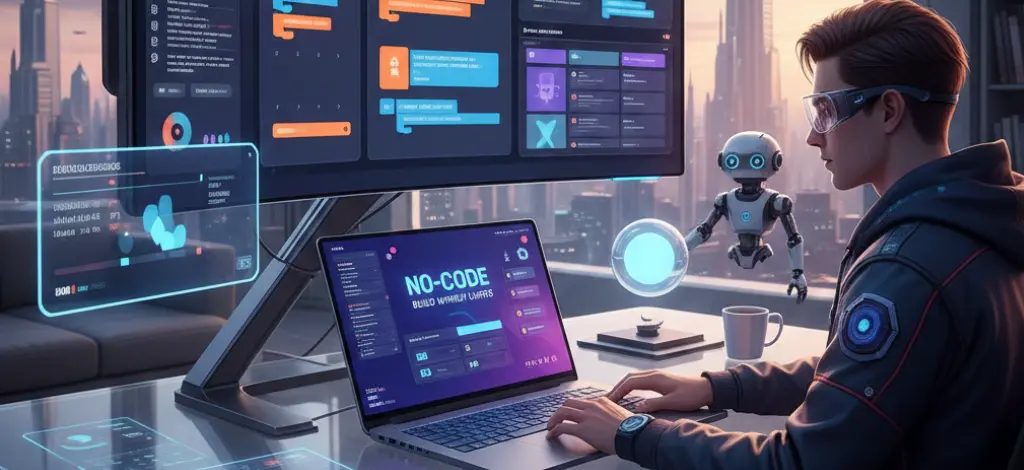
What Is No-Code Development
No-code development is the process of building websites, apps, and software without writing traditional programming code. Instead of complex syntax, users work with visual editors, drag-and-drop components, and pre-built logic blocks. In 2026, no-code feels less like a shortcut and more like a smart way to build fast. It allows ideas to turn into real products without waiting months for developers.
Why No-Code Is Exploding in 2026
The demand for digital products is growing faster than the supply of developers. Businesses want speed, flexibility, and lower costs, and no-code delivers all three. With AI-assisted builders, responsive layouts, and ready-to-scale infrastructure, no-code platforms in 2026 feel powerful and professional rather than basic or limited.
Who Should Use No-Code Platforms
No-code tools are ideal for startups, solo founders, marketers, small businesses, and freelancers. Even enterprises are using no-code internally for dashboards, workflows, and landing pages. If you have an idea but don’t want to deal with heavy development cycles, no-code is the fastest path forward.
Key Benefits of No-Code Tools
No-code platforms remove technical barriers and let creativity lead. You can build faster, test ideas quickly, reduce development costs, and make changes without relying on a developer. It feels like sketching your idea directly into a working product.
Limitations of No-Code Development
No-code is powerful, but it is not magic. Highly complex systems or deeply custom logic may still require traditional development. However, in 2026, these limits are shrinking as platforms add APIs, plugins, and custom code options.
Webflow
Webflow is one of the most popular no-code platforms for building professional websites.
It combines visual design freedom with clean HTML, CSS, and CMS capabilities. Designers love Webflow because it feels like designing without breaking structure.
Design flexibility
Webflow allows pixel-perfect layouts, animations, and responsive designs that look custom-built.
CMS and SEO power
Its built-in CMS and SEO tools make it ideal for blogs, business sites, and content-driven platforms.
Framer
Framer is a modern no-code tool focused on fast, beautiful websites.
In 2026, Framer is widely used for landing pages, startup sites, and product showcases.
Speed and simplicity
Framer is incredibly fast to publish and easy to maintain, making it perfect for quick launches.
Built for modern UI
It shines when it comes to animations, transitions, and smooth user experiences.
Bubble
Bubble is a full-stack no-code platform for building web applications.
If Webflow is for websites, Bubble is for real apps with logic, workflows, and databases.
Backend without coding
Bubble lets you manage users, data, and complex workflows visually.
Scalable app building
Many SaaS products and marketplaces in 2026 are built entirely on Bubble.
Why These Platforms Stand Out in 2026
Webflow, Framer, and Bubble dominate because they cover different needs. Together, they allow anyone to build everything from simple websites to complex platforms without touching code.
No-Code vs Low-Code in 2026
No-code focuses on zero coding, while low-code allows some coding for flexibility. In 2026, many tools blend both approaches, giving creators the freedom to start simple and scale later.
How to Choose the Right No-Code Platform
The best platform depends on what you want to build. For content sites, Webflow is ideal. For fast landing pages, Framer is perfect. For full apps, Bubble is the strongest option.
Future of No-Code Development
No-code is becoming smarter with AI integration. In the near future, you will describe your idea in words, and the platform will generate layouts, logic, and workflows automatically.
Impact of No-Code on Freelancers
No-code platforms are changing how freelancers work. Freelancers can now deliver projects faster, charge based on value, and serve more clients without being limited by development time. For freelancers, no-code means more freedom and more opportunities. They can focus on problem-solving and creativity instead of technical complexity.
Final Thoughts
No-code development in 2026 is not a trend, it is a new standard. Platforms like Webflow, Framer, and Bubble empower individuals and businesses to build digital products faster than ever. Whether you are a startup founder, a business owner, or a freelancer, no-code tools give you the power to turn ideas into reality without barriers.
FAQs
What is the best no-code platform in 2026
Webflow, Framer, and Bubble are considered the top platforms depending on your use case.
Can no-code apps scale
Yes, many no-code apps scale well, especially when combined with APIs and external services.
Is no-code good for startups
No-code is excellent for startups because it reduces cost and speeds up product launches.
Do freelancers need coding skills if they use no-code
Basic understanding helps, but deep coding knowledge is not required.
Will no-code replace developers
No-code will not replace developers, but it will change how software is built.
Tags: no-code development platforms, best No-Code Development tools 2026, No-Code Development app builders, build apps without coding, webflow development, bubble no-code platform, framer website builder, no-code website builders, no-code software tools, startup no-code tools, digital product development, SaaS without coding, freelancing with No-Code Development
Start your freelancing journey the smart way with Realancer — join the waitlist now
Read more blogs: Alitech Blog

Zeeshan Ali Shah is a professional blog writer at AliTech Solutions, and Realancer renowned for crafting engaging and informative content. He holds a degree from the University of Sindh, where he honed his expertise in technology. With a keen eye for detail and a passion for staying up-to-date on the latest tech trends, Zeeshan’s writing provides valuable insights to his readers. His expertise in the tech industry makes him a sought-after writer, and his work at AliTech Solutions has earned him a reputation as a trusted and knowledgeable voice in the field.


Leave a Reply