


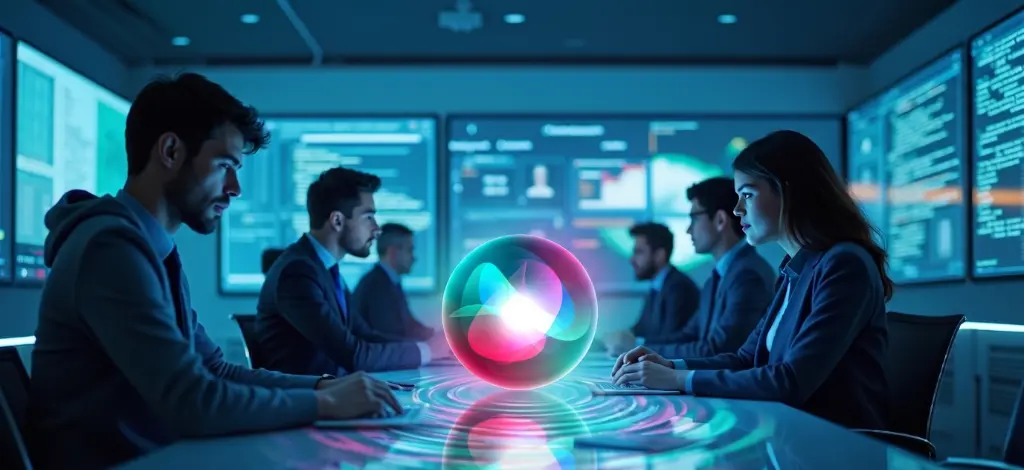
The urgency behind Apple’s AI push
Apple is no longer moving cautiously in artificial intelligence—it’s accelerating at full speed. The decision to send Siri engineers to an AI coding bootcamp signals a major shift in how the company approaches innovation. For years, Apple relied on its reputation for polished, user-friendly technology, but the AI revolution has changed the rules. Suddenly, speed, adaptability, and machine learning expertise matter more than ever. Apple’s internal urgency reflects a broader realization that falling behind in AI could reshape its entire ecosystem. With competitors rapidly improving their assistants, Apple is stepping into a more aggressive phase where retraining talent becomes just as important as hiring new experts.
Siri’s decline in the AI race
Siri was once seen as a groundbreaking feature when it launched, but over time, it lost its competitive edge. While other assistants evolved into conversational and context-aware tools, Siri remained mostly command-based and limited in understanding complex queries. Users began to notice the gap, especially as AI systems became more intelligent and intuitive. Apple’s delay in releasing an advanced AI-driven Siri further widened that gap. The company acknowledged that earlier versions were not reliable enough to meet its standards, which is why the rollout was pushed back. This delay has only increased pressure internally to deliver something significantly better, not just an incremental update.
Growing pressure from AI competitors
The AI space is now dominated by companies that prioritize rapid innovation and large-scale experimentation. Apple is facing intense pressure to match the capabilities of modern AI assistants that can write, analyze, and converse naturally. These systems are redefining user expectations, making traditional voice assistants feel outdated. Apple’s response is not just about catching up—it’s about redefining its position in the AI landscape. By investing in training programs like coding bootcamps, the company is trying to ensure its engineers can compete at the same level as industry leaders who have already embraced AI-first development.
Inside Apple’s AI coding bootcamp strategy
The bootcamp initiative is a strategic move designed to quickly upgrade the skills of existing engineers. Instead of relying solely on new hires, Apple is focusing on transforming its current workforce. This approach allows the company to maintain its culture while adapting to new technological demands. The bootcamp is expected to be intensive, covering multiple weeks of hands-on learning and real-world application. It reflects a growing trend in the tech industry where continuous learning is essential for staying relevant. Apple is essentially investing in its people to accelerate innovation from within.
Who is attending the bootcamp
Reports suggest that fewer than 200 engineers from the Siri team will participate in this program. This is a significant portion of the team, indicating how serious Apple is about this initiative. At the same time, some engineers will remain behind to continue development work, while others will focus on evaluating Siri’s performance. This balanced approach ensures that progress doesn’t stop while training takes place. It also highlights how Apple is managing resources carefully, ensuring that both learning and production happen simultaneously without major disruptions.
What engineers will learn
The bootcamp is not about teaching engineers how to build AI models from scratch. Instead, the focus is on using AI tools to enhance software development. Engineers will learn how to integrate AI into their workflows, automate repetitive tasks, and build smarter applications more efficiently. This includes working with modern AI coding assistants that can generate, debug, and optimize code. The goal is to make engineers more productive while also enabling them to create more advanced features. It’s a shift from traditional coding to a more collaborative approach where humans and AI work together.
Shift from traditional coding to AI-assisted development
The transition to AI-assisted development represents a major cultural change within Apple. For decades, software engineering relied heavily on manual coding and structured processes. Now, AI tools are changing how code is written, tested, and deployed. Engineers are expected to adapt quickly, learning how to guide AI systems rather than doing everything manually. This shift requires not only technical skills but also a new mindset. Apple’s bootcamp is designed to bridge that gap, helping engineers understand how to leverage AI effectively without compromising quality or security.
Organizational shakeups driving change
Apple’s decision to retrain its engineers comes after a series of internal changes within its AI division. Leadership transitions and strategic realignments have played a significant role in shaping the company’s current direction. These changes reflect a recognition that previous approaches were not sufficient to meet the demands of the AI era. By restructuring teams and redefining priorities, Apple is trying to create a more agile and responsive organization. The bootcamp initiative is just one part of this broader transformation.
Leadership changes in Apple’s AI division
Leadership plays a crucial role in driving innovation, and Apple’s recent changes highlight this reality. With new leaders overseeing AI development, the company is adopting a more focused and results-driven approach. These leaders bring fresh perspectives and are likely pushing for faster progress and more ambitious goals. Their influence can be seen in decisions like the coding bootcamp, which emphasizes practical skill development over theoretical knowledge. This leadership shift is helping Apple align its strategy with the rapidly evolving AI landscape.
Impact of internal team performance
The Siri team has reportedly faced criticism for not fully utilizing available AI tools. This perception has contributed to the decision to invest in retraining. Apple recognizes that even the best engineers need the right tools and training to succeed in a changing environment. By addressing these gaps, the company aims to improve overall performance and deliver better results. This move also sends a clear message internally: adapting to new technologies is not optional, it’s essential for staying competitive.
The role of AI tools in Apple’s transformation
AI tools are becoming central to software development across the industry. Apple’s adoption of these tools marks a significant shift in how it builds products. These tools can speed up development, reduce errors, and enable more complex features. By integrating AI into its workflows, Apple is positioning itself to innovate more quickly and efficiently. This transformation is not just about technology—it’s about redefining how work gets done within the company.
Rise of AI coding tools across tech
The popularity of AI coding tools has grown rapidly in recent years. These tools are now widely used by developers to write code, fix bugs, and even design entire systems. Their ability to understand context and generate accurate solutions has made them indispensable. Apple’s decision to embrace these tools reflects a broader industry trend. Companies that fail to adopt AI-assisted development risk falling behind as others gain speed and efficiency.
Apple’s adoption of AI development workflows
Apple is gradually integrating AI into its development processes, moving toward a more modern workflow. This includes using AI for testing, debugging, and optimization. These changes are expected to improve both the speed and quality of software development. By training its engineers to use these tools effectively, Apple is ensuring that it can compete with other tech giants that have already made similar transitions. This adoption marks a turning point in how Apple approaches innovation.
The upcoming Siri overhaul
The new version of Siri is expected to be a major upgrade, transforming it into a more capable and conversational assistant. Apple aims to move beyond simple commands and create an assistant that can understand context and perform complex tasks. This overhaul is part of a broader effort to integrate AI more deeply into its products. The success of this initiative will depend heavily on how well the retrained engineers can apply their new skills.
Expected features of the new Siri
The updated Siri is likely to include features such as improved contextual understanding, better integration with apps, and more natural conversations. Users can expect a more seamless experience where Siri can handle multi-step tasks and provide more accurate responses. These improvements are designed to make Siri more competitive with modern AI assistants. Apple is aiming to deliver a product that feels intuitive and powerful, rather than limited and rigid.
Integration with advanced AI models
One of the most significant changes is the integration of advanced AI models into Siri. These models will enable more sophisticated interactions and better performance. By leveraging external AI technologies, Apple can enhance Siri’s capabilities without building everything from scratch. This approach allows the company to focus on user experience while still benefiting from cutting-edge AI advancements. It’s a strategic move that combines internal expertise with external innovation.
Apple vs competitors in AI assistants
The competition in AI assistants is fierce, with multiple companies pushing the boundaries of what these systems can do. Apple’s challenge is to differentiate itself while also matching the capabilities of its rivals. This requires a careful balance between innovation and reliability. By investing in training and development, Apple is taking steps to close the gap and position itself as a leader once again.
Comparison with modern AI chatbots
Modern AI chatbots have set a new standard for interaction, offering conversational and context-aware responses. Siri’s transformation aims to bring it closer to this level of sophistication. The goal is to create an assistant that feels more like a helpful companion than a simple tool. This comparison highlights how much the expectations have changed and why Apple’s current efforts are so important.
Market expectations and user demands
Users today expect more from their devices than ever before. They want assistants that can understand them, anticipate their needs, and provide meaningful help. Apple’s AI push is a response to these expectations. By improving Siri, the company hopes to meet and exceed user demands, creating a more engaging and useful experience.
Challenges Apple must overcome
Despite its efforts, Apple faces several challenges in its AI journey. These include technical limitations, integration issues, and the need to maintain privacy standards. Balancing these factors is not easy, especially when trying to innovate بسرعة. Apple’s success will depend on how well it can navigate these challenges while delivering a high-quality product.
Technical limitations
Building advanced AI systems is inherently complex, requiring significant resources and expertise. Apple must overcome these challenges to deliver a competitive product. This includes improving performance, accuracy, and scalability. The bootcamp initiative is one way the company is addressing these technical hurdles.
Privacy vs AI capability balance
Apple has always prioritized user privacy, which can limit the capabilities of AI systems. Finding the right balance between privacy and functionality is a key challenge. The company must ensure that its AI features are both powerful and secure, maintaining user trust while delivering innovation.
Future of AI development at Apple
The bootcamp initiative is likely just the beginning of a larger transformation. Apple is expected to continue investing in AI training and development, ensuring that its workforce remains competitive. This long-term approach will help the company adapt to future changes and maintain its position in the tech industry.
Long-term impact of AI training
Training engineers in AI-assisted development will have lasting effects on Apple’s productivity and innovation. It will enable faster development cycles and more advanced features. This investment in human capital is one of the most important steps Apple can take to secure its future.
Cultural shift within engineering teams
Adopting AI tools requires a cultural shift within engineering teams. Apple is encouraging its employees to embrace new ways of working, fostering a mindset of continuous learning. This shift is essential for staying competitive in a rapidly changing industry.
What this means for users
For users, these changes promise a better and more intelligent experience. Siri is expected to become more helpful, responsive, and capable. This will enhance the overall usability of Apple devices, making them more integrated and efficient.
Improved user experience
A smarter Siri will make everyday tasks easier and more intuitive. Users will be able to rely on their devices for more complex interactions, improving productivity and convenience. This is a key goal of Apple’s AI strategy.
Smarter device ecosystem
The improvements to Siri will also benefit the entire Apple ecosystem. Devices will work together more seamlessly, providing a unified experience. This integration is one of Apple’s strongest advantages, and AI will make it even more powerful.
Conclusion
Apple’s decision to send Siri engineers to an AI coding bootcamp marks a pivotal moment in its journey toward AI transformation. It reflects a deeper understanding that technology alone is not enough—people and skills matter just as much. By retraining its workforce and embracing AI-assisted development, Apple is positioning itself to compete in a rapidly evolving landscape. The success of this strategy will depend on execution, but the direction is clear: Apple is fully committed to redefining Siri and reclaiming its place in the AI race.
FAQs
1. Why is Apple sending Siri engineers to a bootcamp?
Apple wants to improve its engineers’ ability to use AI tools effectively, speeding up development and enhancing Siri’s capabilities.
2. How many engineers are involved in the training?
Reports suggest that fewer than 200 engineers will attend the bootcamp, with others continuing development and evaluation work.
3. What will engineers learn in the bootcamp?
They will focus on AI-assisted coding, learning how to use modern tools to build and optimize software more efficiently.
4. When will the new Siri be released?
The updated Siri is expected to be introduced later in 2026 alongside new software updates.
5. How will this impact users?
Users can expect a more intelligent, conversational, and capable Siri that improves overall device experience.
Start your freelancing journey with Realancer — find clients, grow faster, and build your future. Join the waitlist now 👉 https://realancer.net
Read more blogs: Alitech Blog
https://www.hostingbyalitech.com

Zeeshan Ali Shah is a professional blog writer at AliTech Solutions, and Realancer renowned for crafting engaging and informative content. He holds a degree from the University of Sindh, where he honed his expertise in technology. With a keen eye for detail and a passion for staying up-to-date on the latest tech trends, Zeeshan’s writing provides valuable insights to his readers. His expertise in the tech industry makes him a sought-after writer, and his work at AliTech Solutions has earned him a reputation as a trusted and knowledgeable voice in the field.


Leave a Reply